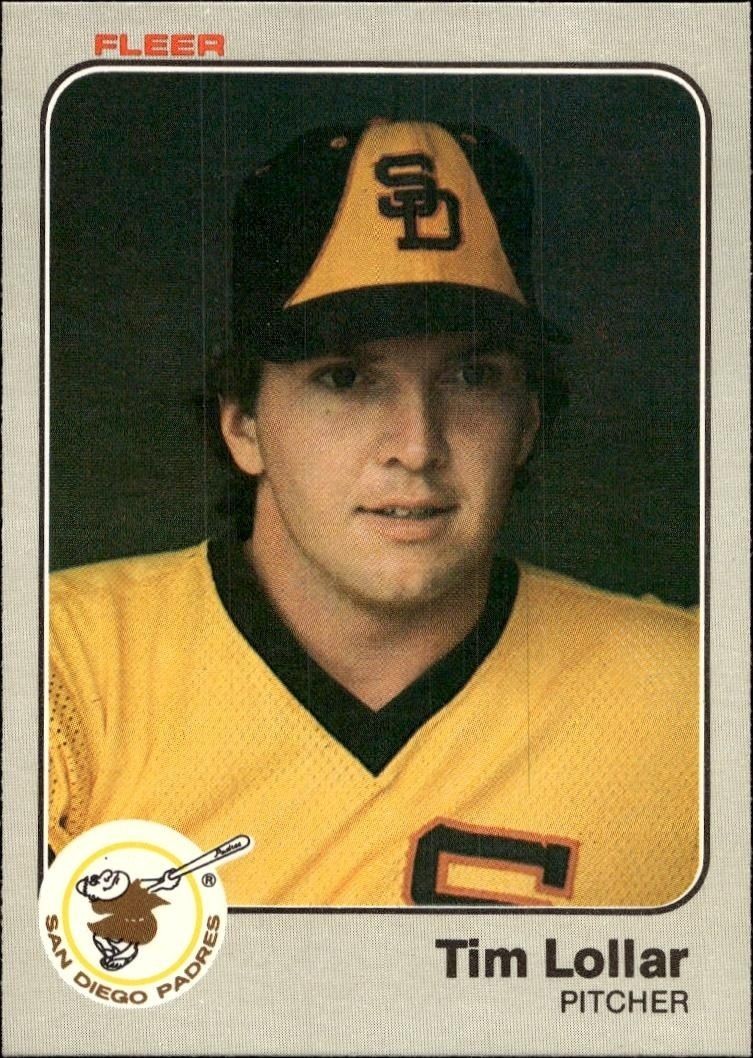
Tim Lollar, born in 1956, was a professional baseball pitcher who competed in Major League Baseball during the late 1970s and 1980s.…Read more
For collectors interested in vintage sports memorabilia, his cards offer a tangible connection to that specific era of the sport. While he wore jersey number 20 during his tenure with the San Diego Padres, his career spanned multiple organizations, including the Chicago White Sox, Houston Astros, Pittsburgh Pirates, and Milwaukee Brewers. This journey makes his cards a diverse addition to any collection focused on 1980s baseball history. Collectors often seek out Tim Lollar cards from the most prominent brands of his active years. You can find his images on cards released by Fleer and Topps in 1983 and 1987. These specific years capture him during his time with the Padres and later with the Pirates, respectively. For investors and completists, these issues are particularly relevant because they represent the peak of his visibility in the hobby. The 1983 Fleer and Topps releases are especially notable for their distinct design aesthetics that define the early 80s trading card landscape. Why collect Tim Lollar cards? His career provides a bridge between the late 70s expansion era and the mid-80s market. While he did not achieve Hall of Fame status, his presence on various teams makes his cards a staple for those building comprehensive team sets or completing decade-specific collections. Whether you are looking to complete a set of 1983 Topps or find a specific Fleer insert, the market for his memorabilia remains steady among niche enthusiasts. For those new to collecting 1980s baseball, Lollar’s cards are an accessible entry point. They are widely distributed across various sets, making them easier to find than some of his more famous contemporaries. This accessibility does not diminish their value to completists who need every face from a specific year. The platform ensures that collectors can explore the full range of his appearances, from base cards to various subset issues. By focusing on the quality and variety of the inventory, collectors can build a meaningful collection that honors the history of the game. The cards serve as historical artifacts, documenting the players who filled the roster spots during a transitional period for baseball.