


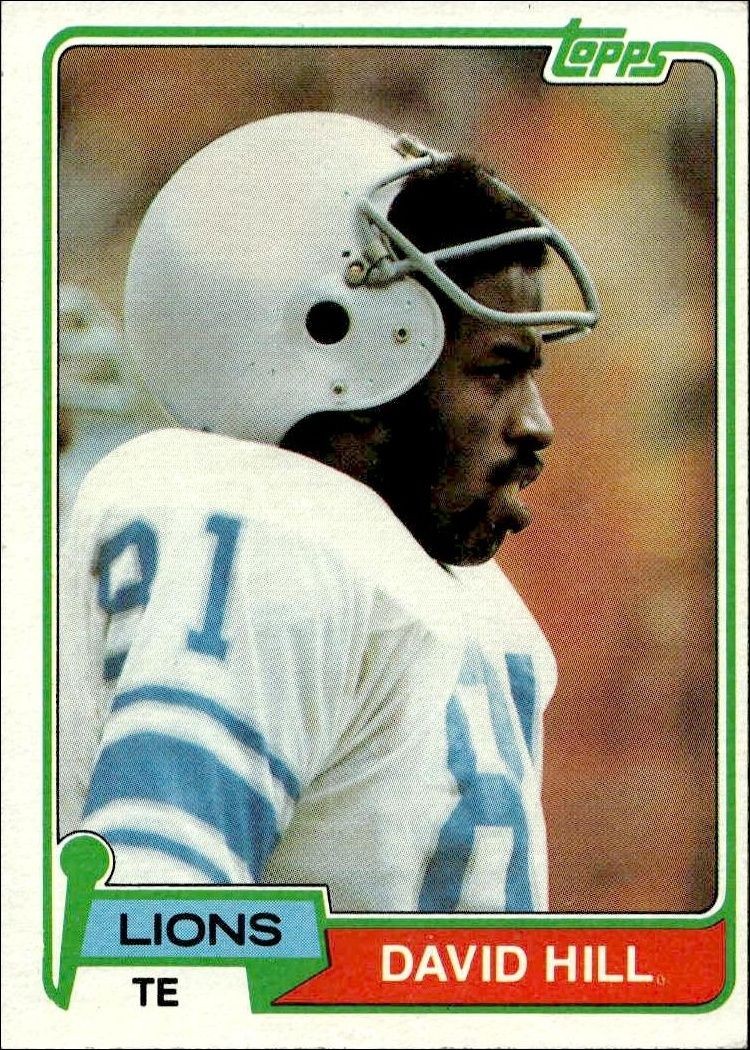
The 1980 Topps David Hill #295 football card captures the Detroit Lions running back during his tenure in the NFL. This vintage sports trading card is a staple for collectors of 1980s football memorabilia.
1980 • Topps
National Football League • Detroit Lions
Excellent
295
New
Shipping Calculated at Checkout
Arrives in 5-7 daysEstimated delivery October 23, 2026 - October 25, 2026
Seller returns October 19, 2026.30-day Returns| Condition | Value | Source | Trend | Price Details |
|---|---|---|---|---|
$1.34 | Guide Estimate | 0% | ||
$1.25As of 9/22/2026 | Completed Sales | |||
$11.99 | Guide Estimate | -10% | ||
$13.00 | Guide Estimate | -13.3% | ||
$23.00 | Guide Estimate | 0% | ||
$31.00 | Guide Estimate | 0% | ||
$14.00 | Guide Estimate | 0% | ||
$23.50 | Guide Estimate | 0% | ||
$14.00 | Guide Estimate | 0% | ||
Raw / Ungraded
PriceCharting Price Guide · Guide Estimate evidence · captured Oct 16, 2026
The 1980 Topps David Hill #295 football card represents a tangible link to the Detroit Lions' roster during the early 1980s. As a standard issue from the 1980 Topps football set, this product offers collectors a straightforward glimpse into the league's landscape during that specific era. David Hill, listed as a running back, is featured on card number 295, providing a cataloged reference point for those tracking player movements and team rosters from this time. For enthusiasts of vintage sports trading cards, this release serves as a fundamental component of the 1980 Topps base set. Collectors often seek out specific card numbers to complete their sets or to focus on particular franchises like the Detroit Lions. The 1980 Topps brand remains a primary reference for football history, making cards like #295 relevant for both novice and experienced hobbyists who value the historical context of the sport. Whether you are building a collection around the 1980 season or focusing on Detroit Lions alumni, this card provides a clear identifier for Hill's career stage. The straightforward design of the 1980 Topps set allows the player's image and statistics to take center stage, offering a clean aesthetic that appeals to those who appreciate the classic style of early 1980s sports card production. Collecting this piece allows enthusiasts to engage with the history of the NFL through the lens of a specific team and year. It is a cataloged item that helps define the scope of the 1980 Topps football collection, making it a recognizable entry for anyone studying the evolution of sports card design and player representation in that decade.
11 hours ago
We'll pre-fill the product details from this catalog entry, so your listing lands on this exact page. Just add photos of your copy, pick its condition, and set your price.
The catalog profile below summarizes the card identity, featured subject, and notable collectible traits.
The subject, team, league, and sport context tied to this card.
Production details and format-specific attributes.
Material
Card Stock
Language
English
Compare prices, grades, photos, and shipping from approved sellers.
New
Excellent
See how many public collections currently include this card.
0 collectors have this card
This 1980 Topps David Hill card sits in an accessible entry-level tier, reflecting its status as a standard base card rather than a premium insert or parallel. The modest current market positioning suggests it is primarily traded for completion purposes or as an affordable option for collectors focusing on Detroit Lions history from that specific era. It lacks the scarcity drivers that typically elevate a card into a higher price bracket within the broader football collecting market.
As a standard base card with no noted special attributes, this item relies on its vintage status rather than structural scarcity for its collectibility. The absence of serial numbering, short-print designations, or unique parallels means the supply is determined solely by original production volumes, which are generally high for mainstream 1980 Topps issues. Consequently, the card does not benefit from the supply constraints associated with limited edition or parallel variants.
The primary demand driver for this card is its role as a foundational piece for vintage 1980s NFL or Detroit Lions set builders. While it offers low financial risk due to its low entry point, it lacks the specific attributes—such as rookie status or high-grade scarcity—that typically fuel significant appreciation. Collectors are likely to acquire this for nostalgia or set completion rather than as a standalone investment vehicle.