



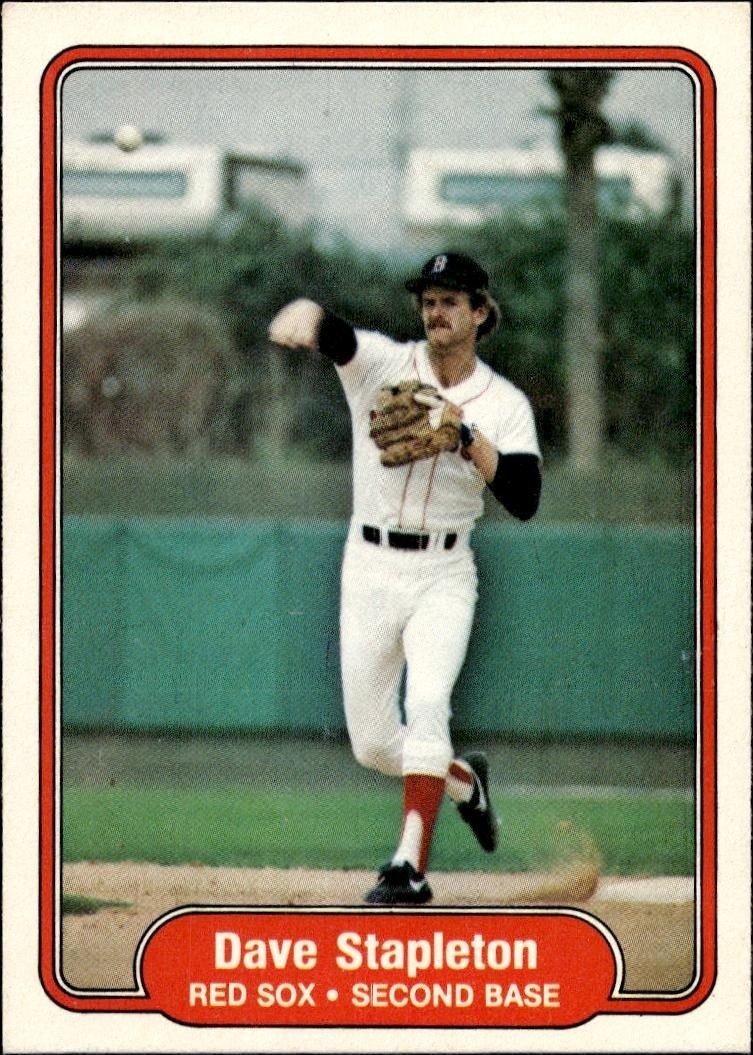
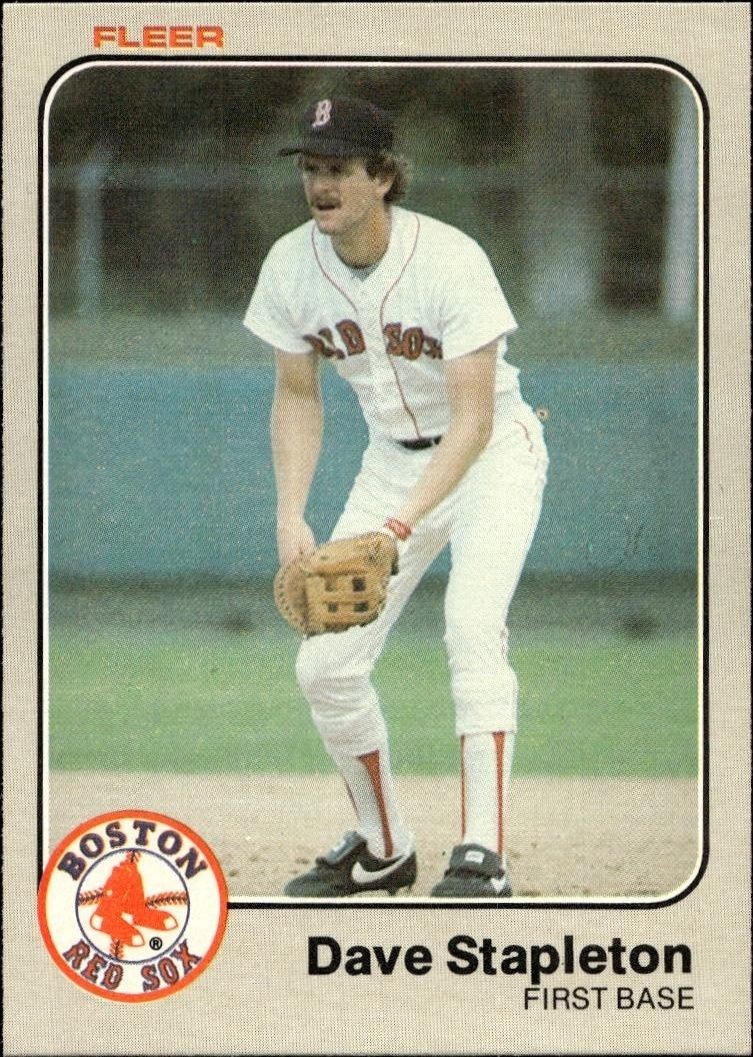
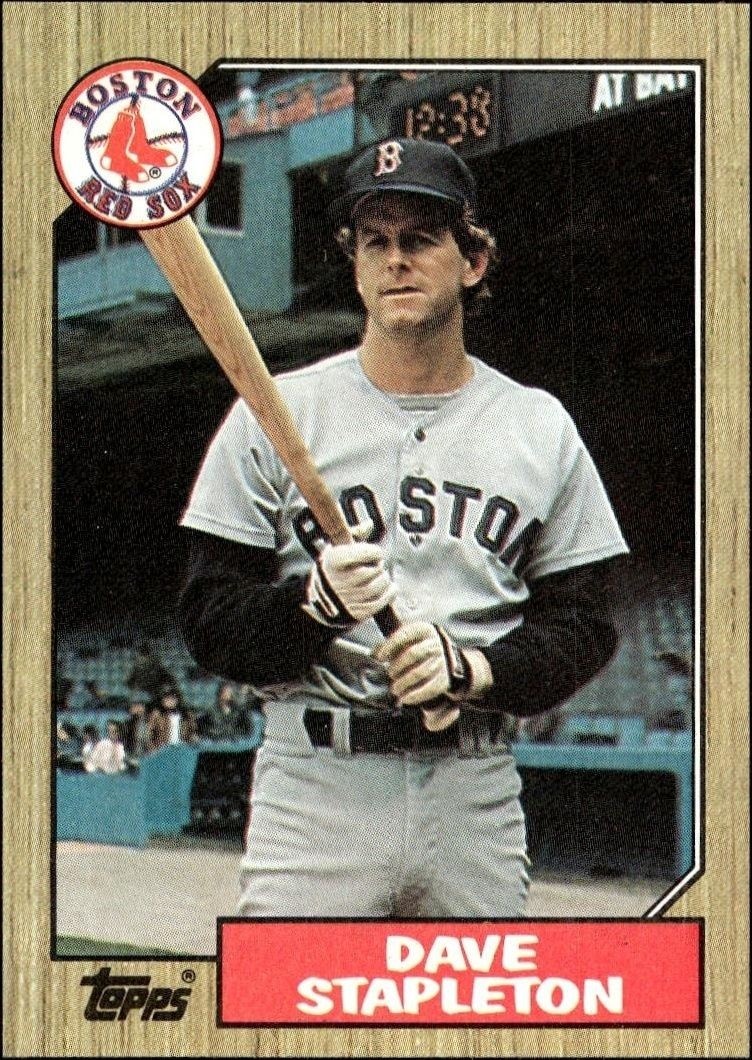
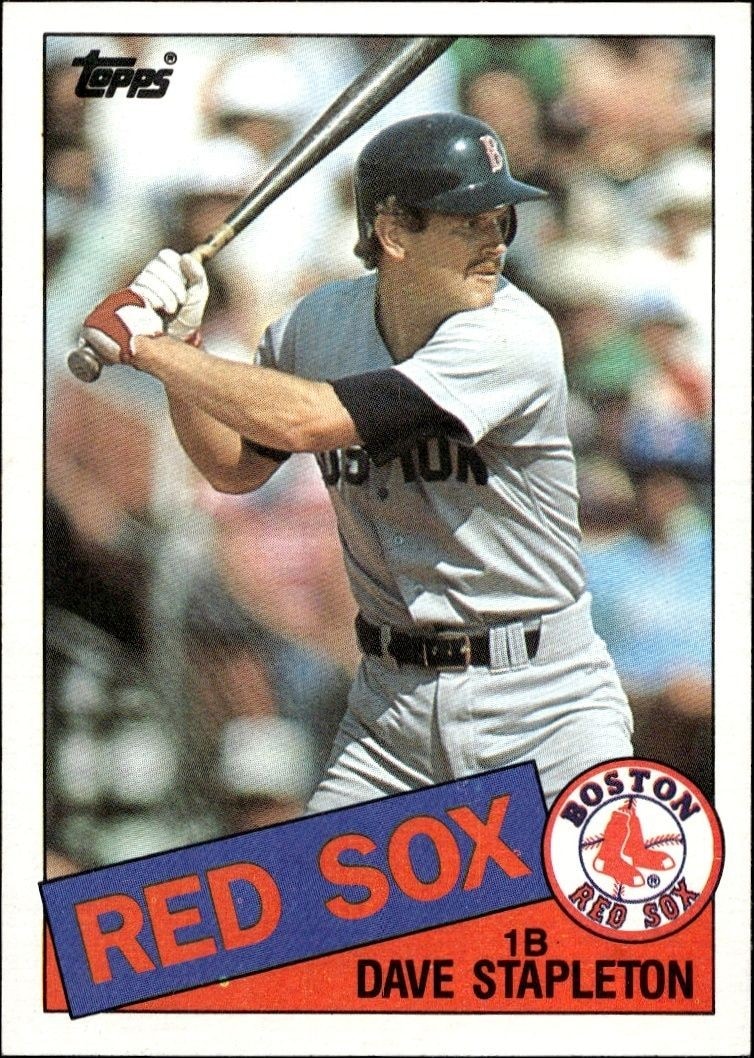
Acquire the 1982 Topps Dave Stapleton #589 sports trading card, featuring the Boston Red Sox player in this classic vintage release.
1982 • Topps
Major League Baseball • Boston Red Sox
Excellent
589
New
Shipping Calculated at Checkout
This seller is away until 10/19/2026 — orders are still accepted and ship after they return.30-day Returns| Condition | Value | Source | Trend | Price Details |
|---|---|---|---|---|
$1.24 | Guide Estimate | +0.8% | ||
$1.80 | Guide Estimate | 0% | ||
$11.07 | Guide Estimate | +0.1% | ||
$12.00 | Guide Estimate | 0% | ||
$168.00 | Guide Estimate | -13.8% | ||
$78.00 | Guide Estimate | -13.3% | ||
$129.25 | Guide Estimate | -13.8% | ||
$78.00 | Guide Estimate | -13.3% | ||
Raw / Ungraded
PriceCharting Price Guide · Guide Estimate evidence · captured Oct 11, 2026
The 1982 Topps Dave Stapleton #589 sports trading card captures a specific moment in baseball history, featuring the Boston Red Sox player during the 1982 season. This vintage card is part of the iconic Topps brand, known for its consistent design and widespread distribution among collectors. Dave Stapleton appears on card number 589, representing the Boston Red Sox roster. For collectors of vintage sports cards, this release offers a tangible connection to the early 1980s era of the game. The card's simple, clean layout is characteristic of Topps' design philosophy during this period, allowing the player's image and information to take center stage. Collecting vintage baseball cards from the 1980s has grown in popularity, with enthusiasts seeking to complete sets or acquire specific players like Dave Stapleton. The 1982 Topps set remains a foundational piece for many collections, offering a snapshot of the sport before the advent of modern design trends and specialty parallel cards. Whether you are building a team-specific collection of Boston Red Sox memorabilia or focusing on the broader Topps catalog, this card serves as a key component. Its status as a standard base card makes it accessible yet meaningful for hobbyists interested in the history of the sport. The enduring appeal of vintage trading cards lies in their ability to preserve player legacies and team dynamics from past seasons. By focusing on authentic releases like the 1982 Topps series, collectors can trust the provenance of their acquisitions. This Dave Stapleton card is a testament to the lasting interest in vintage baseball collectibles.
18 hours ago
We'll pre-fill the product details from this catalog entry, so your listing lands on this exact page. Just add photos of your copy, pick its condition, and set your price.
The catalog profile below summarizes the card identity, featured subject, and notable collectible traits.
The subject, team, league, and sport context tied to this card.
Production details and format-specific attributes.
Material
Card Stock
Language
English
Compare prices, grades, photos, and shipping from approved sellers.
New
Excellent
See how many public collections currently include this card.
0 collectors have this card
This 1982 Topps Dave Stapleton card occupies a niche price tier typical for reserve players from the early 1980s era, reflecting modest demand relative to star counterparts. The current market positioning suggests a baseline value for a standard issue card without condition premiums or special variations. Its affordability makes it accessible for collectors focusing on team history or set completion rather than high-end investment pieces.
The card lacks any special scarcity attributes such as serial numbering, short printing, or parallel processing, indicating it is a standard base card from the 1982 Topps set. This ubiquity means supply is relatively abundant compared to limited edition parallels or insert cards. Consequently, the item relies on general set availability rather than constrained distribution mechanics for its collectibility.
As a non-rookie, non-star card from a mass-produced set, the long-term appreciation potential is likely limited to modest gains driven by general vintage sports card market trends. Collector demand is primarily fueled by nostalgia for the 1982 Boston Red Sox or specific set completion needs rather than player stardom. It serves better as a portfolio filler for vintage collections than as a standalone high-growth asset.