




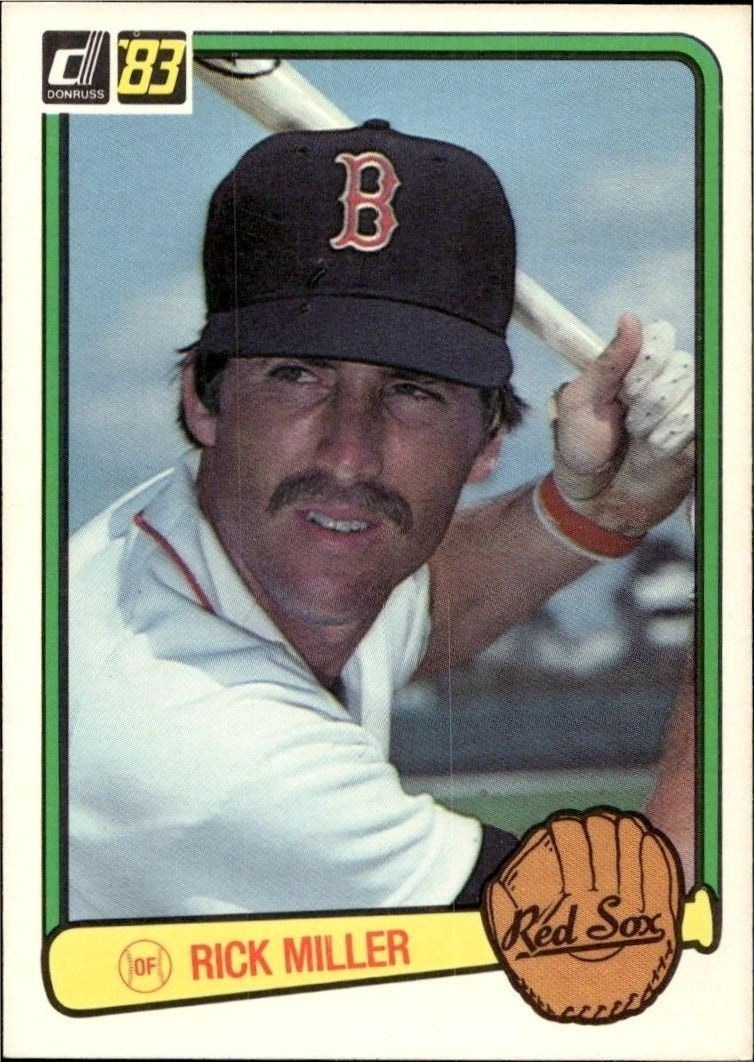

Explore the 1982 Topps Rick Miller #717 baseball card, a vintage collectible featuring the Boston Red Sox player. Essential for retro card enthusiasts.
1982 • Topps
Major League Baseball • Boston Red Sox
Excellent
717
New
Shipping Calculated at Checkout
This seller is away until 10/19/2026 — orders are still accepted and ship after they return.30-day Returns| Condition | Value | Source | Trend | Price Details |
|---|---|---|---|---|
$1.19 | Guide Estimate | |||
$0.99 | Guide Estimate | |||
$19.95 | Guide Estimate | |||
$22.00 | Guide Estimate | |||
$43.00 | Guide Estimate | |||
$20.00 | Guide Estimate | |||
$32.94 | Guide Estimate | |||
$20.00 | Guide Estimate | |||
Raw / Ungraded
PriceCharting Price Guide · Guide Estimate evidence · captured Oct 5, 2026
History is building. At least two days of matching observations are needed to show a trend.
Each point is the last stored observation that day for this printing, condition, grader, autograph status and source. Gaps mean no observation; guide estimates and asking prices are not completed sales.Rick Miller's #717 card from the 1982 Topps set represents a specific moment in vintage baseball history. Collectors often seek out this release to complete their 1982 Topps sets or to add a piece of Boston Red Sox history to their collections. As a standard base card, it serves as a foundational entry for those building comprehensive collections of 1980s baseball memorabilia. The 1982 Topps brand is renowned for its distinctive design and high-volume production, making it one of the most popular sets among retro card hobbyists. Rick Miller, featured here, provides a tangible connection to the era's on-field talent. For investors and long-term holders, vintage sports cards like this one offer a unique way to preserve the legacy of the game through physical media. Whether you are a dedicated set builder or a casual fan of Boston Red Sox history, the 1982 Topps Rick Miller #717 card offers significant collector appeal. It stands as a recognizable item within the broader context of 1980s trading card culture. The card's enduring popularity stems from its place in a widely collected series, ensuring that it remains a relevant and sought-after item for anyone interested in the history of baseball cards. Adding this piece to your portfolio allows you to own a tangible piece of sports history without the need for modern high-priced rookie cards. It is a versatile addition for any display case.
13 hours ago
We'll pre-fill the product details from this catalog entry, so your listing lands on this exact page. Just add photos of your copy, pick its condition, and set your price.
The catalog profile below summarizes the card identity, featured subject, and notable collectible traits.
The subject, team, league, and sport context tied to this card.
Production details and format-specific attributes.
Material
Card Stock
Language
English
Compare prices, grades, photos, and shipping from approved sellers.
New
Excellent
See how many public collections currently include this card.
0 collectors have this card
This 1982 Topps Rick Miller card represents an accessible entry point into Boston Red Sox memorabilia, trading at a modest value tier relative to star players of the era. As a base card with no noted special attributes, it aligns with the lower end of the market spectrum for vintage baseball issues. Its pricing reflects its status as a common parallel within a highly saturated product line from the early 1980s.
The card lacks any scarcity mechanics such as serial numbering, short-print designation, or parallel variants, indicating it is a standard base insert. This absence of limited edition features means the supply is determined solely by the original print run, which was likely substantial for a mass-market brand like Topps. Consequently, the card does not possess the intrinsic scarcity drivers that typically elevate value in vintage collections.
While the card holds nostalgic value for Red Sox fans and collectors of 1980s vintage issues, its lack of rookie status or special attributes limits its potential for significant appreciation. Demand is likely driven by specific team completists rather than broad market speculation. Investors should view this as a low-risk, low-reward acquisition suitable for filling gaps in a set rather than as a standalone growth asset.