


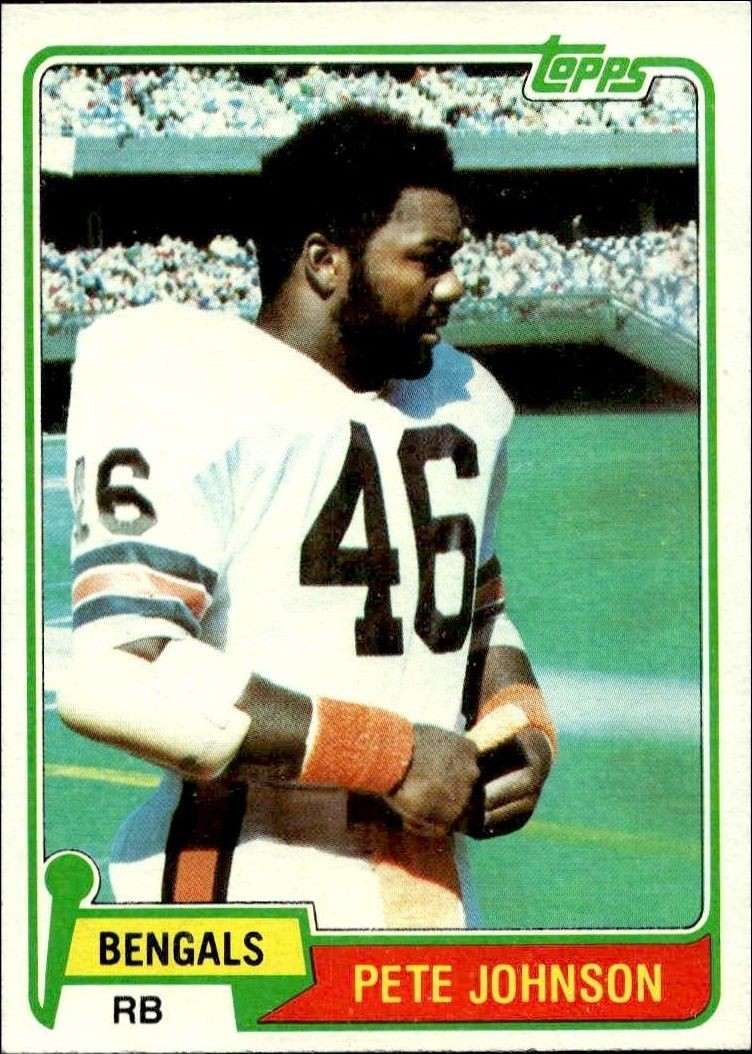
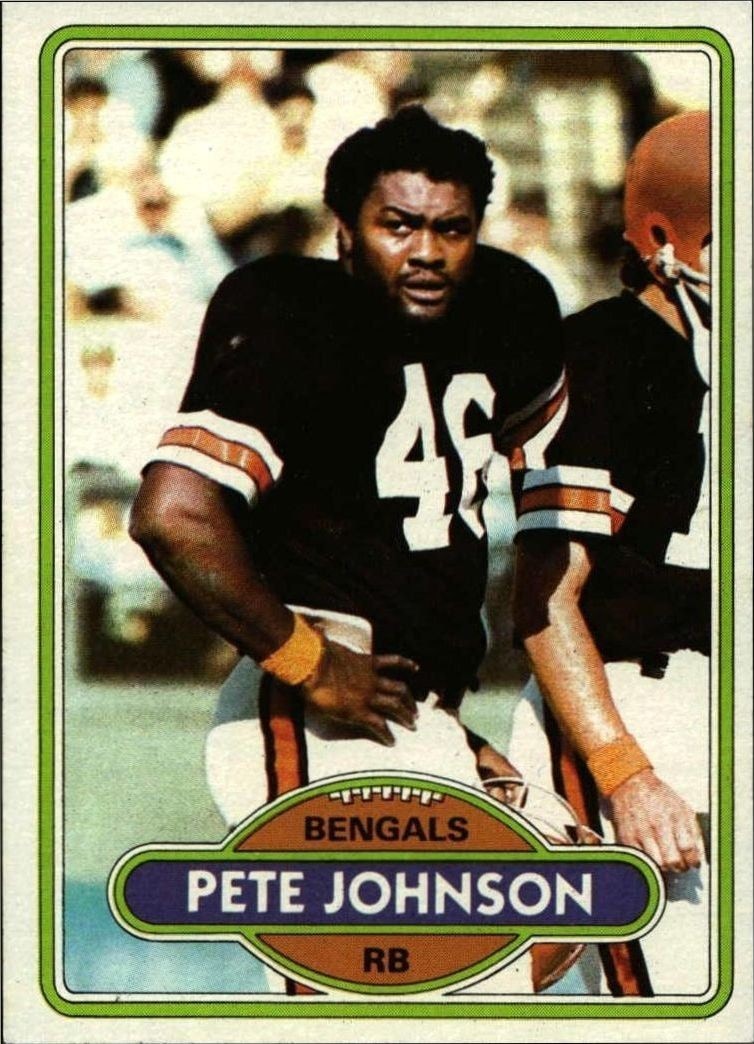
The 1983 Topps Pete Johnson #230 football card features the Cincinnati Bengals running back in the iconic 1983 Topps base set.
1983 • Topps
National Football League • Cincinnati Bengals
Excellent
230
New
Shipping Calculated at Checkout
Arrives in 5-7 daysEstimated delivery October 23, 2026 - October 25, 2026
Seller returns October 19, 2026.30-day Returns| Condition | Value | Source | Trend | Price Details |
|---|---|---|---|---|
$1.60 | Asking Prices | +6.7% | ||
$29.99As of 9/23/2026 | Guide Estimate | 0% | ||
$33.00As of 9/23/2026 | Guide Estimate | 0% | ||
$81.00As of 9/23/2026 | Guide Estimate | 0% | ||
$37.00As of 9/23/2026 | Guide Estimate | 0% | ||
$62.12As of 9/23/2026 | Guide Estimate | 0% | ||
$37.00As of 9/23/2026 | Guide Estimate | 0% | ||
Raw / Ungraded
eBay Active Listings · Asking Prices evidence · captured Oct 17, 2026
Pete Johnson #230 from the 1983 Topps football set captures the running back during his tenure with the Cincinnati Bengals. Released in 1983, this card is part of the expansive base set that remains a cornerstone for NFL collectors seeking to build complete collections from the early 1980s. For investors and set builders, the 1983 Topps Pete Johnson #230 offers a tangible connection to the era of classic NFL design. Collectors often prioritize cards from this year to fill gaps in their chronological arrays, as the 1983 Topps set provides a snapshot of the league during a pivotal period for many franchises. Johnson’s presence on the Bengals roster during this time adds historical context to the card, appealing to fans of the team and the player alike. The product’s enduring appeal lies in its status as a standard issue from a major manufacturer. Unlike limited parallels or autographed variants, this base card represents the core identity of the 1983 Topps release. It serves as an essential component for those assembling full sets, where the uniformity of the design across hundreds of cards creates a cohesive display. Whether viewed as a nostalgic piece of sports history or a strategic addition to a portfolio of vintage cards, the Pete Johnson #230 holds its place in the hobby. Its straightforward design and association with the 1983 Topps brand make it a reliable choice for collectors who value authenticity and set completeness over specialized treatments. As the market for vintage sports cards continues to evolve, base cards from the 1980s remain a fundamental asset for dedicated collectors.
14 hours ago
We'll pre-fill the product details from this catalog entry, so your listing lands on this exact page. Just add photos of your copy, pick its condition, and set your price.
The catalog profile below summarizes the card identity, featured subject, and notable collectible traits.
The subject, team, league, and sport context tied to this card.
Production details and format-specific attributes.
Material
Card Stock
Language
English
Compare prices, grades, photos, and shipping from approved sellers.
New
Excellent
See how many public collections currently include this card.
0 collectors have this card
This 1983 Topps Pete Johnson card represents a base-level entry point for Cincinnati Bengals collectors, trading at a value consistent with common vintage football staples that lack special parallel or serial numbering attributes. Its pricing reflects the standard condition depreciation typical of mass-produced issues from this era, positioning it well below premium autographed or short-printed counterparts in the same set. While the card holds historical significance as a period piece of the Bengals' roster, it does not command a collector premium due to its ubiquitous nature and lack of rarity markers.
The card possesses no special scarcity attributes, meaning it is a standard base issue with no serial numbering, short-print designation, or parallel variation to constrain supply. As a mass-produced item from 1983, the available population is likely high, resulting in a competitive market where supply generally meets or exceeds collector demand. This lack of distinguishing features ensures it remains an accessible entry-level piece rather than a scarce find for serious vintage portfolios.
As a non-rookie, base card from the early 1980s, this item lacks the rookie-card premium mechanics that typically drive significant appreciation in football collectibles. Collector demand is primarily driven by nostalgia and team-specific needs rather than scarcity, limiting its potential for substantial financial growth. Investors should view this as a stable, low-cost addition for completing base sets rather than a high-yield asset, with value stability tied to the general health of the vintage football market segment.