



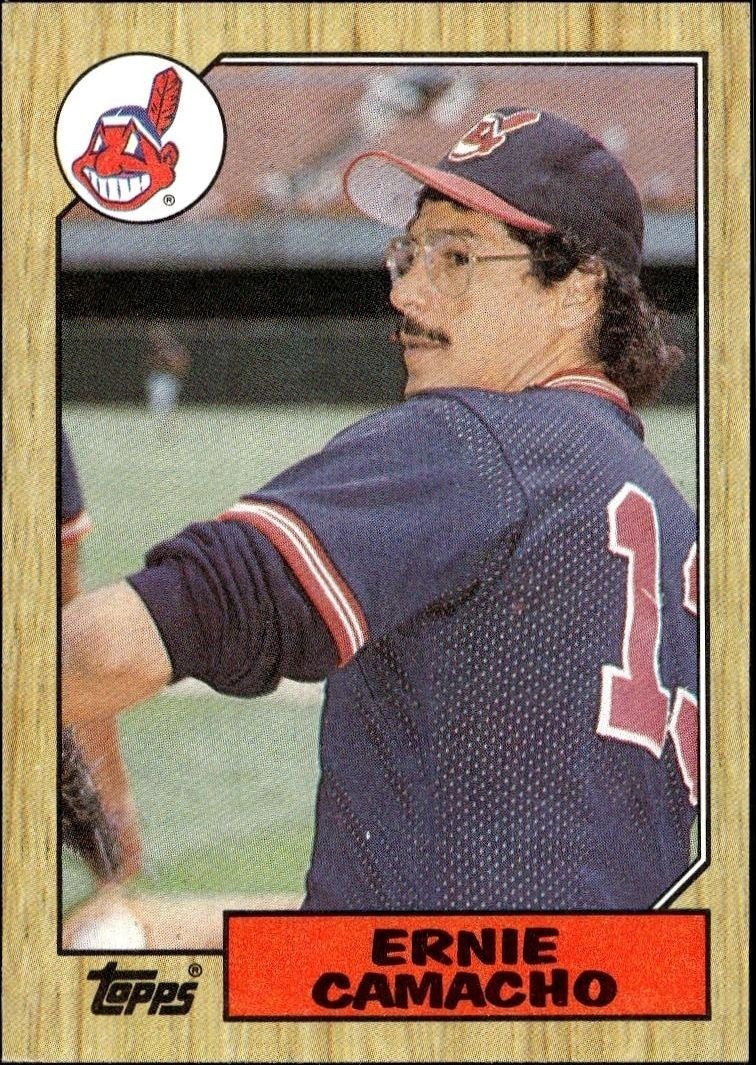
The 1985 Topps Ernie Camacho #739 baseball card represents a classic entry from the Cleveland Indians' roster during the mid-80s MLB season.
1985 • Topps
Major League Baseball • Cleveland Indians
Excellent
739
New
Shipping Calculated at Checkout
Arrives in 5-7 daysEstimated delivery October 29, 2026 - October 31, 2026
30-day Returns| Condition | Value | Source | Trend | Price Details |
|---|---|---|---|---|
$1.69 | Guide Estimate | 0% | ||
$4.99 | Guide Estimate | 0% | ||
$37.89 | Guide Estimate | -0.1% | ||
$42.00 | Guide Estimate | 0% | ||
$130.00 | Guide Estimate | 0% | ||
$40.00 | Guide Estimate | -33.3% | ||
$100.00 | Guide Estimate | 0% | ||
$60.00 | Guide Estimate | 0% | ||
Raw / Ungraded
PriceCharting Price Guide · Guide Estimate evidence · captured Oct 23, 2026
The 1985 Topps Ernie Camacho #739 baseball card serves as a tangible piece of Cleveland Indians history, capturing the roster during a pivotal era of Major League Baseball. As part of the massive 1985 Topps set, this card features the standard design language that defined the brand's visual identity in the mid-1980s, characterized by its clean layout and prominent player photography. For collectors of vintage sports cards, this card number offers a direct connection to the team's lineup during a time of transition. Ernie Camacho, a versatile infielder, is depicted here in his Indians uniform, making this card a essential component for those building comprehensive sets of Cleveland Indians memorabilia or focusing on the broader 1985 Topps collection. The 1985 Topps series remains one of the most widely collected baseball card releases of the decade, known for its accessibility and the sheer volume of cards produced. Collectors often seek out individual cards like #739 to fill gaps in their sets, whether they are assembling complete base sets or focusing on specific team subsets. The card's straightforward design allows the player's image to take center stage, appealing to those who appreciate the classic aesthetic of 1980s trading card production. Whether you are a seasoned investor in vintage baseball cards or a casual hobbyist starting a new collection, the 1985 Topps Ernie Camacho #739 provides a solid addition to any library. It represents the tangible history of the sport, allowing fans to hold a piece of the game from nearly four decades ago. For those interested in the evolution of baseball card design, this release stands as a prime example of the era's manufacturing standards and artistic choices.
3 days ago
We'll pre-fill the product details from this catalog entry, so your listing lands on this exact page. Just add photos of your copy, pick its condition, and set your price.
The catalog profile below summarizes the card identity, featured subject, and notable collectible traits.
The subject, team, league, and sport context tied to this card.
Production details and format-specific attributes.
Material
Card Stock
Language
English
Compare prices, grades, photos, and shipping from approved sellers.
New
Excellent
See how many public collections currently include this card.
0 collectors have this card
This 1985 Topps Ernie Camacho card sits in the entry-level tier for Cleveland Indians collectors, reflecting its status as a standard base card rather than a premium insert. While it lacks the high-demand rookie or star status that commands significant premiums, it remains accessible for those building specific team or era-focused collections. The current pricing indicates a stable, low-volatility asset typical of non-star players from this vintage set.
As a standard base card from the 1985 Topps set, this item carries no serial numbering, short-print designation, or special parallel attributes that would artificially constrain supply. The scarcity is driven purely by age and the natural attrition of high-volume production runs from the mid-1980s, meaning condition becomes the primary differentiator for value rather than print-run limits. Without special subset markings, it represents the most common variant of this player in this product.
Investment potential is limited by the absence of rookie card status or high-profile career milestones that typically drive sustained collector demand for vintage baseball cards. While it holds nostalgic value for fans of the 1985 Indians, the lack of special attributes suggests it will likely trade in line with general vintage baseball market trends rather than outperforming them. Collectors should view this as a affordable completion piece rather than a high-growth asset.