




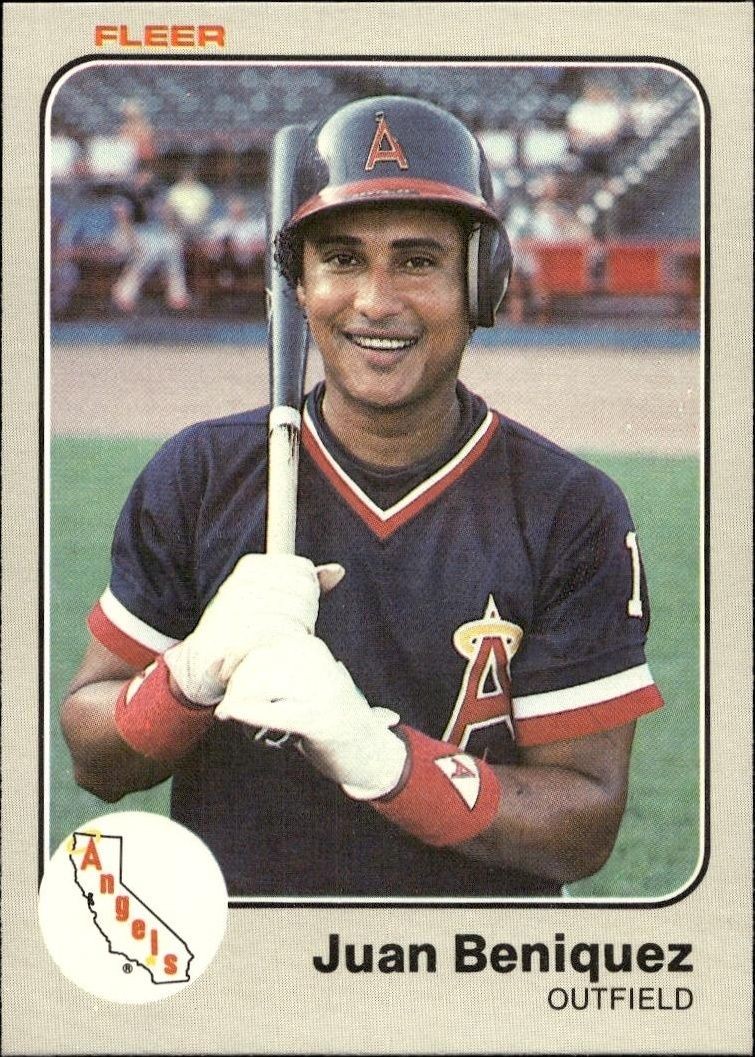

The 1985 Topps #226 features Juan Beniquez of the Los Angeles Angels. This vintage sports trading card is a key component for collectors completing the 1985 set.
1985 • Topps
Major League Baseball • Los Angeles Angels
Excellent
226
New
Shipping Calculated at Checkout
Arrives in 5-7 daysEstimated delivery October 23, 2026 - October 25, 2026
Seller returns October 19, 2026.30-day Returns| Condition | Value | Source | Trend | Price Details |
|---|---|---|---|---|
$1.29 | Guide Estimate | 0% | ||
$51.00 | Guide Estimate | 0% | ||
$24.00 | Guide Estimate | 0% | ||
$39.43 | Guide Estimate | -0.1% | ||
$24.00 | Guide Estimate | 0% | ||
Raw / Ungraded
PriceCharting Price Guide · Guide Estimate evidence · captured Oct 11, 2026
The 1985 Topps #226 baseball card features Juan Beniquez during his tenure with the Los Angeles Angels. Released by Topps, this vintage sports trading card represents a specific era in baseball history, offering collectors a tangible connection to the league's past. For enthusiasts of the 1985 set, this card serves as an essential piece for completing a full collection, providing a complete record of the players who appeared on the field that season. Collecting vintage sports cards from the mid-1980s has grown significantly in popularity, with many hobbyists focusing on specific teams or seasons. The Los Angeles Angels' roster from this period offers a unique glimpse into the franchise's development, making cards like #226 particularly interesting for team-specific collectors. As a standard issue from the 1985 Topps base set, this card reflects the design and production standards of its time, appealing to those who appreciate the aesthetic and historical context of that era. Whether you are building a comprehensive collection of 1985 Topps baseball cards or focusing on the history of the Los Angeles Angels, this card is a valuable addition. The catalog identity is defined by the year 1985, the Topps brand, and the specific card number 226. Collectors often seek these cards to fill gaps in their binders or to highlight a player's career progression. For those interested in the broader landscape of baseball trading cards, the 1985 Topps set remains a foundational release that continues to attract attention from both new and experienced collectors. Understanding the context of this release helps appreciate its place in the hobby. The interaction between the player, the team, and the manufacturer creates a unique artifact that transcends simple sports memorabilia. By acquiring the 1985 Topps #226, collectors secure a piece of the 1985 baseball landscape, preserving the memory of Juan Beniquez and the Los Angeles Angels for future generations of hobbyists.
13 hours ago
We'll pre-fill the product details from this catalog entry, so your listing lands on this exact page. Just add photos of your copy, pick its condition, and set your price.
The catalog profile below summarizes the card identity, featured subject, and notable collectible traits.
The subject, team, league, and sport context tied to this card.
Production details and format-specific attributes.
Material
Card Stock
Language
English
Compare prices, grades, photos, and shipping from approved sellers.
New
Excellent
See how many public collections currently include this card.
0 collectors have this card
As a 1985 Topps card, this item represents a baseline entry point for the Los Angeles Angels franchise from the mid-80s era. Without any special parallel or insert status, it trades at a lower tier compared to rookie cards or autographed variations of Beniquez. The current listing activity suggests a stable but modest demand typical for standard base cards of players with limited long-term star power.
This card is identified as a standard base issue with no noted special attributes such as serial numbering, short printing, or parallel finishes. Consequently, it lacks the artificial supply constraints that drive scarcity premiums in modern or vintage collectibles. The supply is determined solely by the original print run of the 1985 Topps baseball set, making it widely available relative to key inserts.
Investment potential is limited by the lack of rookie card designation and the absence of unique identifying features that typically attract serious vintage investors. Demand is likely driven by casual collectors seeking affordable team-specific or era-specific fillers rather than speculative growth. Long-term value appreciation is unlikely without external catalysts such as a significant rise in the player's historical profile.