



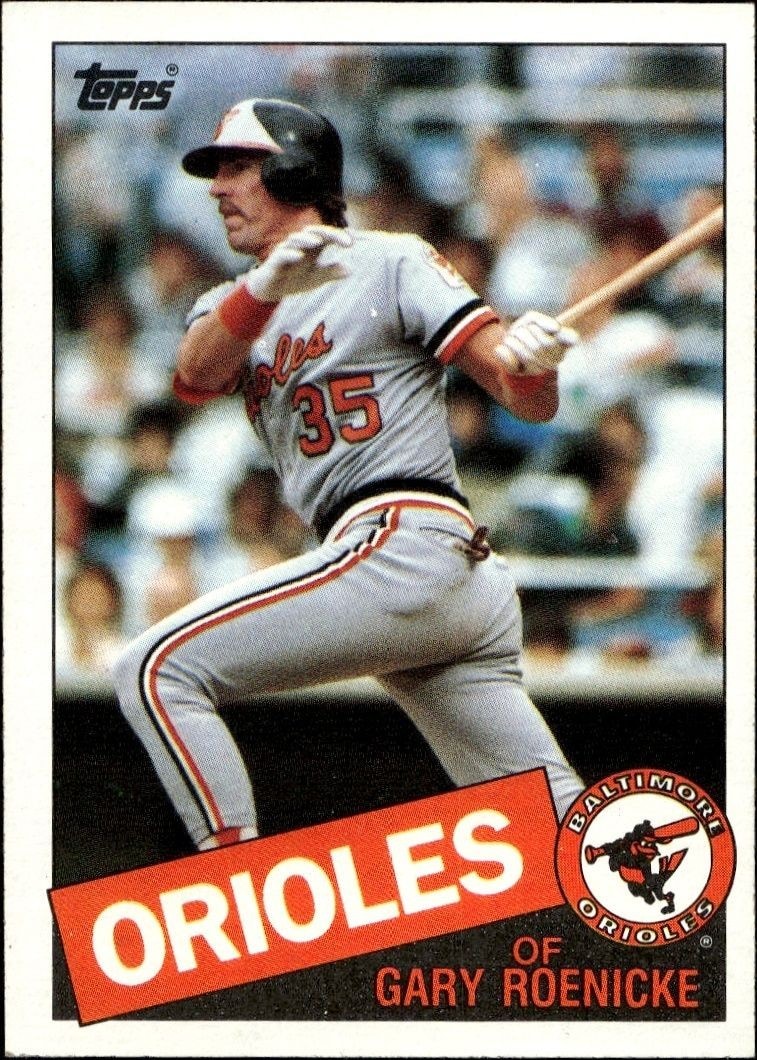



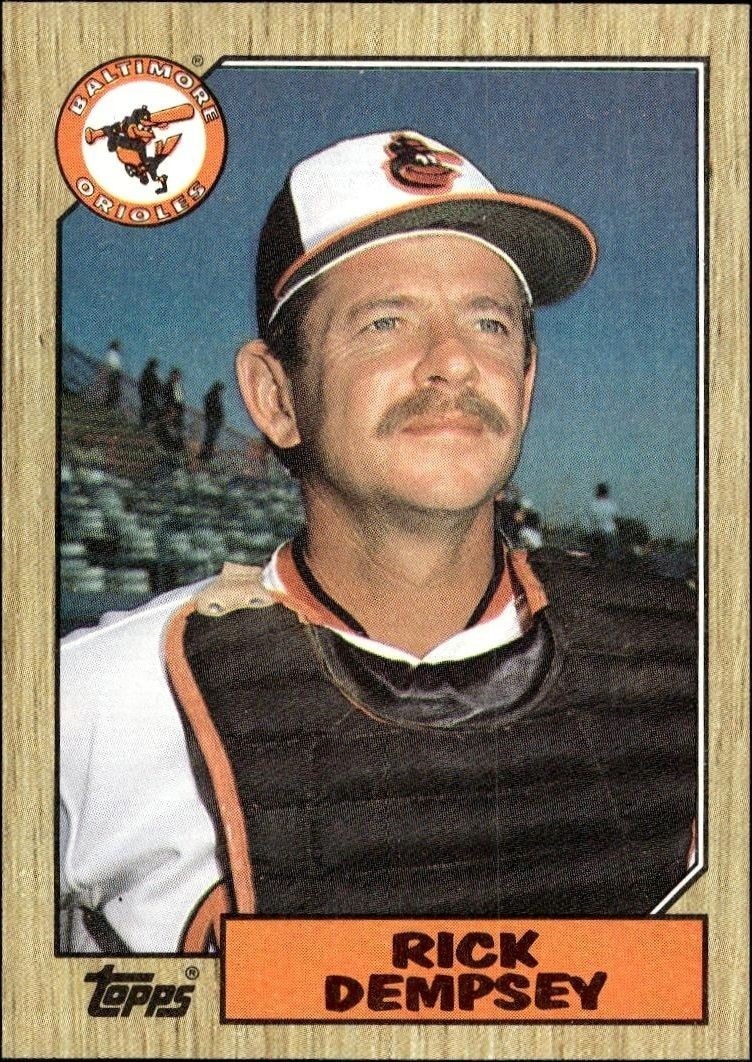

Explore the 1985 Topps #521 Rick Dempsey baseball card, a staple of 1980s MLB collecting. This catalog entry represents a key piece of Baltimore Orioles history for enthusiasts of the era.
1985 • Topps
Major League Baseball • Baltimore Orioles
Excellent
521
New
Shipping Calculated at Checkout
Arrives in 5-7 daysEstimated delivery October 23, 2026 - October 25, 2026
Seller returns October 19, 2026.30-day Returns| Condition | Value | Source | Trend | Price Details |
|---|---|---|---|---|
$1.49 | Guide Estimate | +1.4% | ||
$11.14 | Guide Estimate | +0.9% | ||
$12.00 | Guide Estimate | 0% | ||
$44.66 | Guide Estimate | +0.9% | ||
$62.00 | Guide Estimate | 0% | ||
$29.00 | Guide Estimate | 0% | ||
$47.82 | Guide Estimate | 0% | ||
$29.00 | Guide Estimate | 0% | ||
Raw / Ungraded
PriceCharting Price Guide · Guide Estimate evidence · captured Oct 16, 2026
The 1985 Topps #521 Rick Dempsey baseball card captures a specific moment in the history of the Baltimore Orioles franchise. As a numbered entry in the series, card 521 serves as a tangible connection to the team's roster and the broader landscape of 1980s baseball. For collectors focusing on the Baltimore Orioles or the 1985 season, this card offers a direct link to the past. The 1985 Topps release remains one of the most recognized brands in sports card history, making cards from this year particularly relevant for those building era-specific collections. Rick Dempsey's presence on this card highlights his role with the Orioles, providing context for fans and historians alike. Whether you are completing a full set of 1985 Topps issues or focusing on specific team subsets, this card is an essential component. The marketplace caters to collectors who value the authenticity and provenance of their acquisitions. By focusing on the catalog details, such as the year, brand, and player, collectors can ensure they are acquiring the correct item for their collection. The 1985 Topps Rick Dempsey card is not just a piece of cardboard; it is a piece of sports history that continues to hold interest for those who appreciate the game's heritage. Collecting this card allows enthusiasts to own a piece of the 1985 season, preserving the memory of the Baltimore Orioles and the players who wore their uniform. For investors and hobbyists, the 1985 Topps set remains a cornerstone of the hobby, and cards like #521 are vital building blocks for comprehensive collections.
12 hours ago
We'll pre-fill the product details from this catalog entry, so your listing lands on this exact page. Just add photos of your copy, pick its condition, and set your price.
The catalog profile below summarizes the card identity, featured subject, and notable collectible traits.
The subject, team, league, and sport context tied to this card.
Production details and format-specific attributes.
Material
Card Stock
Language
English
Compare prices, grades, photos, and shipping from approved sellers.
New
Excellent
See how many public collections currently include this card.
0 collectors have this card
This 1985 Topps card sits in an accessible entry-level price tier, reflecting its status as a common base card from a high-volume production year. While Rick Dempsey holds nostalgic significance as a key figure on the championship-caliber Baltimore Orioles, the lack of special attributes prevents this specific issue from commanding a premium over its set counterparts. It trades at a modest valuation relative to rare parallels or graded examples, serving primarily as an affordable acquisition for collectors building foundational sets.
The card carries no inherent scarcity modifiers, as it is identified as a standard base issue without serial numbering, short-print status, or parallel variations. This implies that the supply is determined entirely by the original print run, which was substantial for a major brand like Topps in the mid-1980s. Consequently, the card relies on general collectibility rather than constrained availability to drive its value proposition.
As a non-rookie, non-premium card, the long-term appreciation potential is limited by the abundance of ungraded copies still circulating in the market. Demand is likely driven by set completionists seeking to fill specific gaps in their 1985 Topps collections rather than speculative investors. Collectors should view this as a low-risk addition for portfolio diversification rather than a high-growth asset.
