




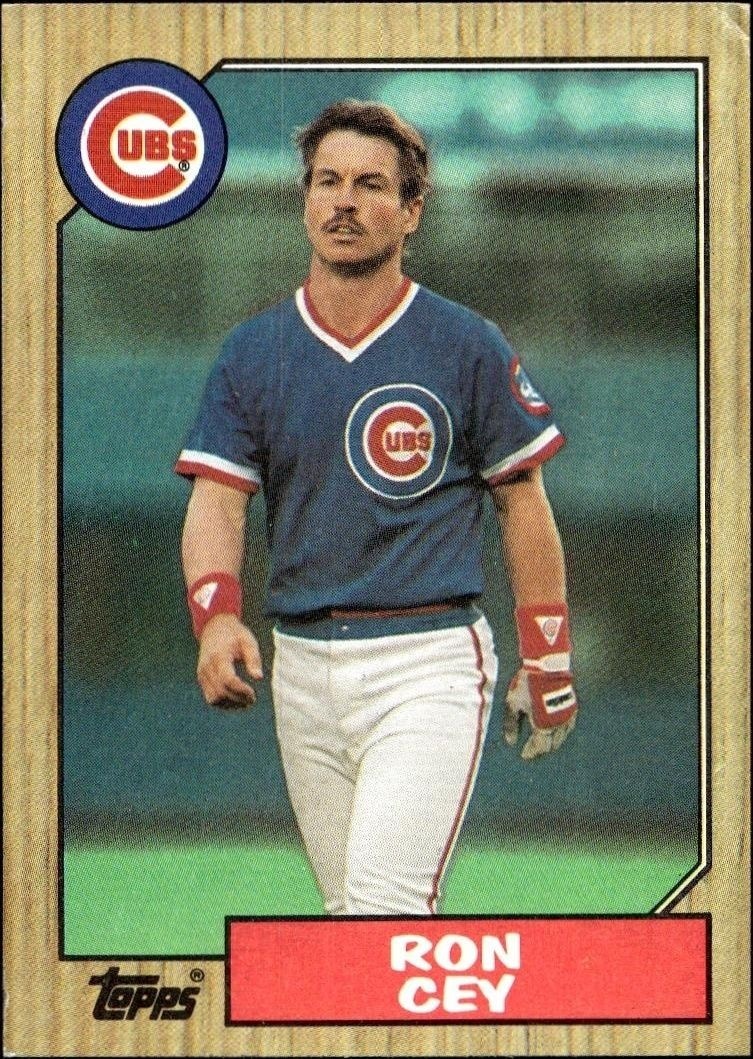

The 1985 Topps Ron Cey #768 features the Chicago Cubs player in a definitive vintage baseball card release from the mid-1980s.
1985 • Topps
Major League Baseball • Chicago Cubs
Excellent
768
New
Shipping Calculated at Checkout
This seller is away until 10/19/2026 — orders are still accepted and ship after they return.30-day Returns| Condition | Value | Source | Trend | Price Details |
|---|---|---|---|---|
$1.44 | Guide Estimate | +2.9% | ||
$1.40As of 9/22/2026 | Completed Sales | |||
$9.00 | Guide Estimate | 0% | ||
$10.81 | Guide Estimate | +0.2% | ||
$19.99 | Guide Estimate | 0% | ||
$34.00 | Guide Estimate | 0% | ||
$45.00 | Guide Estimate | 0% | ||
$21.00 | Guide Estimate | 0% | ||
$34.74 | Guide Estimate | 0% | ||
$21.00 | Guide Estimate | 0% | ||
Raw / Ungraded
PriceCharting Price Guide · Guide Estimate evidence · captured Oct 16, 2026
The 1985 Topps Ron Cey #768 stands as a recognizable entry in vintage baseball card collecting, capturing the player during his tenure with the Chicago Cubs. As part of the massive 1985 Topps set, this card represents a specific era in sports card history where mass production created a wide array of collectibles for fans and investors alike. Collectors often seek out cards from this year to complete base set runs or to build specialized collections focused on 1980s MLB talent. Ron Cey's appearance on card number 768 offers a straightforward look at the athlete in the context of the team's roster for that season. The 1985 Topps brand is renowned for its distinct design elements, including the white border and bold typography that defined the visual identity of baseball cards throughout the decade. For those building a library of vintage sports cards, this product provides a tangible connection to the mid-80s baseball landscape. Whether you are a dedicated fan of the Chicago Cubs or a generalist collector of 1985 Topps issues, this card serves as a foundational piece for many collections. The appeal of 1985 Topps Ron Cey #768 lies in its accessibility and its role as a standard reference point for that year's set. This product remains a staple for enthusiasts who value the nostalgia and design consistency of the 1985 release.
22 hours ago
We'll pre-fill the product details from this catalog entry, so your listing lands on this exact page. Just add photos of your copy, pick its condition, and set your price.
The catalog profile below summarizes the card identity, featured subject, and notable collectible traits.
The subject, team, league, and sport context tied to this card.
Production details and format-specific attributes.
Material
Card Stock
Language
English
Compare prices, grades, photos, and shipping from approved sellers.
New
Excellent
See how many public collections currently include this card.
0 collectors have this card
This 1985 Topps Ron Cey card trades at a modest price tier, reflecting its status as a standard issue from a highly populated set rather than a premium artifact. While Cey is a respected figure in baseball history, the lack of special attributes keeps this specific sheet among the more accessible entries for collectors seeking affordable inventory. Its current valuation suggests it is priced in line with common base cards from this era, offering low barrier-to-entry for casual accumulation.
As a standard base card with no noted special attributes, this item carries no serial numbering, short-print status, or parallel variations to constrain its supply. It exists within the highest volume tier of the 1985 Topps production run, meaning availability remains abundant in the secondary market. Consequently, it lacks the scarcity mechanics that typically drive premium valuation or competitive bidding among serious investors.
The card serves primarily as a foundational piece for 1980s or Chicago Cubs-themed collections rather than a high-growth investment vehicle. Demand is likely driven by nostalgic appeal and the need to complete base set runs, providing stable but limited upside potential. Without rookie card status or unique scarcity features, significant appreciation is unlikely, making it a suitable holding for diversification rather than capital growth.