





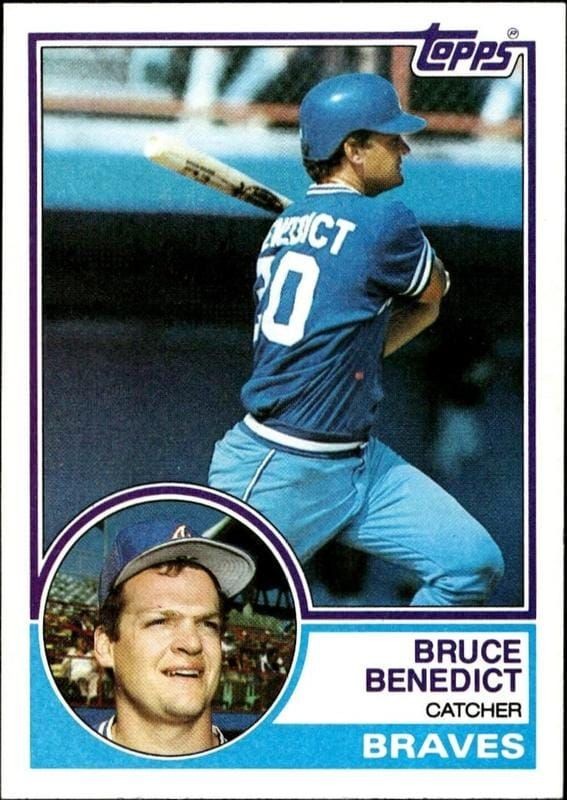


This catalog entry details the 1989 Fleer Bruce Benedict #587 baseball card, featuring the Atlanta Braves infielder from Fleer's historic debut set.
1989 • Fleer
Major League Baseball • Atlanta Braves
Excellent
587
New
Shipping Calculated at Checkout
Arrives in 5-7 daysEstimated delivery October 23, 2026 - October 25, 2026
Seller returns October 19, 2026.30-day Returns| Condition | Value | Source | Trend | Price Details |
|---|---|---|---|---|
$1.19 | Guide Estimate | |||
Raw / Ungraded
PriceCharting Price Guide · Guide Estimate evidence · captured Oct 16, 2026
History is building. At least two days of matching observations are needed to show a trend.
Each point is the last stored observation that day for this printing, condition, grader, autograph status and source. Gaps mean no observation; guide estimates and asking prices are not completed sales.The 1989 Fleer Bruce Benedict #587 card marks a significant moment in baseball card history as part of Fleer's first major return to the hobby. Bruce Benedict, a utility infielder for the Atlanta Braves during this period, appears on card number 587. His inclusion in this base set reflects his role within the team's roster at the time. The card serves as a tangible piece of late-1980s MLB history, capturing the visual style and printing techniques characteristic of Fleer's reintroduction. Collectors often seek out this card number to complete their 1989 Fleer base set collections. Understanding the context of Fleer's 1989 release helps appreciate the historical value of cards like this one. Whether for historical research or set completion, this product represents a foundational era in modern sports card collecting. ## What is the significance of the 1989 Fleer baseball set? The 1989 Fleer set is historically significant because it marked Fleer's return to the mainstream sports trading card market after a long hiatus. ## Who is Bruce Benedict and what was his role with the Braves? Bruce Benedict was a utility infielder who played for the Atlanta Braves during the late 1980s. His appearance on the 1989 Fleer card documents his tenure with the team during that specific season. ## How does the 1989 Fleer set compare to other 1989 releases? The 1989 Fleer set is often compared to Topps and Donruss for its different approach to player photography and border styling. It provides collectors with a diverse range of visual options for building a comprehensive collection of that year's baseball cards.
11 hours ago
We'll pre-fill the product details from this catalog entry, so your listing lands on this exact page. Just add photos of your copy, pick its condition, and set your price.
The catalog profile below summarizes the card identity, featured subject, and notable collectible traits.
The subject, team, league, and sport context tied to this card.
Production details and format-specific attributes.
Material
Card Stock
Language
English
Compare prices, grades, photos, and shipping from approved sellers.
New
Excellent
See how many public collections currently include this card.
0 collectors have this card
This 1989 Fleer Bruce Benedict card represents a foundational entry in the brand's early baseball offerings, currently trading at a modest tier relative to high-profile rookie cards of the era. Its value is anchored by its status as a standard base card, lacking the premium drivers often associated with graded examples or special inserts. The current listing activity suggests a stable but low-volume market typical for role players from this specific vintage set.
The card possesses no special scarcity attributes such as serial numbering, short-print status, or parallel variations, placing it firmly within the common base tier of the 1989 Fleer set. As a standard unaltered issue, its supply is effectively unlimited relative to the total print run, meaning scarcity is not a value driver here. The absence of unique identifiers or limited edition markers distinguishes it from the more sought-after subsets within the same product line.
As a non-rookie card for a player who did not achieve Hall of Fame status or widespread stardom, the long-term appreciation potential is limited by the fundamental supply and demand dynamics of role player cards. Collector interest is likely driven by completionists seeking specific team or set fills rather than speculative growth. The card serves best as a low-cost component for building a complete set rather than as a standalone investment vehicle.
