


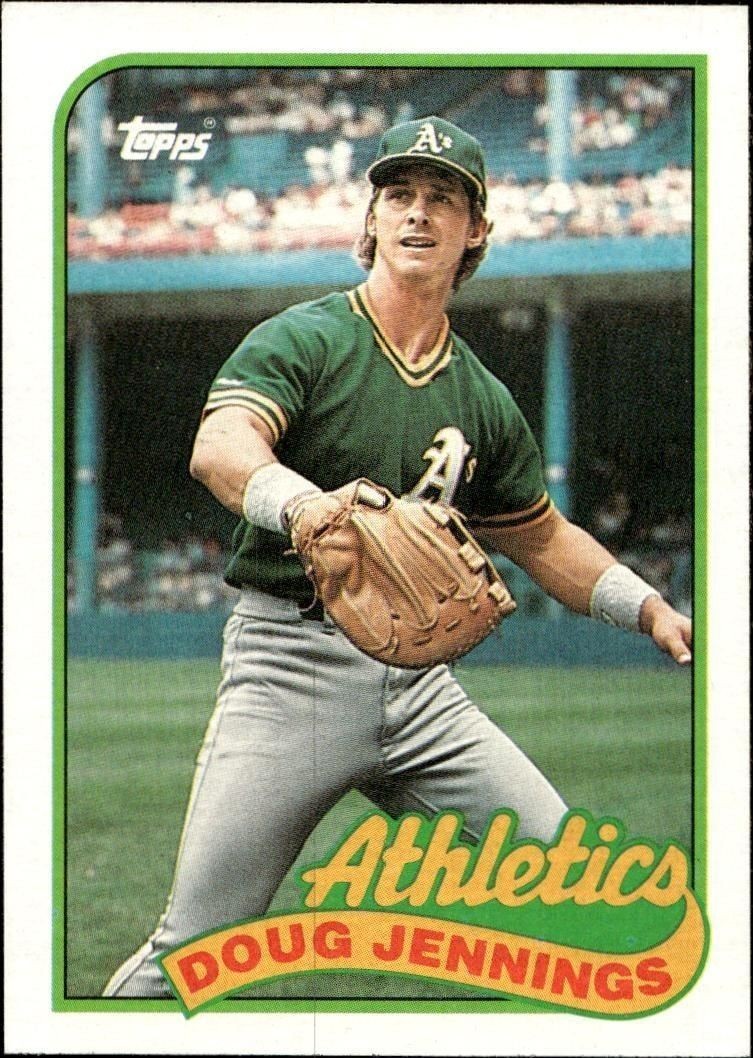
The 1989 Fleer Doug Jennings #14 baseball card features the Oakland Athletics player from a pivotal era in franchise history.
1989 • Fleer
Major League Baseball • Oakland Athletics
Excellent
14
New
Shipping Calculated at Checkout
Arrives in 5-7 daysEstimated delivery October 23, 2026 - October 25, 2026
Seller returns October 19, 2026.30-day Returns| Condition | Value | Source | Trend | Price Details |
|---|---|---|---|---|
$1.69As of 9/25/2026 | Guide Estimate | |||
$104.00As of 9/25/2026 | Guide Estimate | |||
$48.00As of 9/25/2026 | Guide Estimate | |||
$79.99As of 9/25/2026 | Guide Estimate | |||
$48.00As of 9/25/2026 | Guide Estimate | |||
Raw / Ungraded
PriceCharting Price Guide · Guide Estimate evidence · captured Sep 25, 2026
History is building. At least two days of matching observations are needed to show a trend.
Each point is the last stored observation that day for this printing, condition, grader, autograph status and source. Gaps mean no observation; guide estimates and asking prices are not completed sales.The 1989 Fleer Doug Jennings #14 baseball card captures a specific moment in Oakland Athletics history. Released during the late 1980s, this card represents a time when the team featured a mix of veteran leadership and emerging talent. For collectors focusing on the 1989 Fleer set, card #14 is an essential component for those looking to complete the base checklist. The product is a standard sports trading card from the Fleer brand, a manufacturer known for its distinct visual style during this period. Doug Jennings appeared in multiple games for the Athletics during this season, making this card a relevant piece for fans of the franchise and the player. Whether you are building a comprehensive collection of 1980s baseball cards or focusing specifically on the Oakland Athletics, this card offers a tangible connection to the sport's past. The marketplace caters to hobbyists who value the historical context of their acquisitions. Each card tells a story about the player, the team, and the era in which it was produced. For investors and long-term collectors, the 1989 Fleer set remains a popular choice due to its enduring popularity and the sheer number of notable players included. Completing a set of 1989 Fleer cards requires patience and dedication, but the result is a cohesive and visually striking collection. This card serves as a reminder of the depth and breadth of Major League Baseball during a dynamic decade in the sport's history.
19 hours ago
We'll pre-fill the product details from this catalog entry, so your listing lands on this exact page. Just add photos of your copy, pick its condition, and set your price.
The catalog profile below summarizes the card identity, featured subject, and notable collectible traits.
The subject, team, league, and sport context tied to this card.
Production details and format-specific attributes.
Material
Card Stock
Language
English
Compare prices, grades, photos, and shipping from approved sellers.
New
Excellent
See how many public collections currently include this card.
0 collectors have this card
This 1989 Fleer card of Doug Jennings occupies a distinct lower-tier position within the broader baseball card market, reflecting his status as a role player rather than a marquee franchise icon. The modest valuation is consistent with standard issues from this era that lack significant rookie card status or Hall of Fame pedigree, trading at a baseline level relative to more sought-after athletes of the same set. While it holds nostalgic value for Oakland Athletics collectors, it does not command the premiums seen in star-player counterparts from the 1989 Fleer base set.
The card possesses no special scarcity attributes such as serial numbering, short-print status, or parallel variants, classifying it as a standard base issue. This lack of unique identifiers means supply is determined entirely by the original print run and surviving condition, with no artificial constraints on availability. Consequently, the card relies on standard wear and tear for differentiation rather than exclusive production mechanics to drive its collectibility.
As a non-rookie card for a player who did not achieve long-term stardom, the investment potential is limited by the absence of rookie-card premiums or career-defining milestones. Demand is likely niche, driven primarily by team-specific collectors or those seeking to complete base sets of the 1989 Fleer release. Without unique scarcity factors or broader market momentum for 1980s role players, this card is best viewed as a collectible for enjoyment rather than a speculative asset with significant growth trajectory.