





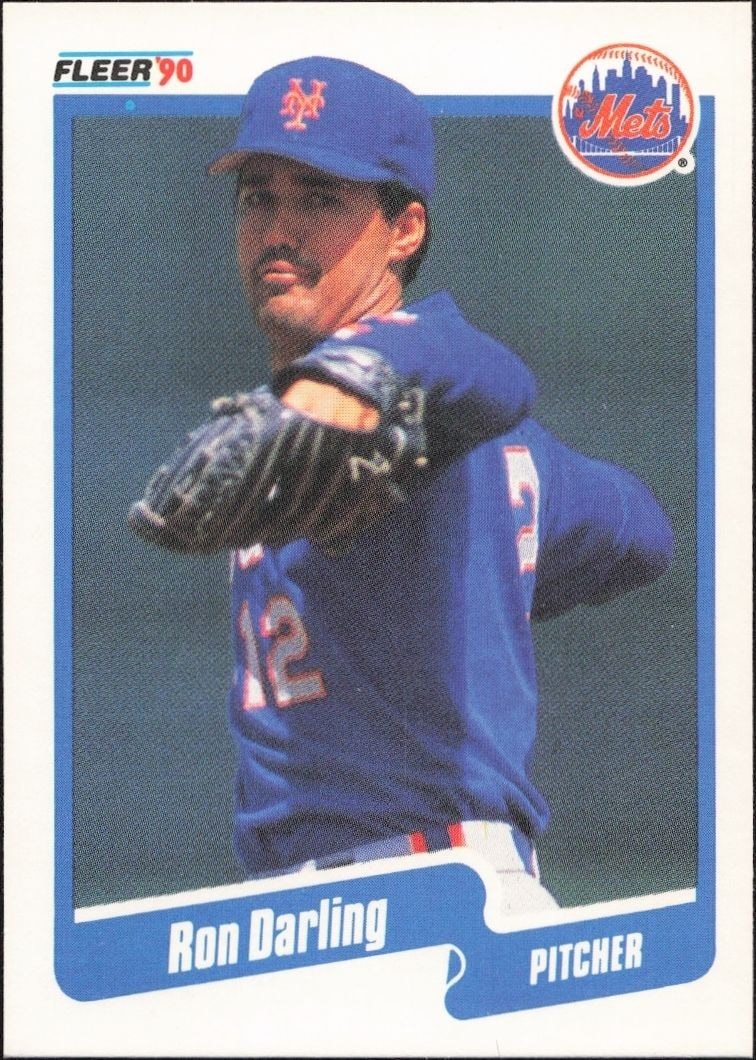

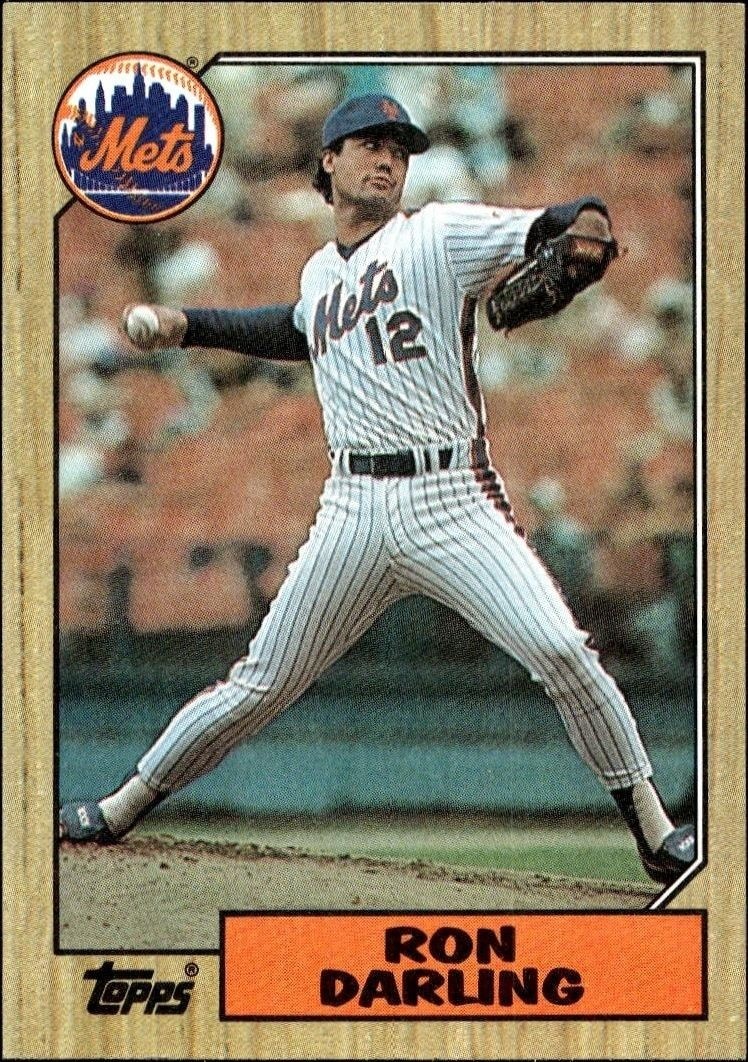


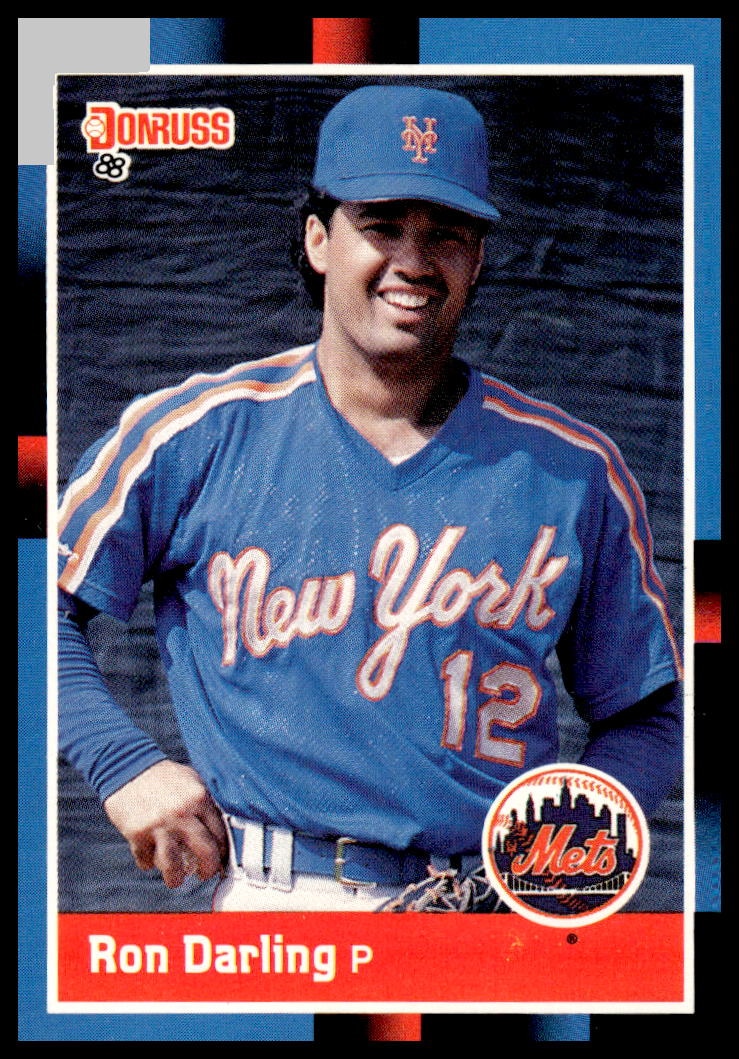
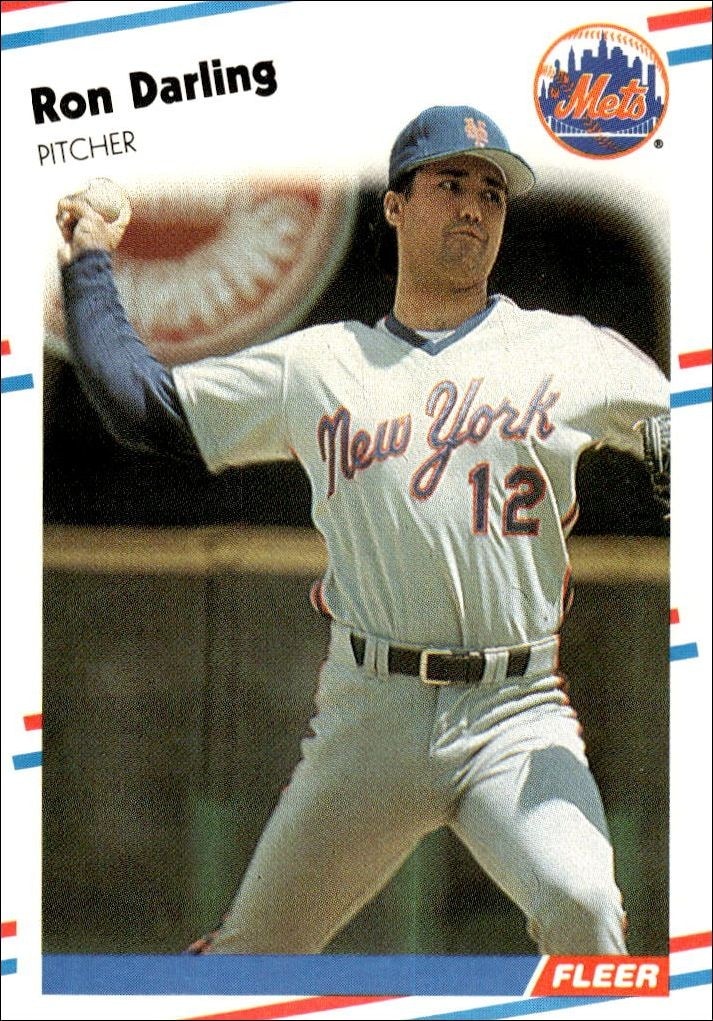
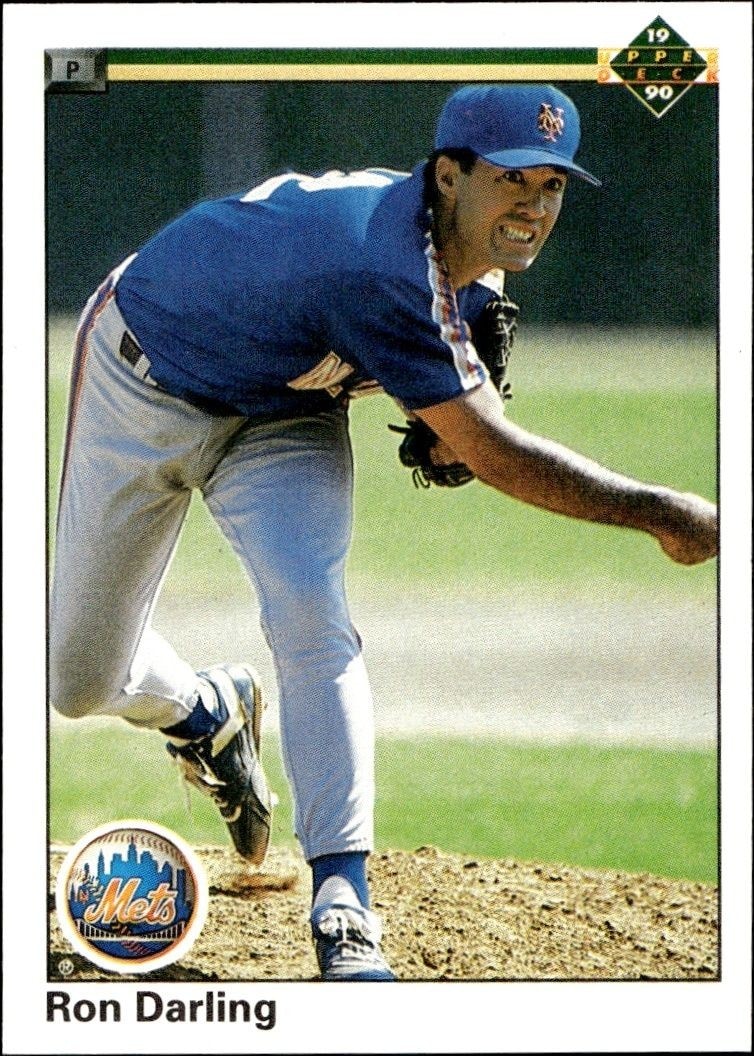
The 1989 Topps Ron Darling #105 captures the New York Mets starting pitcher during a pivotal era in franchise history. This catalog entry represents the standard base card release from the 1989 Topps Baseball set.
1989 • Topps
Major League Baseball • New York Mets
Excellent
105
New
Shipping Calculated at Checkout
30-day Returns| Condition | Value | Source | Trend | Price Details |
|---|---|---|---|---|
$0.99As of 10/1/2026 | Guide Estimate | |||
$8.36As of 10/1/2026 | Guide Estimate | |||
$15.46As of 10/1/2026 | Guide Estimate | |||
$29.00As of 10/1/2026 | Guide Estimate | |||
$39.00As of 10/1/2026 | Guide Estimate | |||
$18.00As of 10/1/2026 | Guide Estimate | |||
$29.88As of 10/1/2026 | Guide Estimate | |||
$18.00As of 10/1/2026 | Guide Estimate | |||
Raw / Ungraded
PriceCharting Price Guide · Guide Estimate evidence · captured Oct 1, 2026
History is building. At least two days of matching observations are needed to show a trend.
Each point is the last stored observation that day for this printing, condition, grader, autograph status and source. Gaps mean no observation; guide estimates and asking prices are not completed sales.The 1989 Topps Ron Darling #105 serves as a tangible link to the New York Mets' roster during a transitional period in MLB history. As a standard base card from the 1989 Topps Baseball set, this product represents one of the most widely distributed and recognizable designs in sports card collecting. Topps dominated the market with its distinct layout style, featuring clean borders and high-contrast photography that defined the aesthetic of the late 1980s. Ron Darling, a key figure in the Mets' pitching rotation, is the subject of this card number. Collectors often seek out cards from this era to complete full base set runs or to build specialized collections focused on New York Mets history. While the 1989 set includes many notable stars, Darling's inclusion provides depth for teams-focused collectors. The card's design reflects the straightforward, information-heavy style typical of Topps during this period, prioritizing player statistics and team affiliation over elaborate graphic treatments. For those interested in the broader context of baseball card evolution, this product sits at the tail end of an era before the massive expansion of parallel variants and insert sets that characterize modern releases. It remains a fundamental component for anyone studying the visual and commercial history of MLB trading cards.
1 day ago
We'll pre-fill the product details from this catalog entry, so your listing lands on this exact page. Just add photos of your copy, pick its condition, and set your price.
The catalog profile below summarizes the card identity, featured subject, and notable collectible traits.
The subject, team, league, and sport context tied to this card.
Production details and format-specific attributes.
Material
Card Stock
Language
English
Compare prices, grades, photos, and shipping from approved sellers.
New
Excellent
See how many public collections currently include this card.
0 collectors have this card
This 1989 Topps Ron Darling card represents a baseline entry point within the modern baseball card market, currently trading at the lower end of the price spectrum for the player. As a standard base card from a high-volume era, it lacks the condition premiums or scarcity drivers that elevate a player's other issues. While Darling remains a recognizable figure from the Mets' history, this specific iteration is widely available and does not command a significant premium over similar vintage issues.
The card possesses no special scarcity attributes, being a standard base release from the 1989 Topps set rather than a short-print, parallel, or serial-numbered variant. This lack of limiting mechanics means the supply is effectively unrestricted by design, as Topps produced millions of these base cards during a peak production year. Consequently, the card exists in high density across the secondary market, diluting any potential scarcity value.
As a non-rookie card from a mass-produced set, this item does not benefit from rookie-card premium mechanics or long-term appreciation trends associated with early-career issues. Collector demand is currently limited to those specifically completing base set fills rather than seeking investment-grade assets. The outlook remains stable but flat, with value driven primarily by the low cost of entry rather than speculative growth or unique collector interest.
