

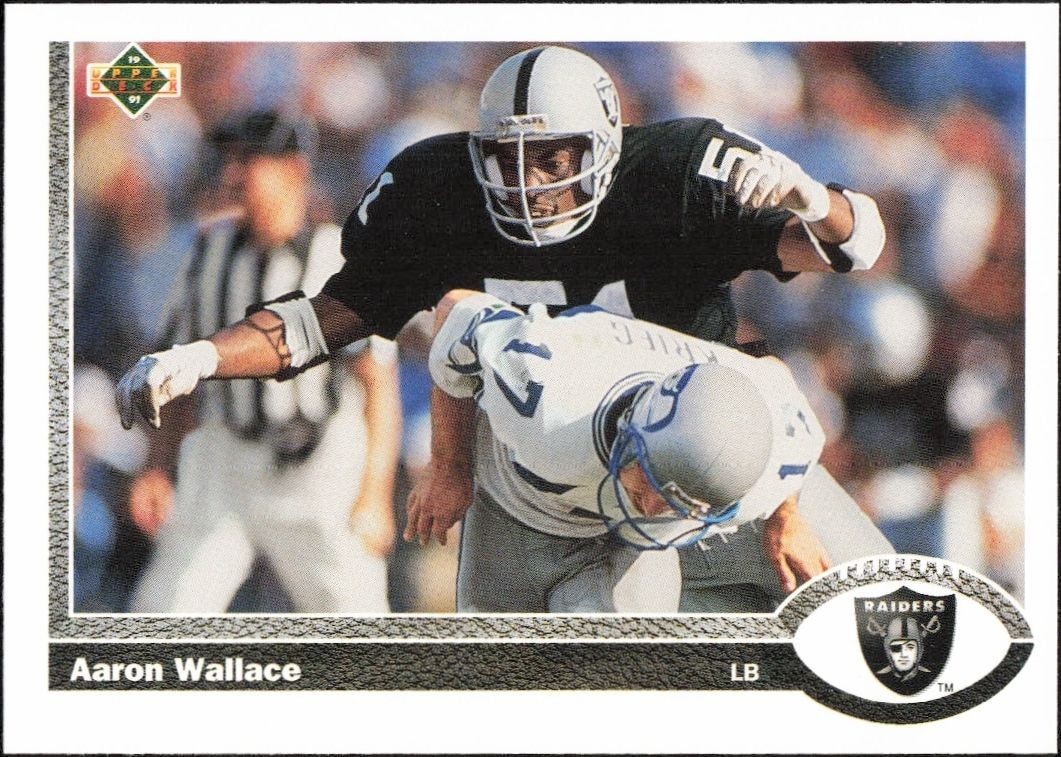
The 1990 Score #620 trading card featuring Aaron Wallace of the Texas A&M Aggies. A distinct piece of NCAA football history from the Score brand.
1990 • Score
NCAA • Texas A&M Aggies
Near Mint
620
New
Shipping Calculated at Checkout
Arrives in 5-7 daysEstimated delivery October 23, 2026 - October 25, 2026
Seller returns October 19, 2026.30-day Returns| Condition | Value | Source | Trend | Price Details |
|---|---|---|---|---|
$1.25As of 9/27/2026 | Asking Prices | |||
Raw / Ungraded
eBay Active Listings · Asking Prices evidence · captured Sep 27, 2026
History is building. At least two days of matching observations are needed to show a trend.
Each point is the last stored observation that day for this printing, condition, grader, autograph status and source. Gaps mean no observation; guide estimates and asking prices are not completed sales.The 1990 Score brand established a distinctive visual identity in sports collecting, and card number 620 stands as a notable entry within that framework. This release focuses on Aaron Wallace, capturing the essence of his tenure with the Texas A&M Aggies during the early 1990s. For collectors of NCAA football memorabilia, this card serves as a tangible link to the era, offering a glimpse into the roster dynamics of a prominent college program. Card #620 adheres to this standard, presenting Wallace in a format that appeals to both vintage enthusiasts and those seeking to complete specific year-based collections. The simplicity of the design allows the subject to remain the focal point, emphasizing his role as a key athlete for the Aggies. Collecting vintage sports cards often involves hunting for specific players, teams, or years. This 1990 Score Aaron Wallace card fits neatly into that pursuit, providing a straightforward yet meaningful addition to any library of Texas A&M Aggies memorabilia. Whether you are building a comprehensive archive of college football history or simply appreciate the nostalgic value of early nineties card designs, this product offers a solid foundation for your collection. The enduring appeal of the Score brand ensures that cards from this period remain relevant among hobbyists. By focusing on the catalog details—the year, the brand, and the subject—collectors can appreciate the card for its historical context rather than just its speculative value. Integrating this piece into your collection connects you to a broader narrative of collegiate athletics and the evolution of trading card design.
17 hours ago
We'll pre-fill the product details from this catalog entry, so your listing lands on this exact page. Just add photos of your copy, pick its condition, and set your price.
The catalog profile below summarizes the card identity, featured subject, and notable collectible traits.
The subject, team, league, and sport context tied to this card.
Production details and format-specific attributes.
Material
Card Stock
Language
English
Compare prices, grades, photos, and shipping from approved sellers.
New
Near Mint
See how many public collections currently include this card.
0 collectors have this card
This 1990 Score card of Aaron Wallace sits at a modest entry-level tier, reflecting the general accessibility of early-90s NCAA football issues. While the player's collegiate tenure at Texas A&M provides historical context, the lack of special attributes keeps this base card trading at the lower end of the market spectrum. It represents a stable, low-risk acquisition for completists rather than a high-value speculative asset.
As a standard base card from the 1990 Score brand, this item carries no inherent scarcity mechanics such as serial numbering, short printing, or parallel variations. The supply is determined solely by the original mass production run, meaning it remains widely available in the secondary market. Without unique distinguishing features, its rarity is functionally equivalent to the most common cards in the set.
The investment potential for this specific item is limited by its status as a non-premium base card from a vintage NCAA set. Collector demand is likely driven by niche interests in Texas A&M memorabilia or 1990s football nostalgia rather than broad market trends. Long-term value appreciation is unlikely to outpace more scarce parallels or rookie cards of higher-profile collegiate stars.