





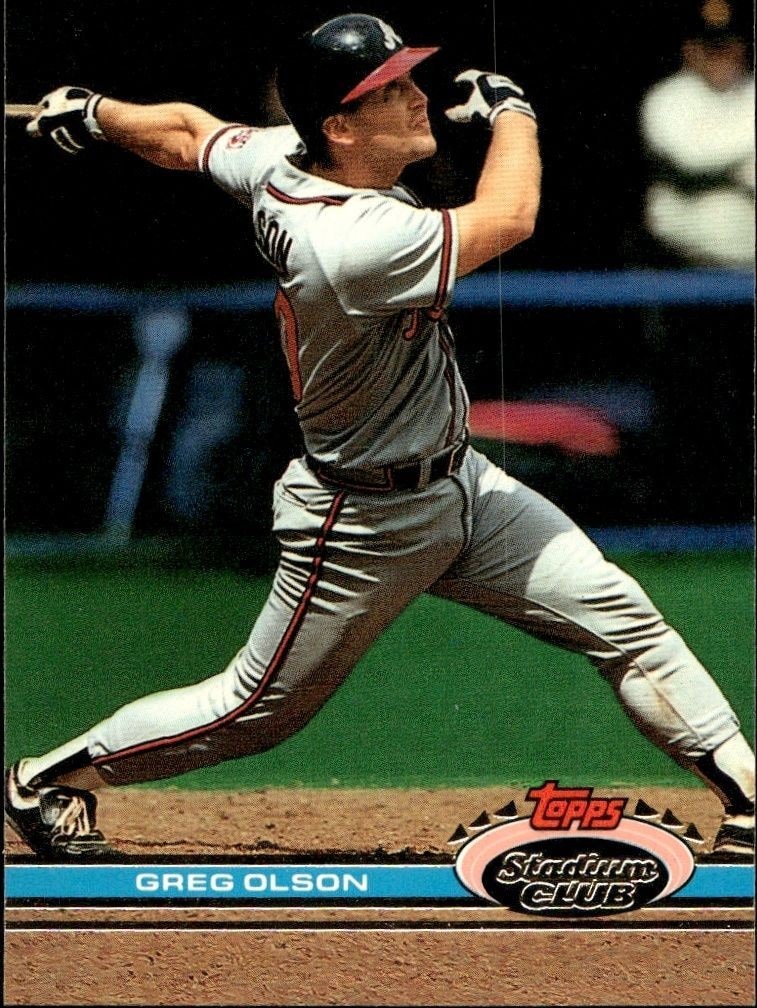
Discover the 1990 Topps Traded Greg Olson #84T baseball card, a notable insert from the Atlanta Braves' roster during the 1990 MLB season.
1990 • Topps • Traded
Major League Baseball • Atlanta Braves
Near Mint
84T
New
Shipping Calculated at Checkout
30-day Returns| Condition | Value | Source | Trend | Price Details |
|---|---|---|---|---|
$1.48 | Guide Estimate | |||
$9.78 | Guide Estimate | |||
$20.77 | Guide Estimate | |||
$37.96 | Guide Estimate | |||
$126.00 | Guide Estimate | |||
$58.00 | Guide Estimate | |||
$96.71 | Guide Estimate | |||
$58.00 | Guide Estimate | |||
Raw / Ungraded
PriceCharting Price Guide · Guide Estimate evidence · captured Oct 12, 2026
History is building. At least two days of matching observations are needed to show a trend.
Each point is the last stored observation that day for this printing, condition, grader, autograph status and source. Gaps mean no observation; guide estimates and asking prices are not completed sales.The 1990 Topps Traded Greg Olson #84T represents a specific moment in the Atlanta Braves' 1990 Major League Baseball season. As part of the Topps Traded series, this card captures the roster changes and player movements that occurred after the initial base set release. Collectors often seek out Traded cards to complete their annual sets, as they feature players who debuted or were traded during the season, providing a more comprehensive view of the league's landscape. Greg Olson's appearance in this numbered insert offers a glimpse into the team's composition during a pivotal era for franchise history. Owning this card number allows collectors to fill a gap in their 1990 Topps Traded collection or add a unique piece to a broader Braves-themed archive. The appeal of catalog items like the Greg Olson #84T card lies in their historical context and the enduring interest in 1990s baseball memorabilia. Whether you are a dedicated set builder focusing on the Traded subset or a general sports collector interested in the Atlanta Braves' lineage, this insert serves as an essential component of the year's release. The card's placement within the Topps Traded series highlights its role in documenting the dynamic nature of MLB rosters during that time. For investors and hobbyists alike, understanding the context of the Traded series helps in appreciating the value of individual inserts like this one.
3 days ago
We'll pre-fill the product details from this catalog entry, so your listing lands on this exact page. Just add photos of your copy, pick its condition, and set your price.
The catalog profile below summarizes the card identity, featured subject, and notable collectible traits.
The core identity of the card within the set.
The subject, team, league, and sport context tied to this card.
Production details and format-specific attributes.
Material
Card Stock
Language
English
Compare prices, grades, photos, and shipping from approved sellers.
New
Near Mint
See how many public collections currently include this card.
0 collectors have this card
This 1990 Topps Traded card of Greg Olson occupies a niche tier within the broader baseball market, reflecting his status as a minor league or journeyman player rather than a star athlete. The current valuation indicates a modest premium over raw bulk cards, typical for players with limited mainstream recognition in high-volume sets. Condition sensitivity is likely low given the player's profile, meaning raw copies trade closely with lightly graded examples.
As a standard insert within the 1990 Topps Traded set, this card lacks serial numbering, short-print designations, or parallel variations that would artificially constrain supply. The scarcity is driven primarily by the age of the product and the specific print run allocated to this player's inclusion in the traded subset. Without special foil treatments or limited edition markers, the supply remains relatively abundant compared to key stars or unique artifacts.
Investment potential is constrained by the lack of rookie card status and the absence of special parallel or short-print attributes that typically drive collector demand. While the 1990 Topps Traded set has historical significance, cards featuring non-star players generally see limited appreciation unless condition is pristine. Collectors are more likely to acquire this for set completion than as a standalone speculative asset.


