

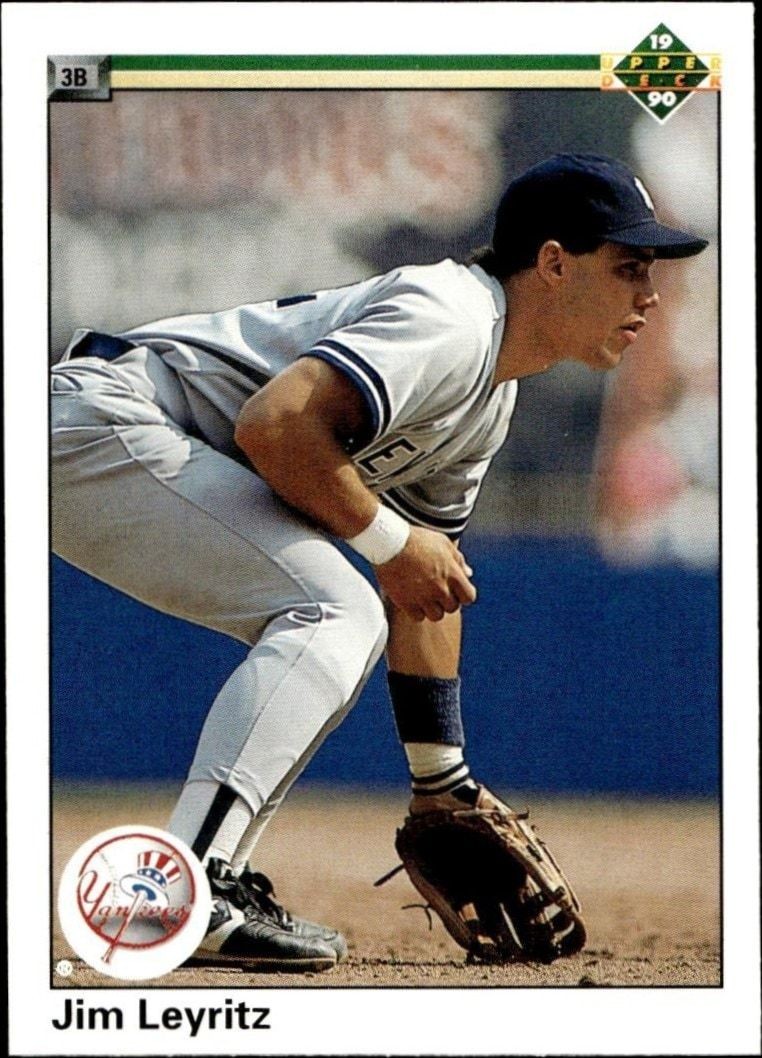


Explore the 1990 Topps Traded Jim Leyritz #61T baseball card, a distinctive addition to any collection featuring the New York Yankees.
1990 • Topps • Traded
Major League Baseball • New York Yankees
Near Mint
61T
New
Shipping Calculated at Checkout
This seller is away until 10/19/2026 — orders are still accepted and ship after they return.30-day Returns| Condition | Value | Source | Trend | Price Details |
|---|---|---|---|---|
$1.75 | Guide Estimate | |||
$9.84 | Guide Estimate | |||
$26.23 | Guide Estimate | |||
$29.00 | Guide Estimate | |||
$127.00 | Guide Estimate | |||
$58.00 | Guide Estimate | |||
$97.49 | Guide Estimate | |||
$58.00 | Guide Estimate | |||
Raw / Ungraded
PriceCharting Price Guide · Guide Estimate evidence · captured Oct 6, 2026
History is building. At least two days of matching observations are needed to show a trend.
Each point is the last stored observation that day for this printing, condition, grader, autograph status and source. Gaps mean no observation; guide estimates and asking prices are not completed sales.The 1990 Topps Traded Jim Leyritz #61T represents a specific snapshot of the New York Yankees during a pivotal era in franchise history. Issued by Topps as part of their annual Traded series, this sports card captures the player at a time when he was establishing himself within the organization's lineup. Collectors often seek out this card number to complete their base sets, as the Traded series is designed to update early-season releases with mid-year roster changes and promotions. Jim Leyritz appeared on numerous cards throughout his career, but the 1990 Topps Traded release holds a unique place for enthusiasts of 1990s baseball memorabilia. The card features the standard Topps design language of the period, providing a consistent aesthetic for those building comprehensive collections. For investors and hobbyists alike, understanding the context of the 1990 Topps Traded set is essential, as it serves as a bridge between the early-season base cards and the later promotional inserts that defined the year. When evaluating this product, collectors look for the specific card number and the distinct 'Traded' designation, which differentiates it from the primary base set. The New York Yankees' prominence during the early 1990s adds historical weight to any card featuring their roster. This release remains a staple for those interested in the visual history of the sport and the specific players who contributed to the team's legacy during that decade. Whether you are a dedicated set builder or a general enthusiast of vintage sports cards, this product offers a tangible connection to the 1990 baseball season.
10 hours ago
We'll pre-fill the product details from this catalog entry, so your listing lands on this exact page. Just add photos of your copy, pick its condition, and set your price.
The catalog profile below summarizes the card identity, featured subject, and notable collectible traits.
The core identity of the card within the set.
The subject, team, league, and sport context tied to this card.
Production details and format-specific attributes.
Material
Card Stock
Language
English
Compare prices, grades, photos, and shipping from approved sellers.
New
Near Mint
See how many public collections currently include this card.
0 collectors have this card
This 1990 Topps Traded Jim Leyritz card represents an entry-level tier within the broader Yankees memorabilia market, reflecting its status as a non-rookie base card from a high-volume set. While the player holds a distinct niche as a key contributor to the Yankees' late-80s and early-90s success, the lack of special attributes keeps this specific item trading below the premium associated with his rookie issues or parallel variants. Current market positioning suggests it serves primarily as a filler for team or player sets rather than a standalone investment piece.
The card carries no scarcity mechanics such as serial numbering, short prints, or unique one-of-one designations, meaning its supply is determined entirely by the original print run of the 1990 Topps Traded set. As a standard base card, it exists in high volume relative to its parallel counterparts, resulting in minimal scarcity-driven value support. The absence of any special attributes ensures that condition becomes the primary differentiator, though even pristine examples face significant supply competition in the secondary market.
Investment potential is limited by the card's classification as a common base issue from a mass-produced year, lacking the rookie-card premium or vintage scarcity that typically drives appreciation. Collector demand is likely driven by casual Yankees fans or those completing specific team sets rather than serious investors seeking capital growth. Long-term value retention will likely track with the general stability of 1990s baseball cards, offering modest liquidity but minimal upside compared to rarer parallels or rookie cards of the same player.