





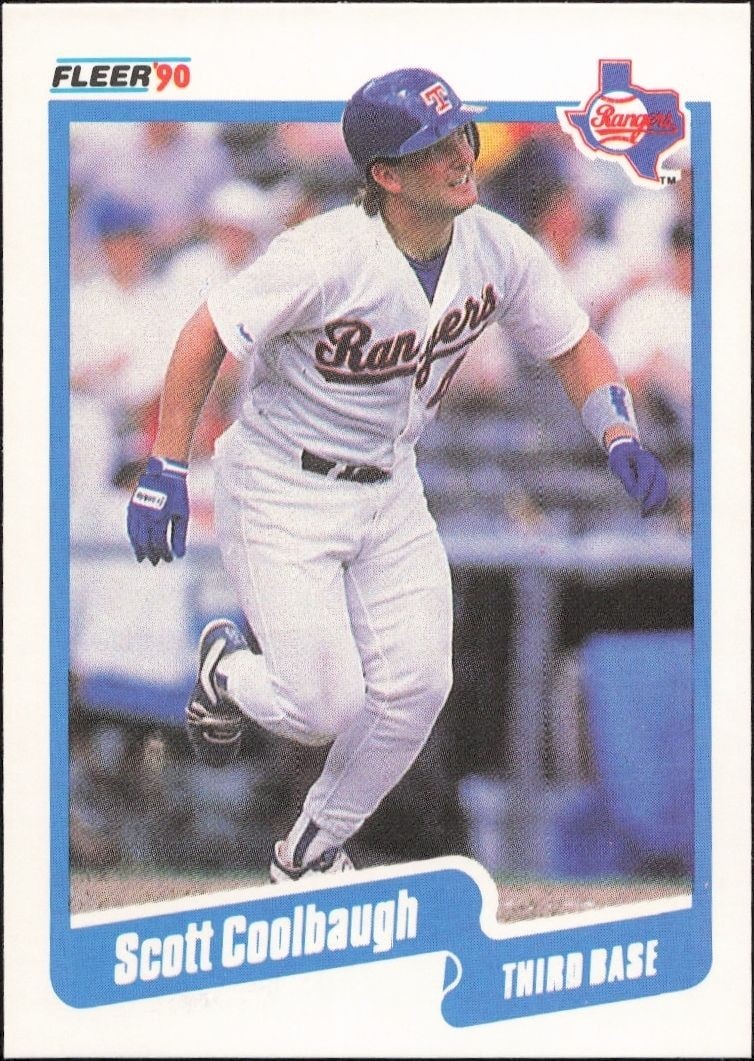
The 1990 Topps Traded #22T card featuring Scott Coolbaugh of the Texas Rangers, capturing a moment in vintage baseball history.
1990 • Topps • Traded
Major League Baseball • Texas Rangers
Excellent
22T
New
Shipping Calculated at Checkout
30-day Returns| Condition | Value | Source | Trend | Price Details |
|---|---|---|---|---|
$1.55As of 10/1/2026 | Guide Estimate | |||
$11.00As of 10/1/2026 | Guide Estimate | |||
$5.00As of 10/1/2026 | Guide Estimate | |||
$8.37As of 10/1/2026 | Guide Estimate | |||
$5.00As of 10/1/2026 | Guide Estimate | |||
Raw / Ungraded
PriceCharting Price Guide · Guide Estimate evidence · captured Oct 1, 2026
History is building. At least two days of matching observations are needed to show a trend.
Each point is the last stored observation that day for this printing, condition, grader, autograph status and source. Gaps mean no observation; guide estimates and asking prices are not completed sales.The 1990 Topps Traded series holds a unique place in vintage sports card collecting, offering a supplementary release that expanded on the base set with updated rosters and emerging talent. Card number 22T highlights Scott Coolbaugh, who was affiliated with the Texas Rangers during this era. For collectors focusing on the 1990 Topps brand, this traded release provides a distinct catalog number that differs from the original base set, allowing enthusiasts to complete specific subsets or track the progression of player rosters through mid-year updates. Coolbaugh’s inclusion in the Traded series reflects the dynamic nature of team compositions in 1990. As a member of the Texas Rangers, his appearance on card 22T serves as a historical record for fans and researchers of the franchise’s history during that period. The Topps Traded cards are often sought after by those who appreciate the design continuity of the main 1990 Topps set while looking for the additional depth that the Traded release provides. Whether you are building a personal archive of Texas Rangers memorabilia or focusing on the broader landscape of 1990s sports cards, finding verified copies of cards like the Scott Coolbaugh #22T is essential. The 1990 Topps Traded set continues to be a popular area of focus for hobbyists who value the tangible connection to past seasons and the specific players who contributed to them. Collecting vintage baseball cards requires attention to detail and a reliable source for inventory. By focusing on the specific attributes of the 1990 Topps Traded release, collectors can make informed decisions about adding this piece to their collection. The intersection of brand heritage, team affiliation, and era-specific design makes card 22T a notable entry for anyone documenting the sport's recent history.
6 days ago
We'll pre-fill the product details from this catalog entry, so your listing lands on this exact page. Just add photos of your copy, pick its condition, and set your price.
The catalog profile below summarizes the card identity, featured subject, and notable collectible traits.
The core identity of the card within the set.
The subject, team, league, and sport context tied to this card.
Production details and format-specific attributes.
Material
Card Stock
Language
English
Compare prices, grades, photos, and shipping from approved sellers.
New
Excellent
See how many public collections currently include this card.
0 collectors have this card
This 1990 Topps Traded card occupies a modest entry-level tier within Scott Coolbaugh's collectible portfolio, reflecting its status as a standard base insert rather than a high-end variation. While the player's tenure with the Texas Rangers provides a foundational hook for Rangers-focused collectors, the card lacks the premium drivers typically seen in rookie or autographed releases. Consequently, it trades at a value consistent with common vintage issues, appealing primarily to budget-conscious set completists rather than speculative investors.
The card is identified as a standard base issue within the 1990 Topps Traded set, meaning it does not carry scarcity mechanics such as serial numbering, short-print status, or parallel foil treatments. Without special attributes like inserts or limited edition designations, the supply is determined solely by the original print run of the base set, which was produced in high volumes to meet widespread demand. This lack of restrictive supply mechanics ensures that copies are readily available in the secondary market, preventing any artificial scarcity premium.
As a non-rookie card from a major mainstream brand, this item serves best as a fill-in for vintage set completion rather than a standalone appreciation asset. The broad availability of similar vintage issues from the early 1990s means that collector demand is driven by nostalgia and completeness rather than scarcity or player stardom. Investors should view this as a low-risk component for portfolio diversity, offering stability through low acquisition costs rather than significant upside potential.


