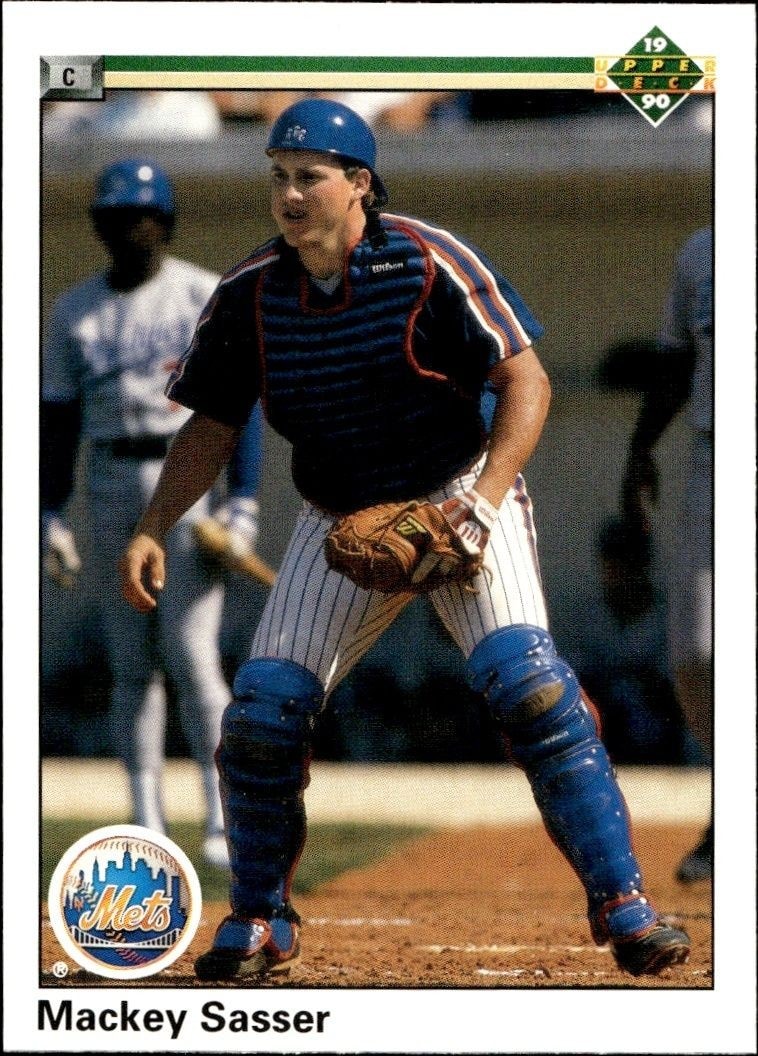
The 1990 Upper Deck John Costello #486 baseball card features the St. Louis Cardinals player in the historic first release from the Upper Deck brand.
1990 • Upper Deck • Low Number
Major League Baseball • St. Louis Cardinals
Near Mint
486
New
Shipping Calculated at Checkout
30-day Returns| Condition | Value | Source | Trend | Price Details |
|---|---|---|---|---|
$0.64As of 10/11/2026 | Guide Estimate | |||
Raw / Ungraded
PriceCharting Price Guide · Guide Estimate evidence · captured Oct 11, 2026
History is building. At least two days of matching observations are needed to show a trend.
Each point is the last stored observation that day for this printing, condition, grader, autograph status and source. Gaps mean no observation; guide estimates and asking prices are not completed sales.The 1990 Upper Deck John Costello #486 card represents a significant entry into the history of modern sports trading cards. As part of the inaugural release from Upper Deck, this product introduced a new standard for production quality and design that would influence the hobby for decades to come. The card features John Costello during his tenure with the St. Louis Cardinals, capturing a moment in the team's roster during the early 1990s era. Collectors often seek out cards from this set due to its status as the first major release from the Upper Deck brand, marking a turning point in the industry's approach to card manufacturing and presentation. The #486 designation places it within the broader base set, offering a tangible connection to the players who wore the Cardinals uniform during this period. For enthusiasts building collections focused on the 1990s or the St. Louis Cardinals franchise, this card serves as a foundational piece. It allows collectors to trace the lineage of players who contributed to the team's identity in the post-1980s transition period. The card's inclusion in the 1990 Upper Deck series makes it a relevant item for those interested in the evolution of baseball card design and the brands that shaped the modern market. Whether for historical interest or as part of a broader set completion strategy, this card holds a distinct place in the catalog of 1990s baseball memorabilia. The intersection of the player, the team, and the brand creates a unique collectible that appeals to both casual fans and dedicated historians of the sport.
10/20/26
We'll pre-fill the product details from this catalog entry, so your listing lands on this exact page. Just add photos of your copy, pick its condition, and set your price.
The catalog profile below summarizes the card identity, featured subject, and notable collectible traits.
The core identity of the card within the set.
The subject, team, league, and sport context tied to this card.
Production details and format-specific attributes.
Material
Card Stock
Language
English
Compare prices, grades, photos, and shipping from approved sellers.
New
Near Mint
See how many public collections currently include this card.
0 collectors have this card
At a sub-dollar price point, this card represents an entry-level tier within the 1990 Upper Deck baseball spectrum, reflecting its status as a non-premium parallel or base variation. The minimal market activity suggests it trades well below the value of major stars or key rookie cards from the same era. Its financial positioning is defined by low demand relative to the broader set, serving more as a filler item than a primary investment vehicle.
The provided attributes indicate no special scarcity mechanics such as serial numbering, short-print status, or one-of-one designations are present. Without explicit limited edition markers, the supply is determined by standard mass-production runs typical of base sets from this period. This lack of constrained supply mechanics means the card does not benefit from the scarcity premiums associated with low-numbered parallels or inserts.
As a standard issue from the 1990 Upper Deck Low Number set, this item lacks the rookie-card premium or distinct parallel attributes that typically drive collector interest. Demand is likely limited to completists seeking specific base cards rather than investors looking for appreciation. The outlook suggests stable but minimal growth potential, driven primarily by basic set completion needs rather than speculative demand.