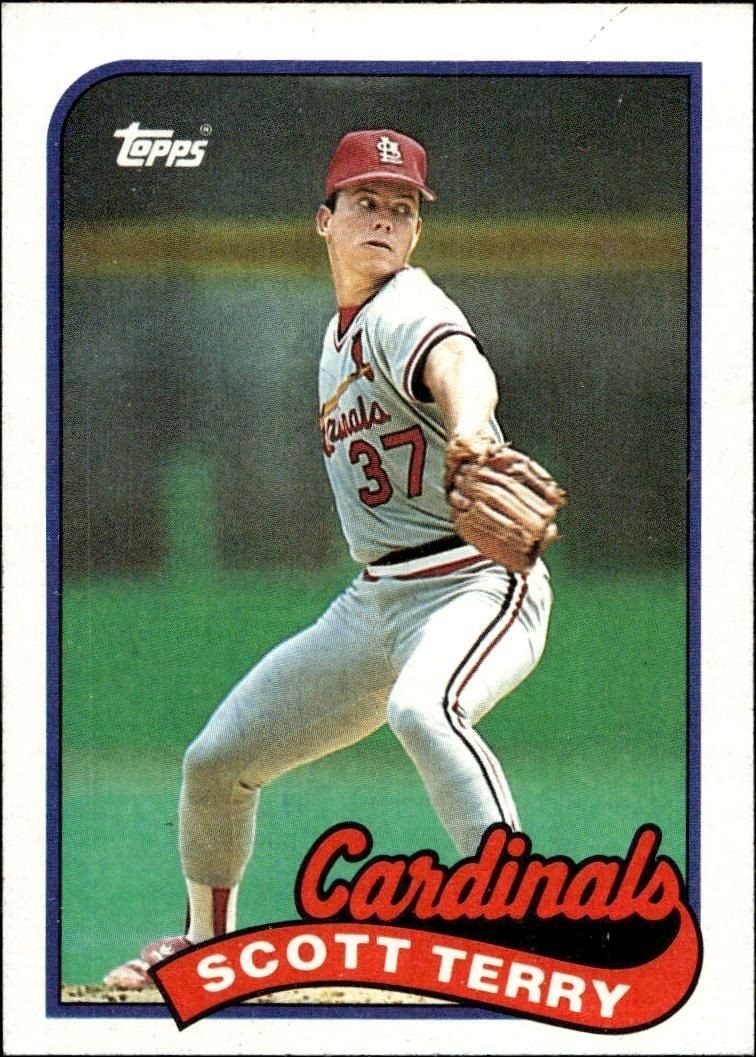




The 1990 Upper Deck Scott Terry #260 baseball card is a notable entry from the brand's first release, featuring the St. Louis Cardinals pitcher.
1990 • Upper Deck • Low Number
Major League Baseball • St. Louis Cardinals
Excellent
260
New
Shipping Calculated at Checkout
This seller is away until 10/19/2026 — orders are still accepted and ship after they return.30-day Returns| Condition | Value | Source | Trend | Price Details |
|---|---|---|---|---|
$1.16 | Guide Estimate | |||
Raw / Ungraded
PriceCharting Price Guide · Guide Estimate evidence · captured Oct 11, 2026
History is building. At least two days of matching observations are needed to show a trend.
Each point is the last stored observation that day for this printing, condition, grader, autograph status and source. Gaps mean no observation; guide estimates and asking prices are not completed sales.Scott Terry's 1990 Upper Deck #260 card represents a significant moment in modern sports card history, marking his appearance in the very first release from the Upper Deck brand. As the inaugural set of a manufacturer that would go on to redefine the hobby with its glossy finish and high-quality production values, this card holds a special place for collectors who value the origins of the modern era. Terry, who pitched for the St. Louis Cardinals during this period, is featured in this base card, offering a tangible connection to the team's roster in the early 1990s. For collectors, the 1990 Upper Deck set is widely recognized not just for its visual appeal, but for its role in launching a new standard in card design. Whether you are building a collection focused on a specific team like the Cardinals or tracking the evolution of the sport's memorabilia, this card provides a solid foundation. The 1990 Upper Deck Scott Terry #260 card appeals to those who appreciate the historical context of the brand's debut and the player's career trajectory. By focusing on the catalog identity rather than individual condition, collectors can evaluate this card as a key piece of the set's narrative. It stands as a reminder of the era when Upper Deck first entered the market, bringing fresh energy and design innovation to the St. Louis Cardinals' fanbase and collectors alike.
15 hours ago
We'll pre-fill the product details from this catalog entry, so your listing lands on this exact page. Just add photos of your copy, pick its condition, and set your price.
The catalog profile below summarizes the card identity, featured subject, and notable collectible traits.
The core identity of the card within the set.
The subject, team, league, and sport context tied to this card.
Production details and format-specific attributes.
Material
Card Stock
Language
English
Compare prices, grades, photos, and shipping from approved sellers.
New
Excellent
See how many public collections currently include this card.
0 collectors have this card
This 1990 Upper Deck Scott Terry card represents a budget-friendly entry point within the vintage baseball market, trading at a modest premium relative to its current $1.13 valuation. As a non-premium parallel or base card from a foundational set, it lacks the scarcity drivers that typically propel prices higher, keeping it accessible for casual collectors. The pricing reflects its status as a standard issue rather than a key rookie or autographed piece, though it holds sentimental value for Cardinals fans from that era.
The card does not possess explicit scarcity mechanics such as serial numbering, short-print designations, or one-of-one status, placing it in the most common tier of the 1990 Upper Deck Low Number set. Without special attributes to constrain supply, this is a mass-produced item where availability is driven by standard print runs rather than limited editions. Consequently, the supply is effectively infinite relative to collector demand, as copies are readily available in the current marketplace.
As a standard base card for a player who was not a marquee rookie star in the modern sense, the long-term appreciation potential is likely limited to modest gains tied to general vintage baseball nostalgia. Collector demand is primarily driven by team affiliation with the St. Louis Cardinals and set completionism rather than individual player stardom. Investors should view this as a low-risk, low-reward asset suitable for filling gaps in a collection rather than a primary vehicle for capital growth.