






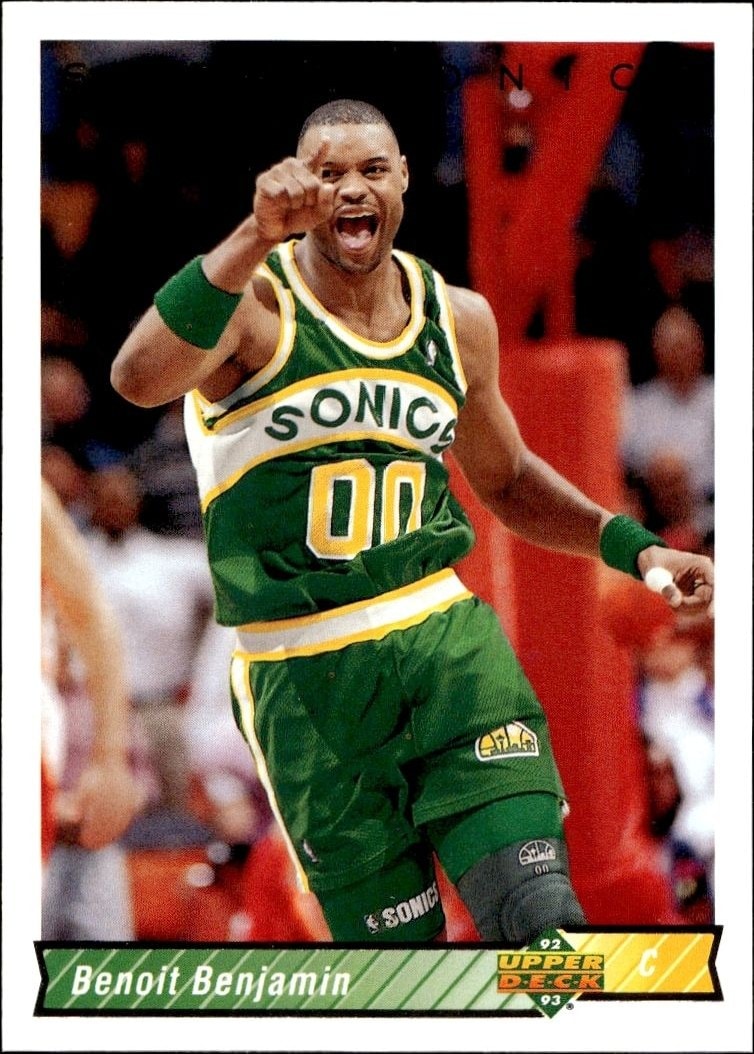
Explore the 1991-92 Benoit Benjamin #159 basketball trading card, a vintage NBA collectible featuring the Seattle SuperSonics player.
1991-92 • Upper Deck
National Basketball Association • Seattle SuperSonics
Near Mint
159
New
Shipping Calculated at Checkout
Arrives in 5-7 daysEstimated delivery October 23, 2026 - October 25, 2026
Seller returns October 19, 2026.30-day Returns| Condition | Value | Source | Trend | Price Details |
|---|---|---|---|---|
$0.99 | Guide Estimate | |||
Raw / Ungraded
PriceCharting Price Guide · Guide Estimate evidence · captured Oct 8, 2026
History is building. At least two days of matching observations are needed to show a trend.
Each point is the last stored observation that day for this printing, condition, grader, autograph status and source. Gaps mean no observation; guide estimates and asking prices are not completed sales.The 1991-92 Benoit Benjamin #159 basketball card represents a specific moment in NBA history, capturing the player during his tenure with the Seattle SuperSonics. This sports trading card is part of a vintage release that continues to attract attention from collectors who appreciate the distinct aesthetic and era-specific design of early 1990s basketball memorabilia. For those building comprehensive collections, this card serves as a necessary component for completing the full set, ensuring that every player from that season is represented. Collectors often seek out this card to fill gaps in their series holdings, valuing the tangible connection to the league's past. The card's catalog number, 159, makes it easy to locate and organize within any systematic collection. Whether you are a dedicated fan of the Seattle SuperSonics or a broader basketball enthusiast, adding this vintage piece to your inventory offers a chance to own a piece of sports history. The enduring appeal of 1991-92 basketball cards lies in their ability to evoke nostalgia and document the players who shaped the game during that period. By acquiring this card, you contribute to the preservation of sports memorabilia, keeping the legacy of the era alive for future generations. The straightforward design and clear identification of the subject make it a reliable and recognizable item for any serious collector.
15 hours ago
We'll pre-fill the product details from this catalog entry, so your listing lands on this exact page. Just add photos of your copy, pick its condition, and set your price.
The catalog profile below summarizes the card identity, featured subject, and notable collectible traits.
The core identity of the card within the set.
The subject, team, league, and sport context tied to this card.
Production details and format-specific attributes.
Material
Card Stock
Language
English
Compare prices, grades, photos, and shipping from approved sellers.
New
Near Mint
See how many public collections currently include this card.
0 collectors have this card
This 1991-92 Upper Deck card of Benoit Benjamin represents a low-tier asset within the broader basketball collecting market, reflecting his status as a role player rather than a franchise cornerstone. The current pricing indicates minimal collector interest compared to primary stars of the era, with the card trading near the baseline value for ungraded, base inserts. Its position is defined by availability and lack of premium attributes rather than significant historical impact.
The card lacks any special scarcity mechanics such as serial numbering, short-print status, or parallel variations, placing it firmly in the standard base set category. Without limited edition attributes or unique production constraints, the supply remains effectively unlimited relative to demand. This absence of rarity drivers means the card does not benefit from the supply-side premiums seen in more exclusive subsets.
As a non-rookie, non-premium card from the early 1990s, this item offers negligible appreciation potential due to the saturated market for standard basketball inserts. Collector demand is currently driven by players with higher career significance or rookie status, neither of which applies here. Investors should expect stable, low-volume trading with no expectation of market growth or premium retention.
