


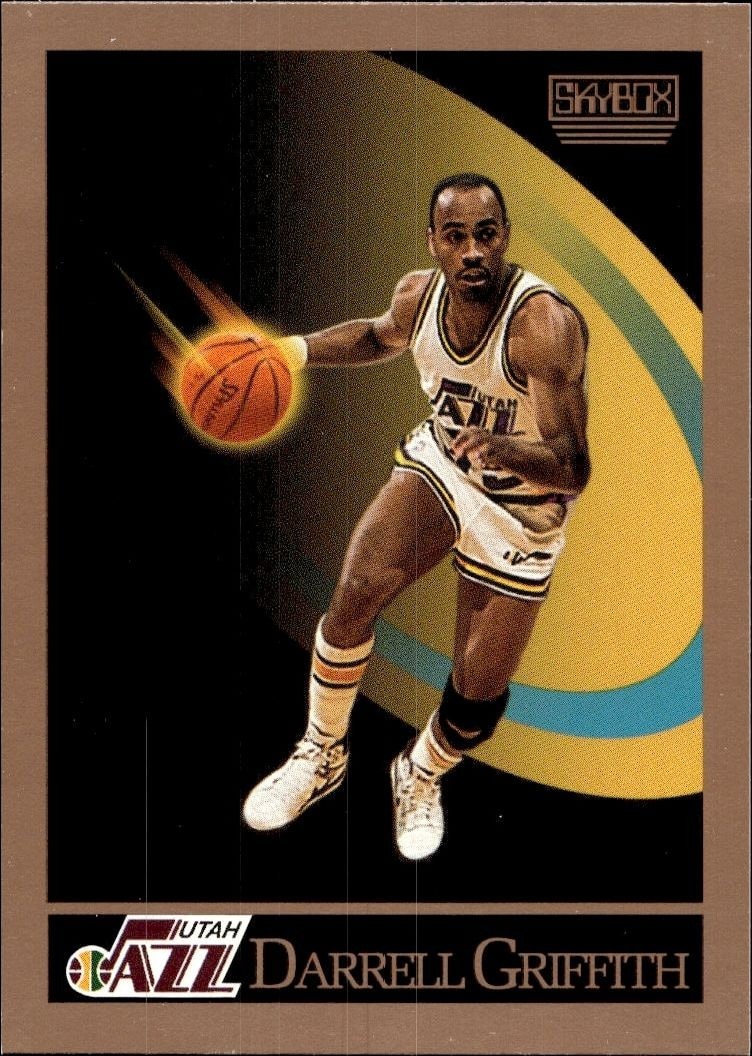
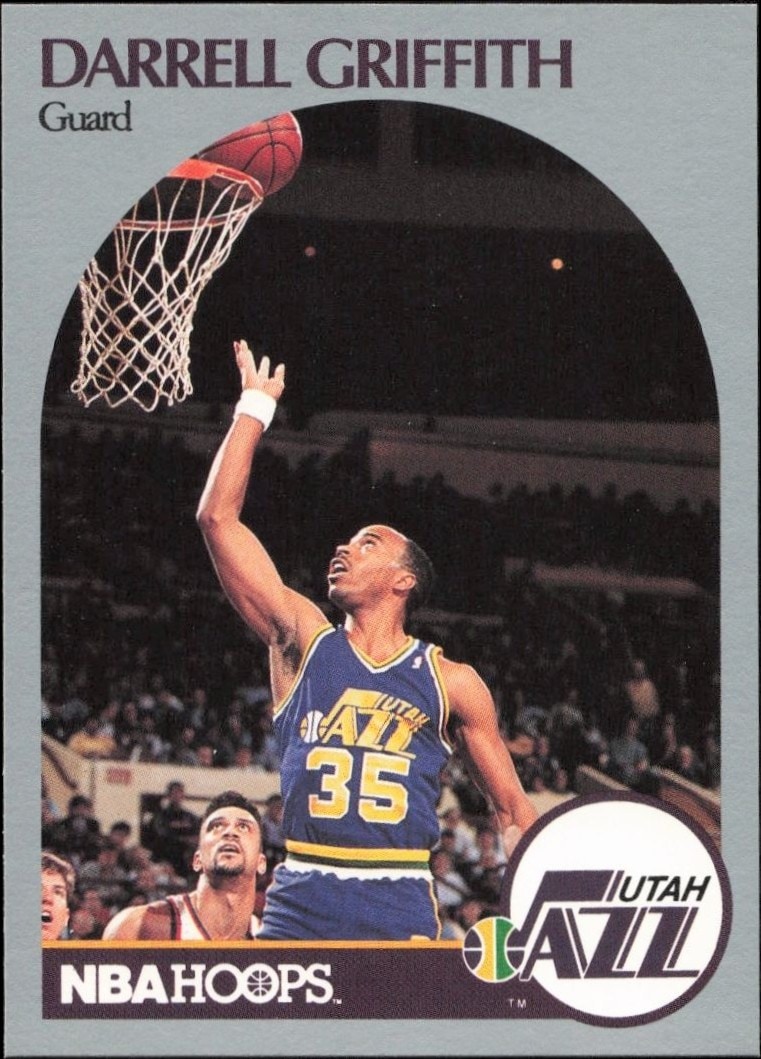
The 1991-92 Upper Deck #131 basketball card featuring Darrell Griffith of the Utah Jazz, a staple of early 90s NBA trading card collecting.
1991-92 • Upper Deck
National Basketball Association • Utah Jazz
Near Mint
131
New
Shipping Calculated at Checkout
Arrives in 5-7 daysEstimated delivery October 23, 2026 - October 25, 2026
Seller returns October 19, 2026.30-day Returns| Condition | Value | Source | Trend | Price Details |
|---|---|---|---|---|
$1.35 | Guide Estimate | |||
Raw / Ungraded
PriceCharting Price Guide · Guide Estimate evidence · captured Oct 7, 2026
History is building. At least two days of matching observations are needed to show a trend.
Each point is the last stored observation that day for this printing, condition, grader, autograph status and source. Gaps mean no observation; guide estimates and asking prices are not completed sales.The 1991-92 Upper Deck #131 basketball card features Darrell Griffith, a key figure in Utah Jazz history during the early 1990s. Released by Upper Deck, this card is part of one of the most recognizable and widely collected basketball sets of the era. Darrell Griffith, affectionately known as "Dr. Dunkenstein," brought energy and skill to the court throughout his career. This card captures a specific moment in his timeline with the Jazz, offering collectors a tangible connection to the team's rich legacy. The card's straightforward presentation allows the focus to remain on the player and the era, making it an appealing addition for those who appreciate the simplicity and nostalgia of early 90s design. Collecting vintage basketball cards often involves seeking out cards from pivotal seasons and teams. The 1991-92 Upper Deck set offers a diverse range of players, with #131 standing out as a notable entry for Griffith fans. Whether you are building a comprehensive set of Utah Jazz cards or focusing on individual player collections, this card provides a solid foundation. Its enduring popularity ensures that it remains a relevant and sought-after item in the secondary market. For investors and hobbyists alike, the 1991-92 Upper Deck series represents a significant period in sports card history. As the market for vintage cards continues to grow, cards like #131 offer both aesthetic appeal and historical value. The card's association with the NBA and the Utah Jazz adds to its collectibility, making it a versatile piece for any portfolio. Exploring the broader context of this set reveals the depth of talent and storylines that defined basketball during this time. By focusing on the intrinsic value of the card and its place in history, collectors can make informed decisions about their acquisitions. The 1991-92 Upper Deck #131 is more than just a card; it is a piece of basketball heritage.
16 hours ago
We'll pre-fill the product details from this catalog entry, so your listing lands on this exact page. Just add photos of your copy, pick its condition, and set your price.
The catalog profile below summarizes the card identity, featured subject, and notable collectible traits.
The core identity of the card within the set.
The subject, team, league, and sport context tied to this card.
Production details and format-specific attributes.
Material
Card Stock
Language
English
Compare prices, grades, photos, and shipping from approved sellers.
New
Near Mint
See how many public collections currently include this card.
0 collectors have this card
This 1991-92 Upper Deck card of Darrell Griffith represents a budget-friendly entry point for Utah Jazz collectors, reflecting his status as a franchise icon rather than a current market leader. The current pricing indicates it trades well below the premium tier reserved for his rookie issues or high-grade parallels. Supply appears stable with active listings, suggesting a liquid but low-volatility market for this specific iteration.
As a standard base card from the 1991-92 Upper Deck set, this item lacks serial numbering, short-print designations, or parallel layering that would constrain supply. Its scarcity is driven by general wear and tear on common cards rather than intentional production limits. Consequently, it does not benefit from the artificial scarcity mechanics that elevate value in parallel or serial-numbered subsets.
Grasping the rookie-card premium is not applicable here as this is a later-year issue, limiting its potential for significant appreciation compared to 1980-81 releases. Collector demand is likely anchored by nostalgia for the Jazz's 1990s era rather than speculative growth. This card serves better as a fill-in for a team set rather than a standalone speculative asset.