






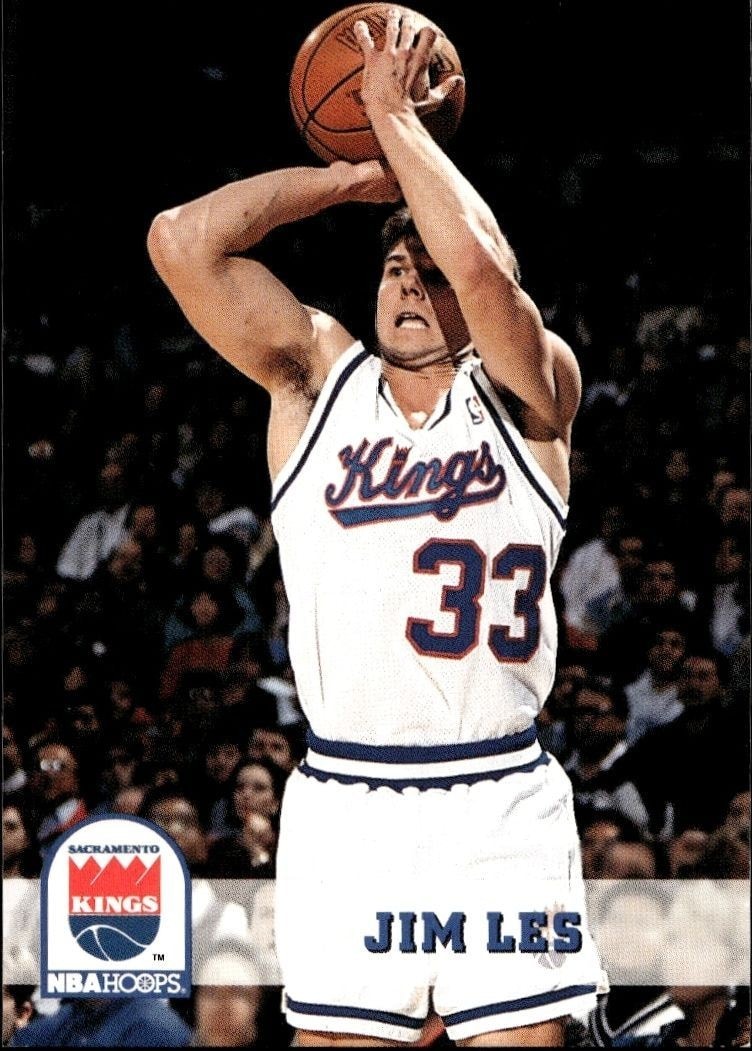
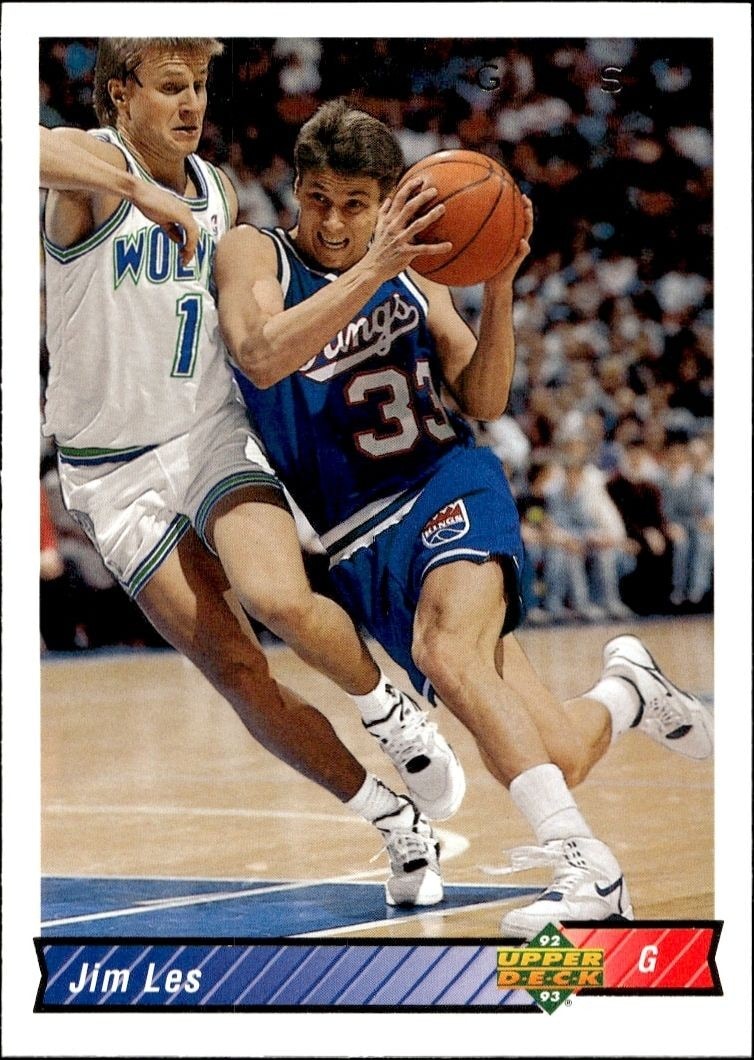
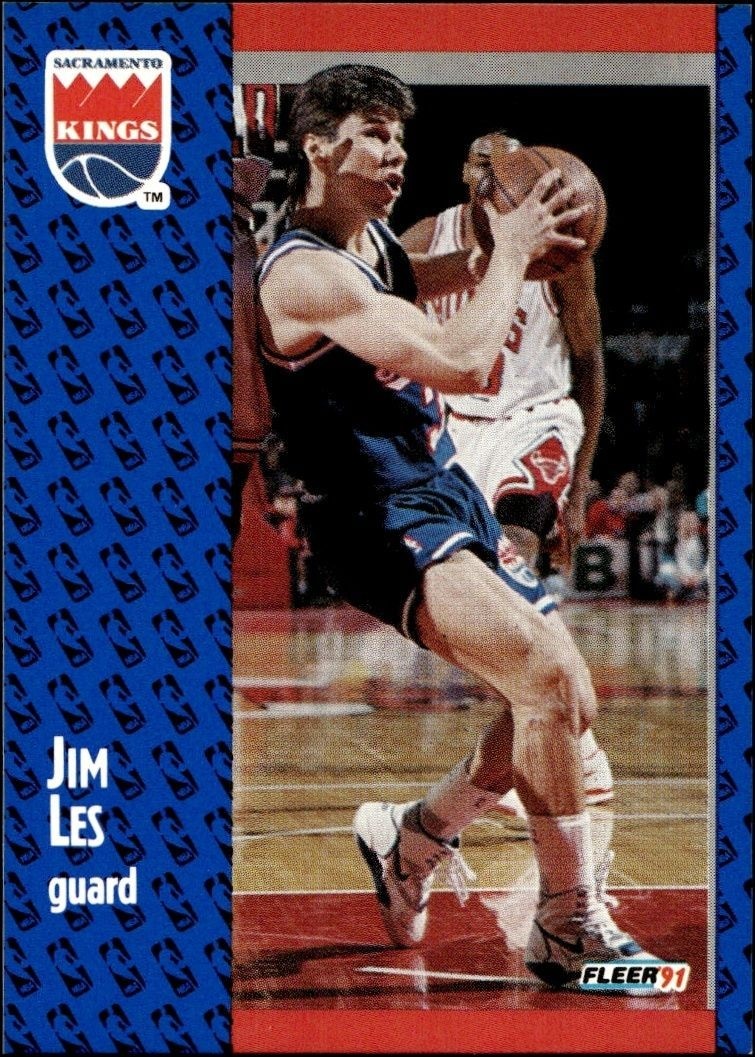
Explore the catalog for the 1991-92 Upper Deck Jim Les #360 basketball trading card, a vintage collectible featuring the Sacramento Kings guard.
1991-92 • Upper Deck
National Basketball Association • Sacramento Kings
Near Mint
360
New
Shipping Calculated at Checkout
Arrives in 5-7 daysEstimated delivery October 23, 2026 - October 25, 2026
Seller returns October 19, 2026.30-day Returns| Condition | Value | Source | Trend | Price Details |
|---|---|---|---|---|
$1.15 | Guide Estimate | -2.5% | ||
$17.50 | Guide Estimate | 0% | ||
Raw / Ungraded
PriceCharting Price Guide · Guide Estimate evidence · captured Oct 16, 2026
The 1991-92 Upper Deck Jim Les #360 basketball card represents a specific entry in the early history of the Upper Deck brand, a manufacturer that revolutionized sports trading cards with its high-quality production standards during this era. As card number 360 in the base set, this product features Jim Les, who was associated with the Sacramento Kings during the 1991-92 NBA season. For collectors focusing on vintage basketball memorabilia, this card serves as a tangible link to the league's roster compositions from the early 1990s. Collecting cards from the 1991-92 Upper Deck set appeals to those who appreciate the transition in design aesthetics and printing techniques that defined that period. The #360 card number places it within the broader scope of the release, allowing enthusiasts to track down specific players from that season. Whether you are building a set dedicated to the Sacramento Kings or focusing on the career of Jim Les, this catalog entry provides the essential reference for identifying the correct product. Vintage basketball cards from this era are valued for their historical context and the role they play in documenting the sport's past. The 1991-92 Upper Deck Jim Les #360 card is a standard component for those seeking to complete collections or acquire specific player cards from the NBA. The enduring interest in this product highlights the continued relevance of early 90s basketball cards in the modern collecting market.
15 hours ago
We'll pre-fill the product details from this catalog entry, so your listing lands on this exact page. Just add photos of your copy, pick its condition, and set your price.
The catalog profile below summarizes the card identity, featured subject, and notable collectible traits.
The core identity of the card within the set.
The subject, team, league, and sport context tied to this card.
Production details and format-specific attributes.
Material
Card Stock
Language
English
Compare prices, grades, photos, and shipping from approved sellers.
New
Near Mint
See how many public collections currently include this card.
0 collectors have this card
This 1991-92 Upper Deck Jim Les card sits in the entry-level tier of NBA basketball collectibles, reflecting the player's role as a solid contributor rather than a franchise cornerstone. Its current valuation is modest compared to star counterparts from the same era, aligning with its status as a standard base card without additional scarcity modifiers. The single active listing suggests a thin market, where immediate acquisition is possible but resale liquidity may be limited for casual collectors.
The card lacks any special attributes such as serial numbering, short printing, or parallel finishes, meaning it is a standard base issue from the set. Consequently, its supply is determined by the original print run of the 1991-92 Upper Deck basketball set, which was produced in high volumes for mass distribution. Without unique scarcity mechanics like limited editions or one-of-one variations, this card relies entirely on general player interest for its relative standing.
As a non-rookie card from the early 1990s, this item does not benefit from the rookie-card premium that typically drives long-term value appreciation for players of Les' caliber. The absence of special attributes limits its appeal to specialized set builders, resulting in steady but low-demand collector interest. Future value retention will likely track with the broader macro-trends of 90s basketball cards rather than individual player performance metrics.
