



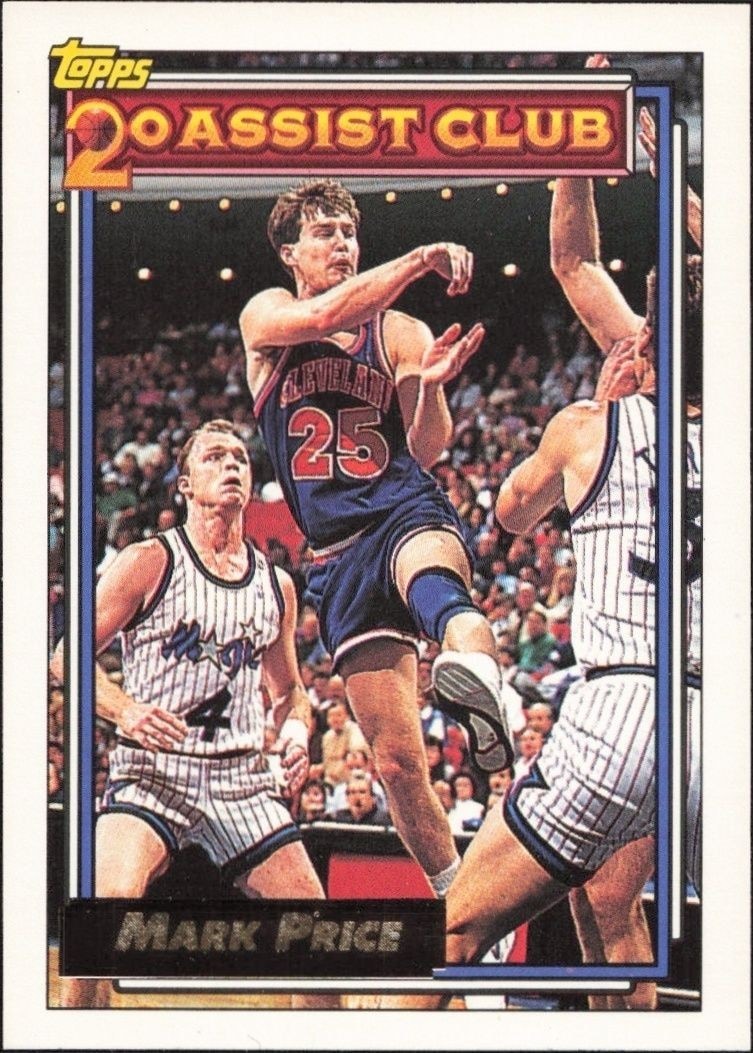
The 1991-92 Upper Deck Jimmy Oliver #19 basketball card features the Cleveland Cavaliers guard during his NBA rookie season. This vintage card is a staple for collectors of 1990s basketball memorabilia.
1991-92 • Upper Deck
National Basketball Association • Cleveland Cavaliers
Near Mint
19
New
Shipping Calculated at Checkout
Arrives in 6-8 daysEstimated delivery October 23, 2026 - October 25, 2026
Seller returns October 19, 2026.30-day Returns| Condition | Value | Source | Trend | Price Details |
|---|---|---|---|---|
$1.61As of 9/22/2026 | Guide Estimate | |||
Raw / Ungraded
PriceCharting Price Guide · Guide Estimate evidence · captured Sep 22, 2026
History is building. At least two days of matching observations are needed to show a trend.
Each point is the last stored observation that day for this printing, condition, grader, autograph status and source. Gaps mean no observation; guide estimates and asking prices are not completed sales.The 1991-92 Upper Deck Jimmy Oliver #19 basketball card captures the Cleveland Cavaliers guard during his rookie season in the NBA. As part of the landmark 1991-92 Upper Deck set, this card represents a pivotal era in basketball collectibles when the brand revolutionized the industry with its glossy, high-quality printing and larger card dimensions. Collectors often seek this issue to complete base sets from the early 1990s or to focus on players who had significant tenures in the league despite not always achieving superstar status. Jimmy Oliver, selected in the first round of the 1991 NBA Draft, brought a strong scoring presence to the Cavaliers. The #19 card number places it within the main base set, making it a fundamental component for those building comprehensive collections of Cavaliers history or 1990s NBA rosters. Whether you are looking to add a piece of Cavaliers history to your shelf or track down specific rookie-year cards from the early 90s, this product provides a tangible connection to the sport's past. The enduring appeal of 1990s basketball cards lies in their design simplicity and the nostalgia they evoke for fans who watched the game grow during that period. By focusing on the catalog identity, collectors can appreciate the card as a standalone piece of sports history rather than just a graded slab.
41 minutes ago
We'll pre-fill the product details from this catalog entry, so your listing lands on this exact page. Just add photos of your copy, pick its condition, and set your price.
The catalog profile below summarizes the card identity, featured subject, and notable collectible traits.
The core identity of the card within the set.
The subject, team, league, and sport context tied to this card.
Production details and format-specific attributes.
Material
Card Stock
Language
English
Compare prices, grades, photos, and shipping from approved sellers.
New
Near Mint
See how many public collections currently include this card.
0 collectors have this card
This 1991-92 Upper Deck Jimmy Oliver card sits in the entry-level price tier, reflecting its status as a standard base card from a major mainstream set. The current market positioning suggests modest liquidity with limited premium potential compared to star players or unique variations within the same product line. Its value is primarily driven by the nostalgia of the early 1990s basketball card boom rather than exceptional card-specific attributes.
As a standard base card with no noted special attributes, this item represents the highest volume tier of production within the Upper Deck basketball series. It lacks the supply-constraining mechanics of serial numbering, short printing, or parallel variations that typically drive scarcity premiums. Consequently, the available supply is determined solely by the initial print run of the base set, making it widely accessible to collectors.
Investment potential is constrained by the card's position as a common rookie-year issue for a player who did not achieve sustained stardom or Hall of Fame recognition. Demand is likely limited to specific Cleveland Cavaliers collectors or those completing 1991-92 base set requirements, resulting in a flat appreciation trajectory. Collectors should view this as a low-cost acquisition for set completion rather than a vehicle for significant capital growth.