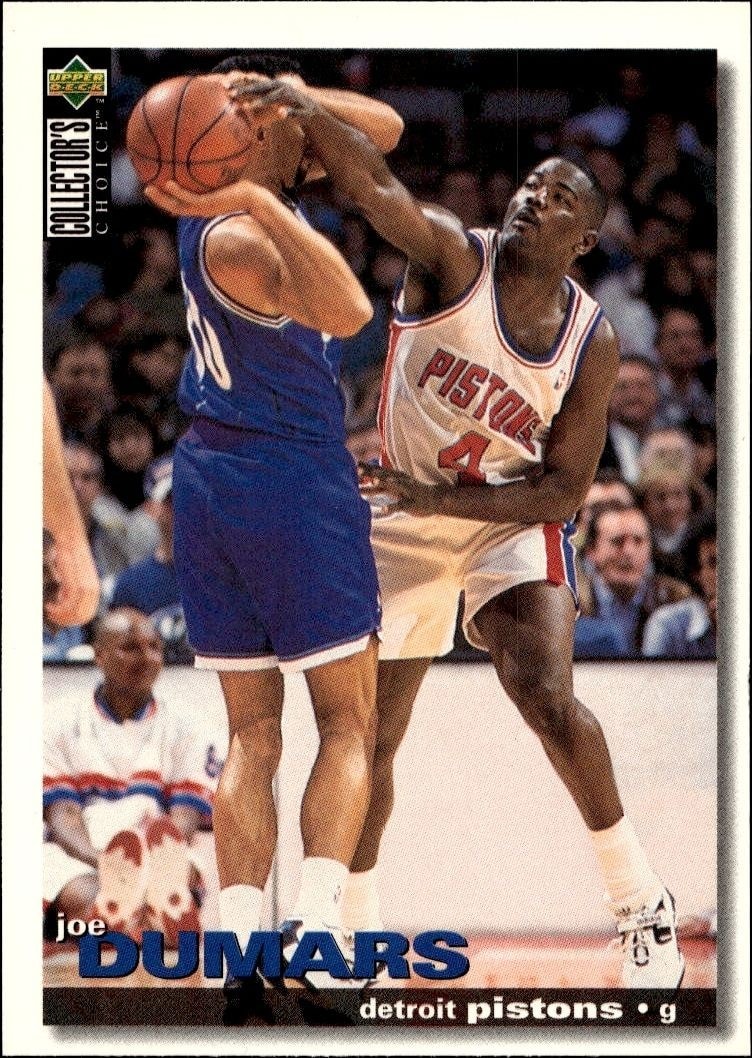




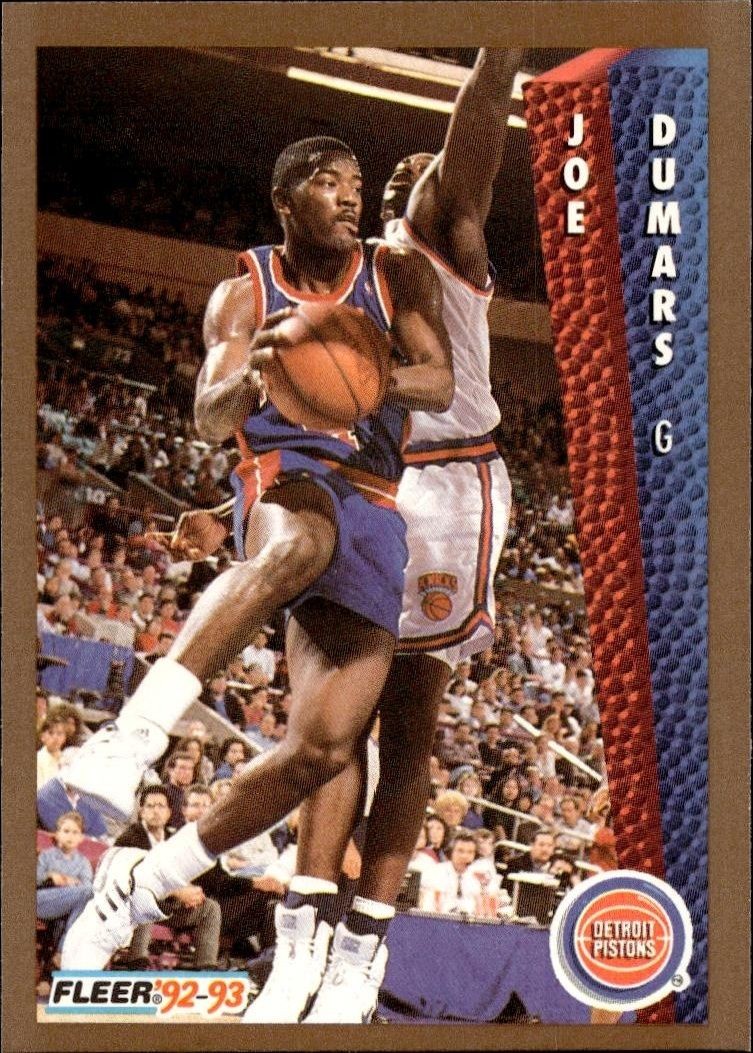

The 1991-92 Upper Deck Joe Dumars #61 basketball card captures the skill of a Detroit Pistons legend. This key card from a premier NBA trading card set is essential for dedicated collectors.
1991-92 • Upper Deck
National Basketball Association • Detroit Pistons
Near Mint
61
New
Shipping Calculated at Checkout
Arrives in 5-7 daysEstimated delivery October 23, 2026 - October 25, 2026
Seller returns October 19, 2026.30-day Returns| Condition | Value | Source | Trend | Price Details |
|---|---|---|---|---|
$0.73 | Guide Estimate | |||
$8.99 | Guide Estimate | |||
$10.00 | Guide Estimate | |||
$11.00 | Guide Estimate | |||
$30.00 | Guide Estimate | |||
$14.00 | Guide Estimate | |||
$22.99 | Guide Estimate | |||
$14.00 | Guide Estimate | |||
Raw / Ungraded
PriceCharting Price Guide · Guide Estimate evidence · captured Oct 7, 2026
History is building. At least two days of matching observations are needed to show a trend.
Each point is the last stored observation that day for this printing, condition, grader, autograph status and source. Gaps mean no observation; guide estimates and asking prices are not completed sales.The 1991-92 Upper Deck Joe Dumars #61 basketball card stands as a significant piece of sports memorabilia for enthusiasts of the Detroit Pistons and NBA history. Released during a pivotal era for the franchise, this card highlights Dumars' established role as one of the league's premier shooting guards. Joe Dumars was a cornerstone of the Pistons' success, known for his defensive prowess and clutch scoring. For collectors, this card represents more than just a player portrait; it is a tangible connection to a championship-caliber team and a player who would later be inducted into the Basketball Hall of Fame. The #61 designation places it squarely within the base set, making it a fundamental component for those looking to complete their collection of 1991-92 Upper Deck cards. Collecting this product appeals to a wide range of hobbyists. Set builders will find it an indispensable part of their album, while dedicated Pistons fans may seek it out to commemorate Dumars' legendary tenure in Detroit. The card's design is straightforward yet striking, allowing the imagery of the player to take center stage. As the market for vintage basketball cards continues to grow, items from the early 1990s are increasingly valued for their nostalgia and historical significance. Whether you are looking to add to your long-term collection or find a meaningful gift for a fellow enthusiast, the 1991-92 Upper Deck Joe Dumars #61 basketball card offers a compelling blend of history and collectible value. It remains a popular choice for anyone interested in the golden age of NBA trading cards.
11 hours ago
We'll pre-fill the product details from this catalog entry, so your listing lands on this exact page. Just add photos of your copy, pick its condition, and set your price.
The catalog profile below summarizes the card identity, featured subject, and notable collectible traits.
The core identity of the card within the set.
The subject, team, league, and sport context tied to this card.
Production details and format-specific attributes.
Material
Card Stock
Language
English
Compare prices, grades, photos, and shipping from approved sellers.
New
Near Mint
See how many public collections currently include this card.
0 collectors have this card
This base 1991-92 Upper Deck Joe Dumars card sits at the lower end of the market spectrum, reflecting its status as a common base issue rather than a premium insert. While Dumars remains a significant figure in Pistons history, the lack of special attributes means this specific slab trades at a volume-driven price point typical for ungraded or raw common cards. It commands a modest premium only relative to other base cards from the same set, lacking the scarcity premiums that drive higher valuations.
As a standard base card with no special attributes, this item carries the highest possible supply within the 1991-92 Upper Deck basketball set. There are no serial numbering constraints, short-print designations, or parallel layers to limit the available population. Consequently, the scarcity mechanic is entirely absent, making it a high-volume item where supply significantly outstrips the specialized demand for base-level assets.
The investment potential is limited by the card's position as a non-premium, base-issue product in a highly saturated market. Without rookie-card status, special parallels, or unique scarcity mechanics, collector demand remains minimal and price appreciation is unlikely. Investors typically look for graded examples of key rookies or low-print inserts, whereas this unattributed base card serves more as a filler acquisition than a growth-oriented asset.