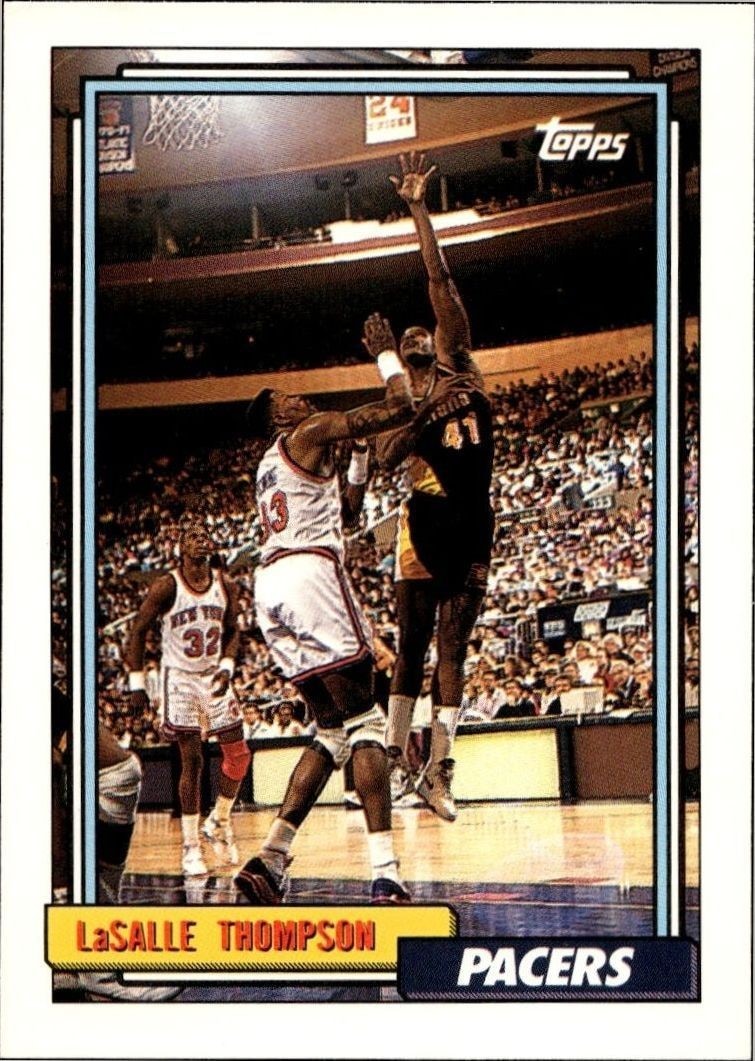




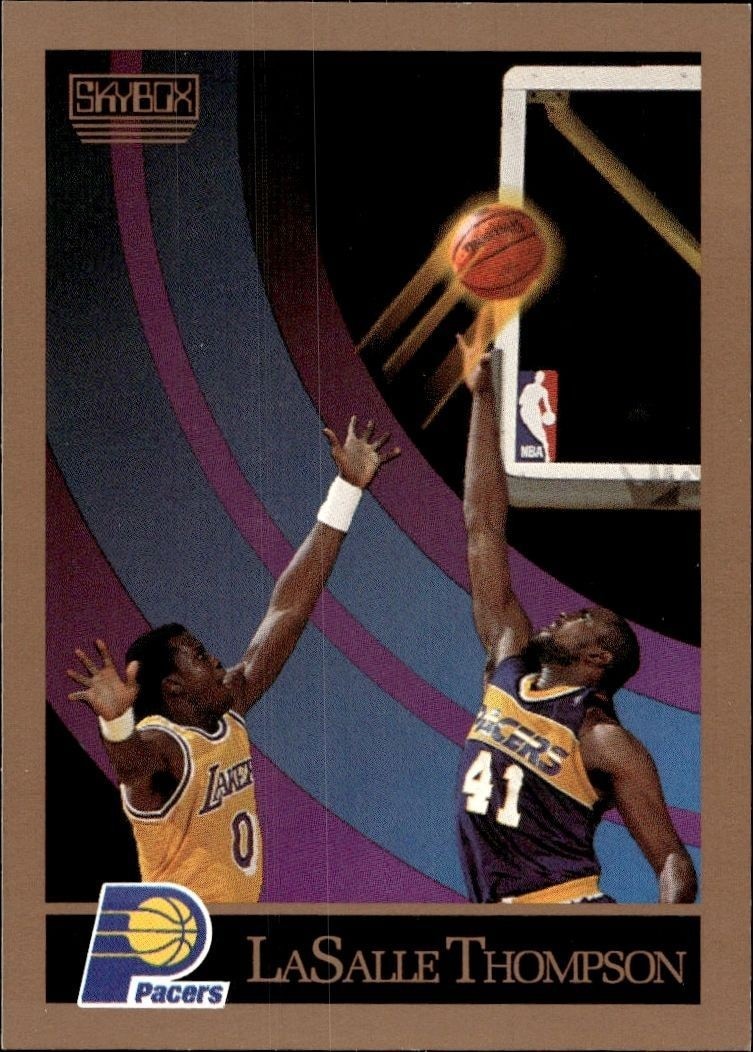
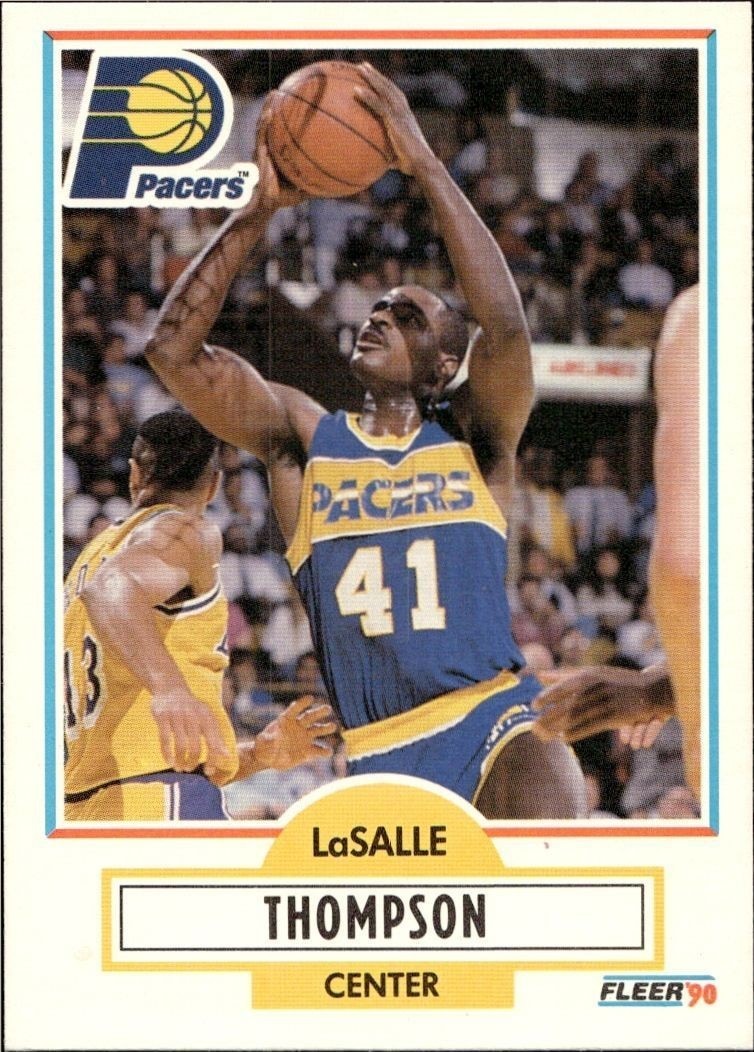


The 1991-92 Upper Deck LaSalle Thompson #218 sports card featuring Indiana Pacers forward LaSalle Thompson in the NBA.
1991-92 • Upper Deck
National Basketball Association • Indiana Pacers
Near Mint
218
New
Shipping Calculated at Checkout
Arrives in 5-7 daysEstimated delivery October 23, 2026 - October 25, 2026
Seller returns October 19, 2026.30-day Returns| Condition | Value | Source | Trend | Price Details |
|---|---|---|---|---|
$0.99 | Guide Estimate | 0% | ||
Raw / Ungraded
PriceCharting Price Guide · Guide Estimate evidence · captured Oct 18, 2026
LaSalle Thompson appears on card number 218 of the 1991-92 Upper Deck basketball trading card set, representing a specific era of NBA history. This release captures the forward during his tenure with the Indiana Pacers, providing collectors with a tangible connection to the league's competitive landscape in the early 1990s. The 1991-92 Upper Deck series remains a foundational product for enthusiasts who appreciate the design and production values of that period, making this card a standard reference point for those researching player rosters from that time. For collectors focusing on Indiana Pacers history, this entry serves as an essential component for completing team-based subsets or building comprehensive league collections. The product identity is anchored in its specific card number and brand lineage, offering a clear catalog reference for both novice and experienced traders. Upper Deck's approach during the 1991-92 season established many of the visual and structural norms that would define sports card collecting for years to come. Owning a card from this set allows enthusiasts to engage with the physical artifact that documents Thompson's professional journey. Whether you are seeking to fill a gap in your Indiana Pacers collection or looking to expand your holdings of 1990s NBA memorabilia, this card provides a direct link to the past. The 1991-92 Upper Deck brand is widely recognized for its quality, and card #218 stands as a distinct identifier within that framework. Collectors often value these cards for their historical significance and their role in documenting the careers of athletes who shaped the game.
22 hours ago
We'll pre-fill the product details from this catalog entry, so your listing lands on this exact page. Just add photos of your copy, pick its condition, and set your price.
The catalog profile below summarizes the card identity, featured subject, and notable collectible traits.
The core identity of the card within the set.
The subject, team, league, and sport context tied to this card.
Production details and format-specific attributes.
Material
Card Stock
Language
English
Compare prices, grades, photos, and shipping from approved sellers.
New
Near Mint
See how many public collections currently include this card.
0 collectors have this card
LaSalle Thompson's 1991-92 Upper Deck card sits in an accessible entry-level price tier, reflecting his role as a solid rotational player rather than a franchise cornerstone during this era. The base nature of this issue means it lacks the premium valuation associated with parallel versions or high-grade specimens, trading in line with common rookie-year inventory for non-superstar talents. Condition sensitivity is likely minimal given the abundance of surviving copies, keeping the market stable but flat.
This card is a standard base insert within the 1991-92 Upper Deck basketball set, meaning it carries no inherent scarcity mechanics such as serial numbering, short-printing, or unique parallels. Supply is determined by the original print run of the base set, which was produced in large quantities to meet broad collector demand. Consequently, the card does not benefit from limited edition constraints or one-of-one exclusivity that typically drive scarcity premiums in the secondary market.
As a rookie card, this item benefits from the foundational collector interest associated with a player's first major release, though Thompson's career trajectory limits broad speculative demand. The general basketball market for mid-tier rookies from the early 1990s tends to trade steadily without significant appreciation, driven by nostalgia rather than growth potential. Investors should view this as a low-risk addition for completing a base set rather than a vehicle for substantial capital appreciation.