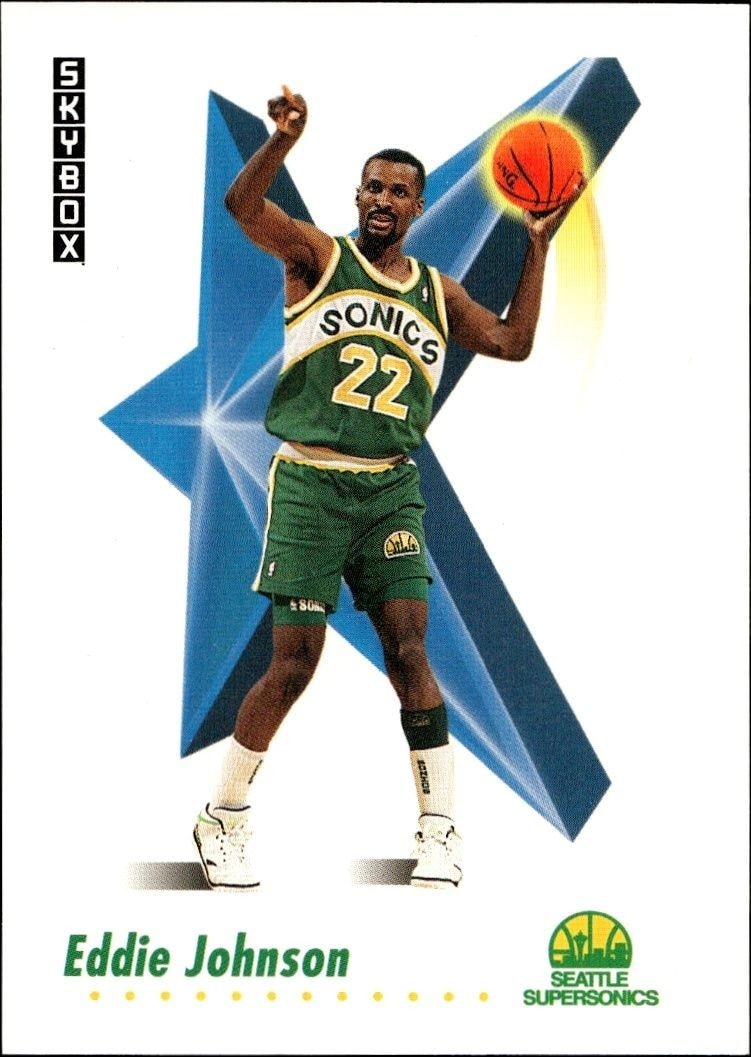


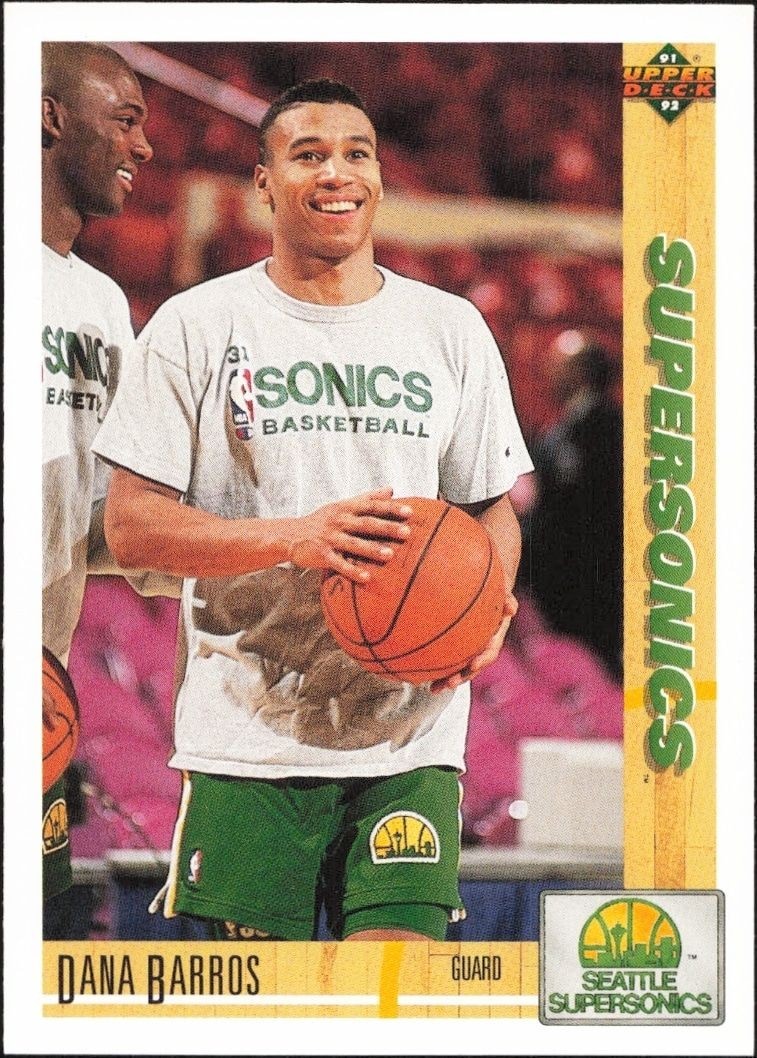



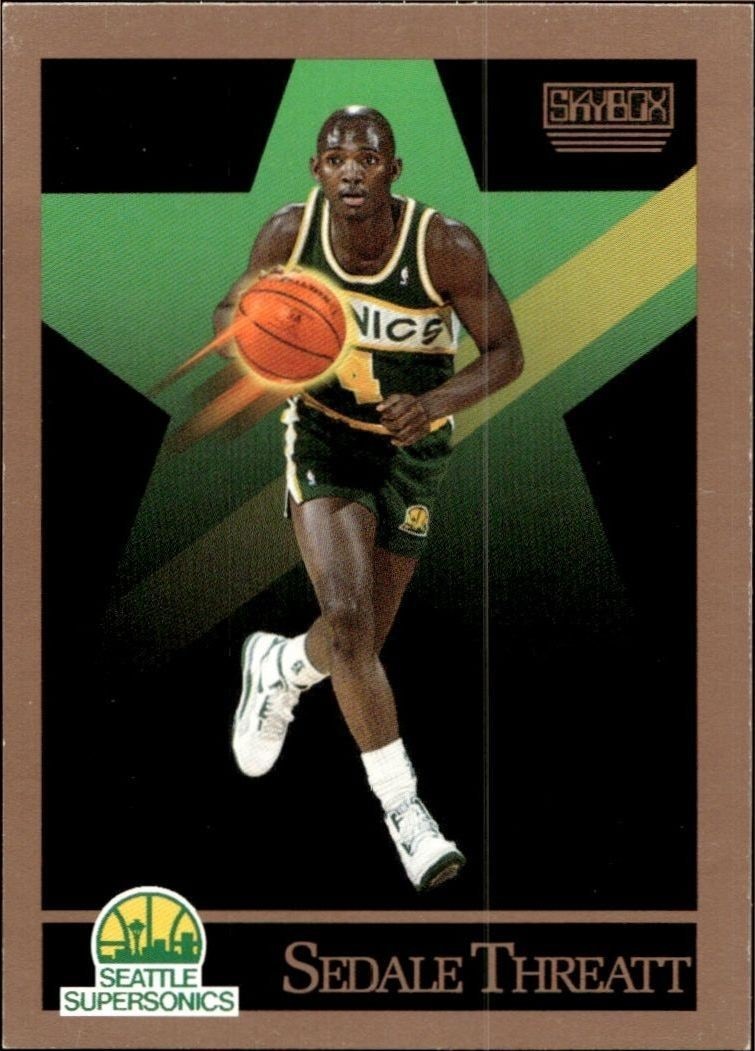
The 1991-92 Upper Deck Sedale Threatt #110 basketball card captures the Seattle SuperSonics guard during a pivotal NBA season. This product represents the standard base card identity for collectors.
1991-92 • Upper Deck
National Basketball Association • Seattle SuperSonics
Near Mint
110
New
Shipping Calculated at Checkout
Arrives in 5-7 daysEstimated delivery October 23, 2026 - October 25, 2026
Seller returns October 19, 2026.30-day Returns| Condition | Value | Source | Trend | Price Details |
|---|---|---|---|---|
$1.12 | Guide Estimate | |||
Raw / Ungraded
PriceCharting Price Guide · Guide Estimate evidence · captured Oct 7, 2026
History is building. At least two days of matching observations are needed to show a trend.
Each point is the last stored observation that day for this printing, condition, grader, autograph status and source. Gaps mean no observation; guide estimates and asking prices are not completed sales.The 1991-92 Upper Deck Sedale Threatt #110 basketball card represents a foundational piece for collectors of NBA history and Seattle SuperSonics memorabilia. Released during a transformative era for the league, this card features Sedale Threatt, a dynamic point guard who brought speed and playmaking to the Sonics roster. Upper Deck entered the sports card market in 1990 with a revolutionary approach, and by the 1991-92 season, the brand had established itself as a premium standard for basketball enthusiasts. Sedale Threatt's tenure with Seattle is remembered for his versatility and ability to control the pace of the game. As a guard, he played a crucial role in the team's offensive system, often facilitating plays and scoring efficiently. For collectors, this card serves as a tangible connection to that specific period in franchise history. The 1991-92 Upper Deck set remains a staple in many collections, offering a mix of rookie cards, veteran staples, and emerging stars. Threatt's inclusion on card number 110 places him among a diverse group of players who defined the era's competitive landscape. Collecting this card allows enthusiasts to explore the nuances of early 1990s basketball culture. The Upper Deck brand is synonymous with quality and innovation, making its releases from this time highly sought after by hobbyists. Whether you are building a comprehensive set of 1991-92 Upper Deck cards or focusing on specific teams like the Seattle SuperSonics, this card provides a valuable addition to your portfolio. The enduring appeal of this release lies in its ability to capture the energy and style of NBA basketball during the late 1980s and early 1990s. As the market for vintage sports cards continues to grow, understanding the context of these releases enhances the collecting experience. Sedale Threatt #110 is a testament to the rich history of the Seattle SuperSonics and the broader NBA community.
7 hours ago
We'll pre-fill the product details from this catalog entry, so your listing lands on this exact page. Just add photos of your copy, pick its condition, and set your price.
The catalog profile below summarizes the card identity, featured subject, and notable collectible traits.
The core identity of the card within the set.
The subject, team, league, and sport context tied to this card.
Production details and format-specific attributes.
Material
Card Stock
Language
English
Compare prices, grades, photos, and shipping from approved sellers.
New
Near Mint
See how many public collections currently include this card.
0 collectors have this card
This 1991-92 Upper Deck Sedale Threatt card represents a baseline entry point within the broader NBA collectible market, trading at the lowest tier relative to star players or rookie cards from the same era. The current market price reflects a commodity-level valuation typical for role players in mass-produced sets from this period. Condition sensitivity is likely minimal given the abundance of copies, meaning premium grades do not significantly diverge from raw market values.
The card possesses no special scarcity attributes such as serial numbering, short printing, or parallel variants, placing it firmly in the base set category. This lack of distinct scarcity mechanics means the supply is determined entirely by the original print run, which was likely substantial for a mainstream brand like Upper Deck. Consequently, the card does not carry the limited supply dynamics that typically drive collector demand for niche or exclusive inserts.
As a non-rookie card for a role player in a high-volume set, the investment outlook is limited by the lack of rookie-card premium mechanics or unique set positioning. Collector demand is primarily driven by general nostalgia for the early 1990s NBA era rather than specific player achievements or card exclusivity. Long-term value appreciation is unlikely to outpace the broader market for common vintage basketball cards without external factors such as significant player fame changes.