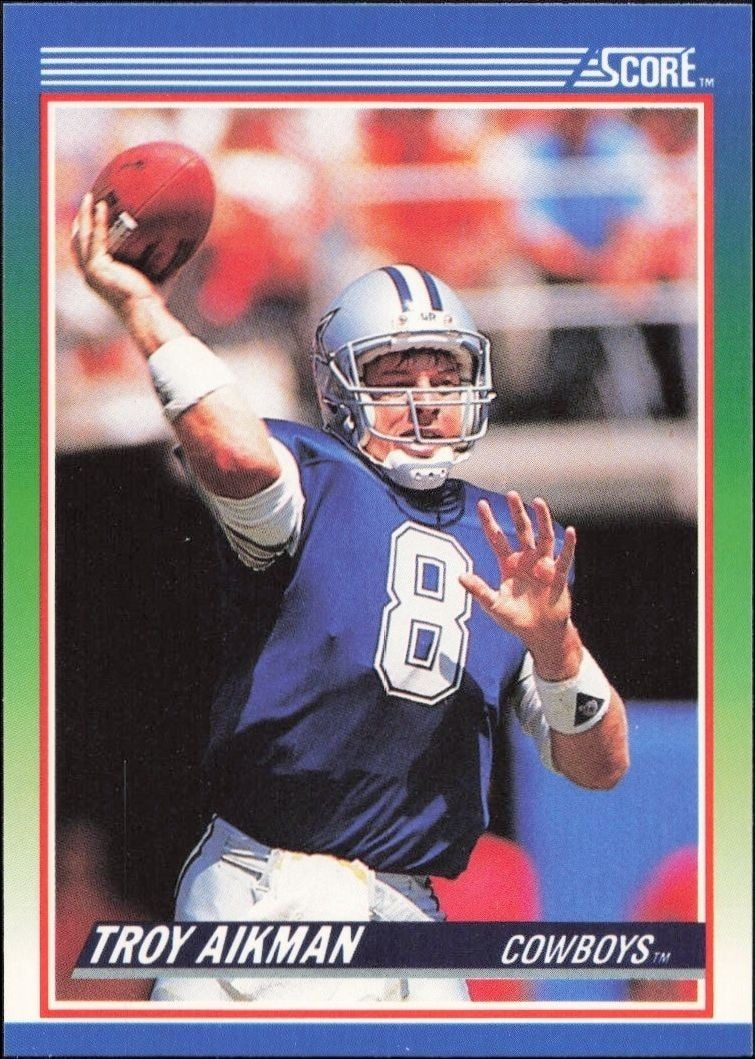




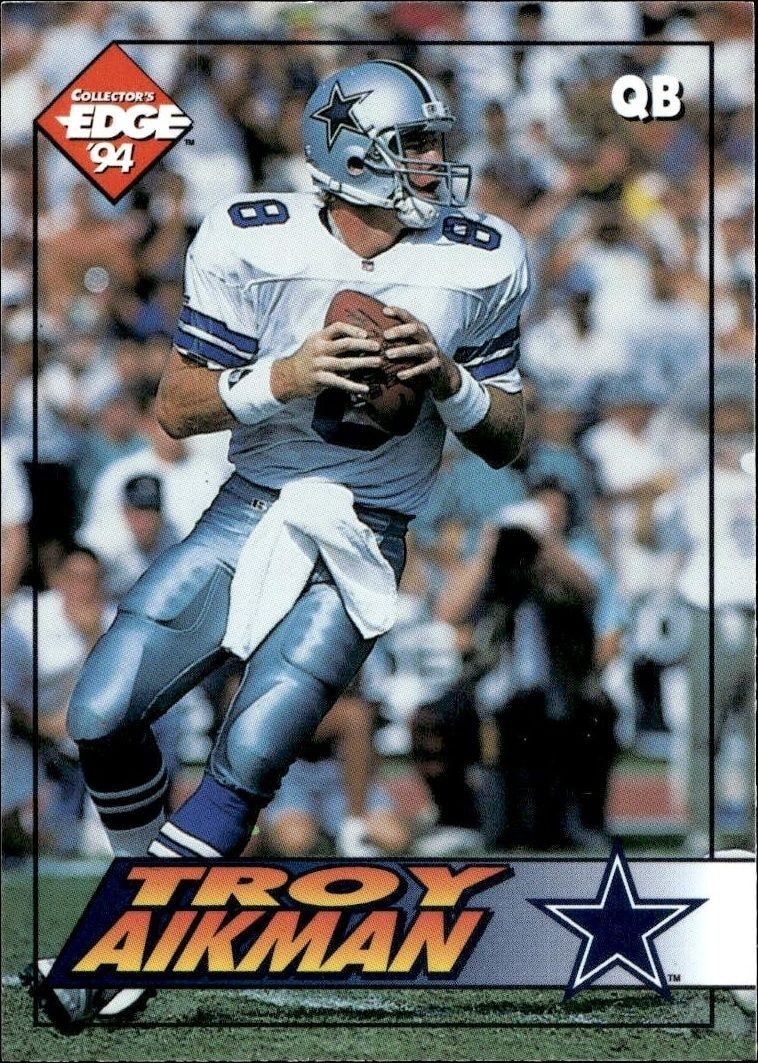
The 1991 Fleer Ultra Troy Aikman #162 football card captures the Dallas Cowboys quarterback in a classic design from one of the most sought-after sets of the early 1990s.
1991 • Fleer • Ultra
National Football League • Dallas Cowboys
Excellent
162
New
Shipping Calculated at Checkout
Arrives in 5-7 daysEstimated delivery October 23, 2026 - October 25, 2026
Seller returns October 19, 2026.30-day Returns| Condition | Value | Source | Trend | Price Details |
|---|---|---|---|---|
$1.44 | Guide Estimate | 0% | ||
$10.00 | Guide Estimate | 0% | ||
$11.50 | Guide Estimate | 0% | ||
$13.00 | Guide Estimate | 0% | ||
$53.00 | Guide Estimate | 0% | ||
$25.00 | Guide Estimate | 0% | ||
$40.94 | Guide Estimate | 0% | ||
$25.00 | Guide Estimate | 0% | ||
Raw / Ungraded
PriceCharting Price Guide · Guide Estimate evidence · captured Oct 6, 2026
Troy Aikman leads the Dallas Cowboys as the franchise quarterback on this 1991 Fleer Ultra #162 football card. Released during a pivotal era for the team, this card represents a significant moment in NFL trading card history. The 1991 Fleer Ultra set is renowned among collectors for its distinctive silver foil borders and high-quality design, which set it apart from other releases of the time. As a key piece for fans of the NFL and the Dallas Cowboys, this card features Aikman in his iconic Cowboys uniform, showcasing the star player who would lead the team to multiple Super Bowl victories in the following decade. The card's clean layout and premium finish make it a favorite for those building vintage football collections. The combination of Aikman's Hall of Fame career and the premium nature of the Ultra set ensures this card remains a staple in many football collections. Whether you are a long-time fan of the Cowboys or a serious collector of 1990s football cards, this #162 release holds a special place in the hobby. The 1991 Fleer Ultra series is often cited as one of the best designs from the era, making cards like this Troy Aikman issue particularly desirable for those who appreciate the aesthetic and historical significance of early 90s sports memorabilia. Adding this card to your collection connects you to a golden age of football and trading card design.
10 hours ago
We'll pre-fill the product details from this catalog entry, so your listing lands on this exact page. Just add photos of your copy, pick its condition, and set your price.
The catalog profile below summarizes the card identity, featured subject, and notable collectible traits.
The core identity of the card within the set.
The subject, team, league, and sport context tied to this card.
Production details and format-specific attributes.
Material
Card Stock
Language
English
Compare prices, grades, photos, and shipping from approved sellers.
New
Excellent
See how many public collections currently include this card.
0 collectors have this card
This 1991 Fleer Ultra Troy Aikman card represents a foundational entry point for Dallas Cowboys collectors, trading at a modest valuation relative to its iconic status. As a base card from a highly regarded set, it commands a steady but accessible price tier, reflecting its condition-sensitive nature rather than rarity-driven premiums. Its current positioning suggests it serves as a volume-oriented asset for those building early-era NFL collections.
The card lacks any special scarcity attributes such as serial numbering, short prints, or parallel variants, placing it firmly in the base set category. This means its supply is determined solely by the overall print run of the 1991 Fleer Ultra set, with no artificial constraints limiting availability. Consequently, the scarcity is purely functional, relying on the preservation of high-grade copies from a large initial production.
As a rookie card for a Hall of Fame quarterback, this issue benefits from consistent long-term demand driven by the enduring popularity of the Dallas Cowboys brand. The lack of special parallels keeps the entry barrier low, making it a practical acquisition for new collectors entering the hobby. Its value trajectory is likely to track with the broader market for 1990s base rookie cards, offering stability rather than explosive growth.