




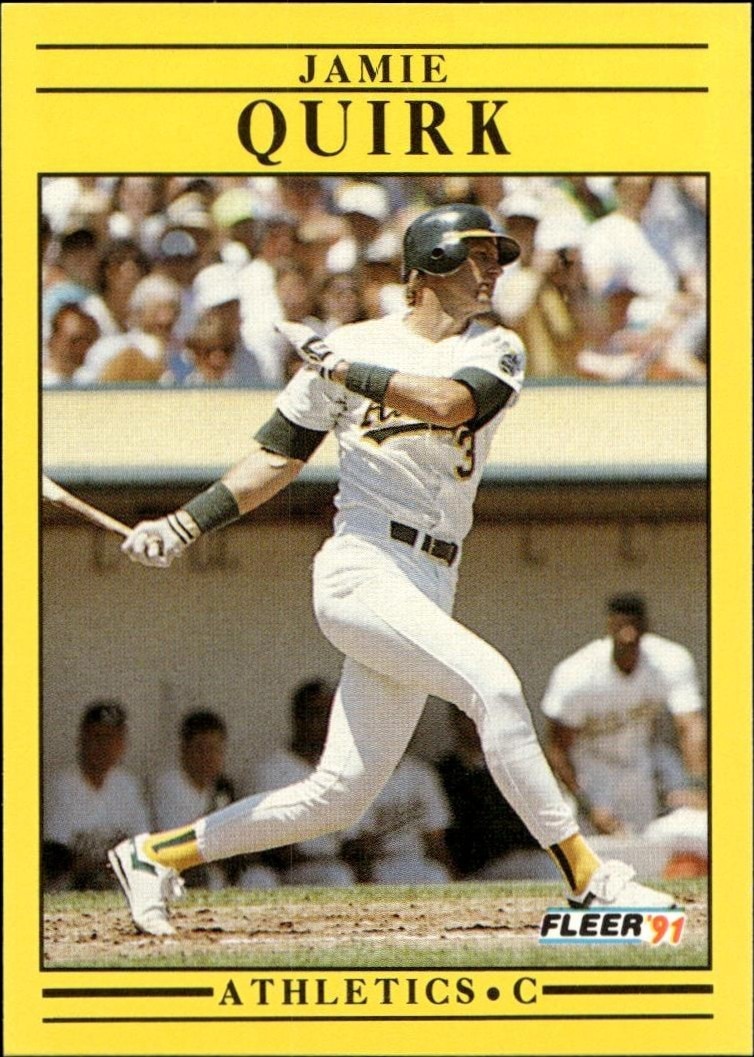



The 1991 Topps Jamie Quirk #132 baseball card captures the Oakland Athletics infielder during a pivotal era of MLB history. This collectible sports card is a staple for vintage set builders.
1991 • Topps
Major League Baseball • Oakland Athletics
Excellent
132
New
Shipping Calculated at Checkout
This seller is away until 10/19/2026 — orders are still accepted and ship after they return.30-day Returns| Condition | Value | Source | Trend | Price Details |
|---|---|---|---|---|
$1.58As of 9/29/2026 | Guide Estimate | |||
$2.27As of 9/29/2026 | Guide Estimate | |||
Raw / Ungraded
PriceCharting Price Guide · Guide Estimate evidence · captured Sep 29, 2026
History is building. At least two days of matching observations are needed to show a trend.
Each point is the last stored observation that day for this printing, condition, grader, autograph status and source. Gaps mean no observation; guide estimates and asking prices are not completed sales.The 1991 Topps Jamie Quirk #132 baseball card represents a specific moment in Major League Baseball history, featuring the Oakland Athletics infielder during the early 1990s. As one of the most recognizable brands in the hobby, Topps established a standard design language that collectors still reference today, making cards from this era highly sought after for their nostalgic value and historical context. This card, numbered 132 in the base set, serves as an essential component for enthusiasts aiming to complete their 1991 Topps collection. Collecting vintage baseball cards from the early 90s offers a unique window into the sport's transition period. The Oakland Athletics were a competitive force during this time, and players like Jamie Quirk are remembered for their contributions to the team's identity. For investors and hobbyists alike, the 1991 Topps release remains a foundational product in the trading card market, providing accessible entry points into the hobby while offering long-term potential for those who understand the nuances of vintage card collecting. The appeal of the 1991 Topps Jamie Quirk #132 baseball card lies in its simplicity and historical significance. It is not just a piece of cardboard but a tangible connection to the games played decades ago. Whether you are looking to fill a gap in your personal archive or add a recognizable face from the Oakland Athletics lineup to your portfolio, this card delivers on both fronts. The enduring popularity of Topps products ensures that this release continues to be a relevant and desirable item for anyone passionate about baseball history and the evolution of sports trading cards.
1 day ago
We'll pre-fill the product details from this catalog entry, so your listing lands on this exact page. Just add photos of your copy, pick its condition, and set your price.
The catalog profile below summarizes the card identity, featured subject, and notable collectible traits.
The subject, team, league, and sport context tied to this card.
Production details and format-specific attributes.
Material
Card Stock
Language
English
Compare prices, grades, photos, and shipping from approved sellers.
New
Excellent
See how many public collections currently include this card.
0 collectors have this card
This 1991 Topps base card of Jamie Quirk represents a low-tier entry point within the broader Oakland Athletics and MLB collectibles market. As a standard issue without special attributes, it trades significantly below premium parallels or graded examples, reflecting its status as a common circulation item. The current valuation suggests it serves primarily as a budget-friendly acquisition for collectors completing specific team or year sets rather than as a standalone investment piece.
The card lacks any scarcity drivers such as serial numbering, short-print status, or unique parallels, making it a standard base card from a high-volume production run. Its supply is effectively unlimited relative to collector demand, as no limited edition mechanics or one-of-one variations are present to constrain availability. Consequently, the physical card exists in a vast pool of identical units, offering no inherent rarity premium beyond its age and subject matter.
As a non-rookie card from the early 1990s, this item does not benefit from the rookie-card premium mechanics that typically drive long-term value appreciation in baseball. Demand is likely limited to niche collectors seeking specific team completions for the Oakland Athletics during this era, resulting in stable but low growth potential. Without grading or special attributes to enhance its appeal, it remains a speculative hold with minimal upside compared to more sought-after parallels or key rookies.