



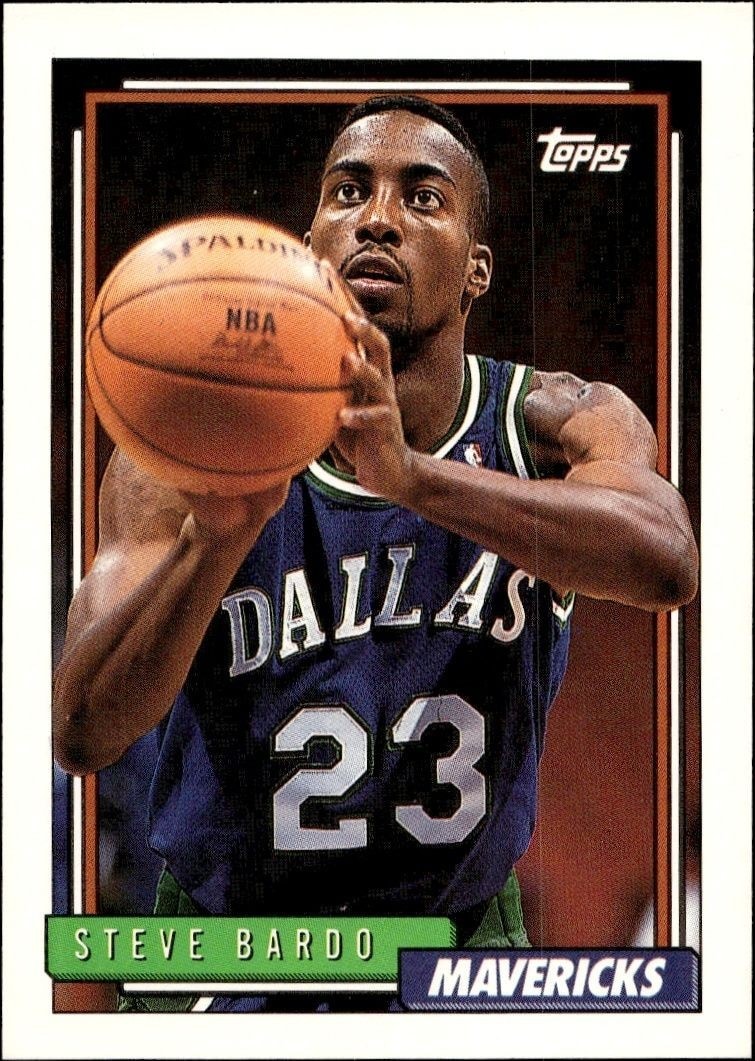
The 1992-93 Fleer Steve Bardo #321 basketball card captures the Dallas Mavericks guard during the early 1990s NBA era.
1992-93 • Fleer
National Basketball Association • Dallas Mavericks
Excellent
321
New
Shipping Calculated at Checkout
This seller is away until 10/19/2026 — orders are still accepted and ship after they return.30-day Returns| Condition | Value | Source | Trend | Price Details |
|---|---|---|---|---|
$1.25 | Guide Estimate | |||
Raw / Ungraded
PriceCharting Price Guide · Guide Estimate evidence · captured Oct 6, 2026
History is building. At least two days of matching observations are needed to show a trend.
Each point is the last stored observation that day for this printing, condition, grader, autograph status and source. Gaps mean no observation; guide estimates and asking prices are not completed sales.Steve Bardo appeared in the 1992-93 Fleer basketball card set as card number 321, representing his tenure with the Dallas Mavericks. This issue is part of a growing collection of vintage sports trading cards that document the NBA landscape of the early 1990s. Collectors often seek out cards from this era to complete foundational sets or to explore the history of players who contributed to their franchises during pivotal seasons. The 1992-93 Fleer brand is recognized for its distinctive design elements and comprehensive coverage of league rosters, making it a staple for hobbyists building their vintage basketball collections. Each card in the series serves as a tangible link to the sport's past, offering insights into team compositions and player developments from that time. For investors and casual fans alike, cards like this one provide a window into the competitive spirit and athletic prowess that defined the decade. Building a collection of vintage basketball cards involves curating pieces that represent significant moments and figures in the game. The Steve Bardo #321 card fits into this narrative by highlighting a player who was part of the Mavericks' roster during a transformative period in the team's history. Whether you are a dedicated set builder or a collector focused on specific teams, adding this card to your portfolio contributes to a broader appreciation of sports memorabilia. By focusing on catalog-level details and historical context, we help enthusiasts make informed decisions about their acquisitions. The enduring appeal of vintage cards lies in their ability to preserve the legacy of the game and its participants for future generations.
15 hours ago
We'll pre-fill the product details from this catalog entry, so your listing lands on this exact page. Just add photos of your copy, pick its condition, and set your price.
The catalog profile below summarizes the card identity, featured subject, and notable collectible traits.
The subject, team, league, and sport context tied to this card.
Production details and format-specific attributes.
Material
Card Stock
Language
English
Compare prices, grades, photos, and shipping from approved sellers.
New
Excellent
See how many public collections currently include this card.
0 collectors have this card
This 1992-93 Fleer Steve Bardo card represents a baseline entry point within the Fleer basketball market, reflecting its status as a non-premium parallel or base card. While Steve Bardo is a recognized figure in NBA history, this specific iteration lacks the scarcity attributes that typically drive significant price premiums above standard market averages. Consequently, it trades in the lower tier of collectible value, appealing primarily to completists seeking to fill roster gaps rather than investors targeting high-yield assets.
The card possesses no special scarcity attributes such as serial numbering, short printing, or parallel coating, meaning it shares the same supply constraints as the standard base set. Without limited edition mechanics or unique production runs, the supply remains relatively abundant compared to higher-tier variants from the same season. This lack of distinct rarity factors means the card does not benefit from the supply-side economics that usually elevate a collectible's standalone worth.
As a standard base card from a mid-tier vintage set, the investment potential is limited by the high volume of available inventory and the absence of rookie card status for a player whose career peaked outside this specific year. Demand is likely driven by niche collectors focusing on specific teams or seasons rather than broad market speculation. Long-term value appreciation is expected to remain modest, tracking closely with general vintage basketball trends rather than outperforming them.