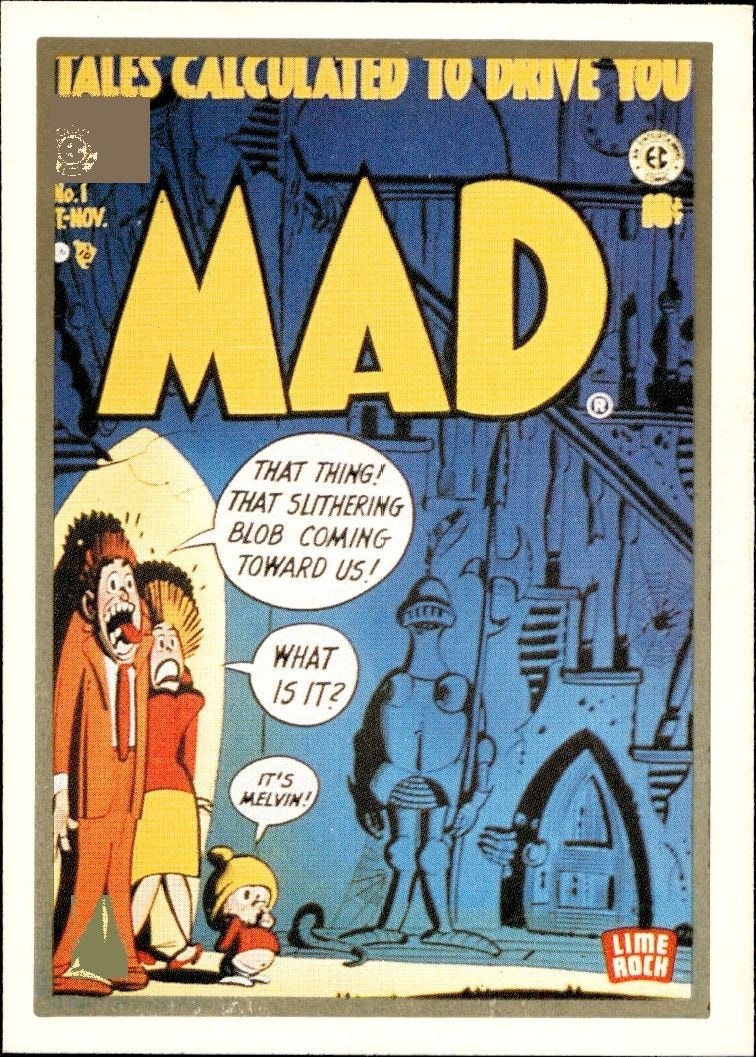
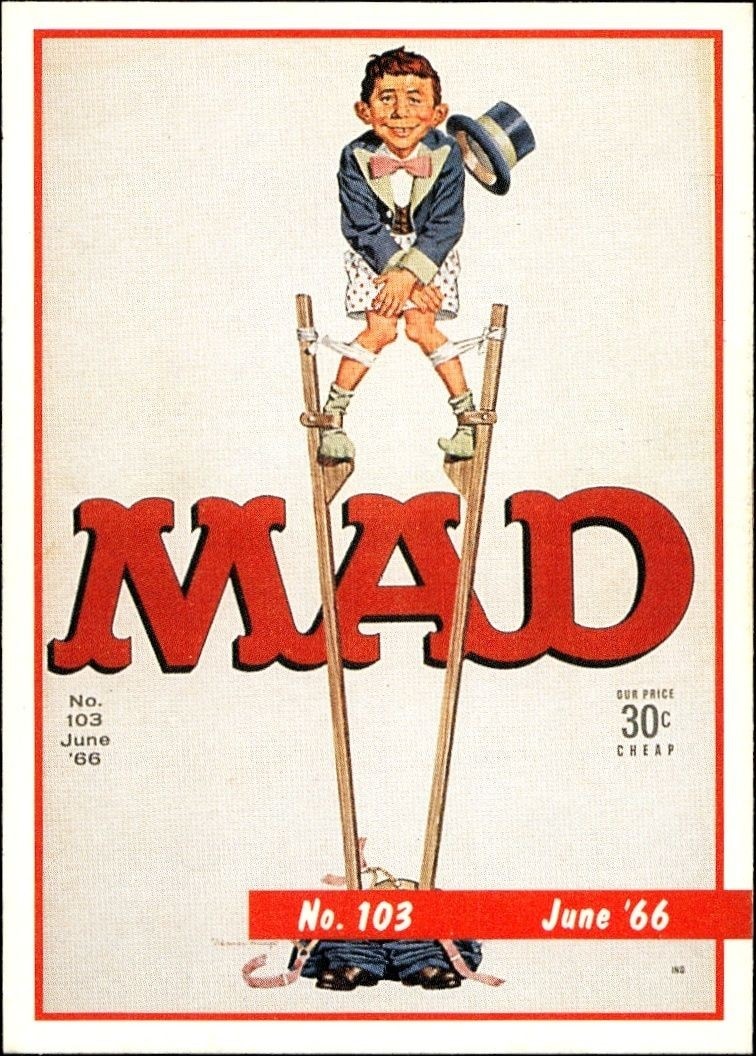
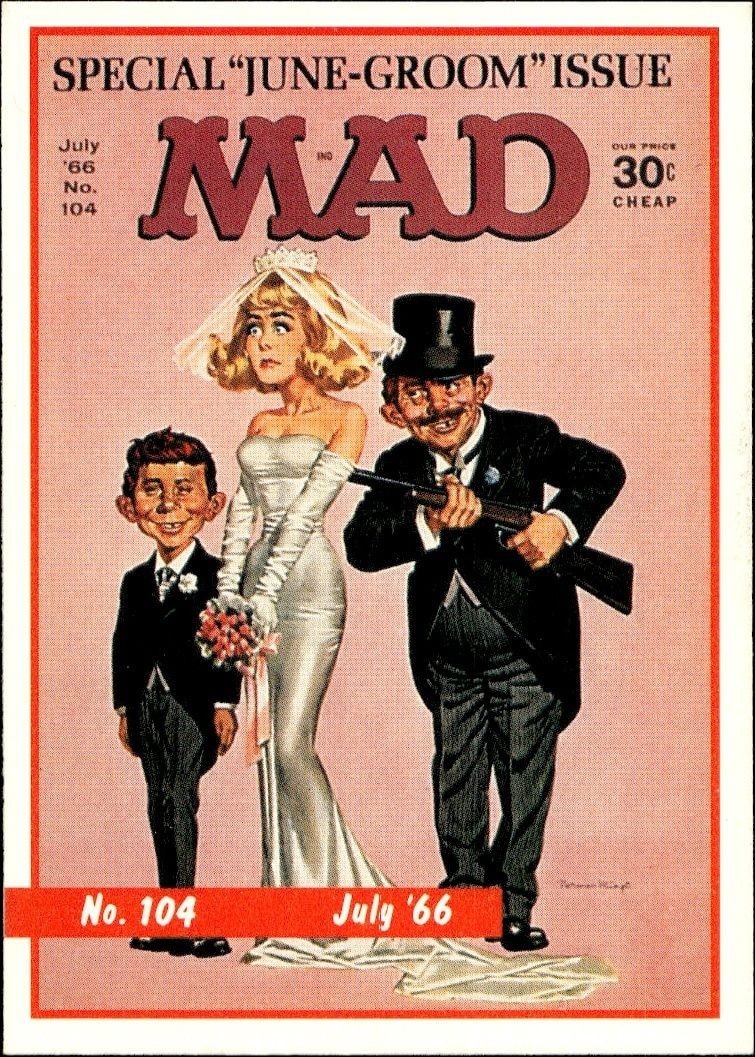
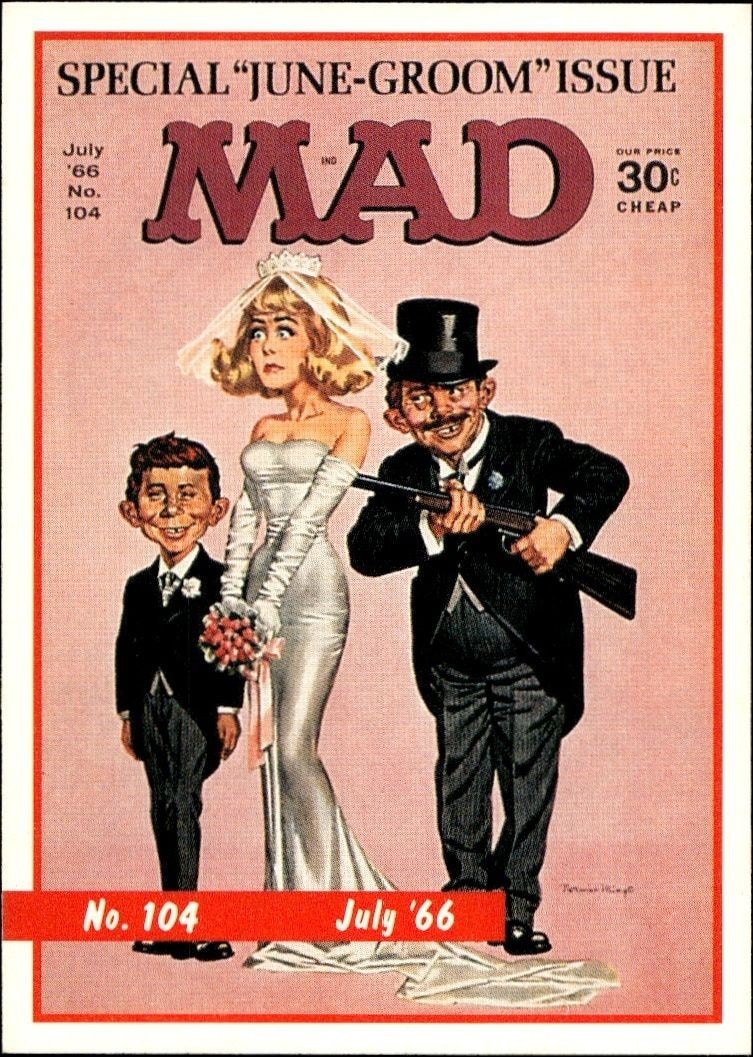
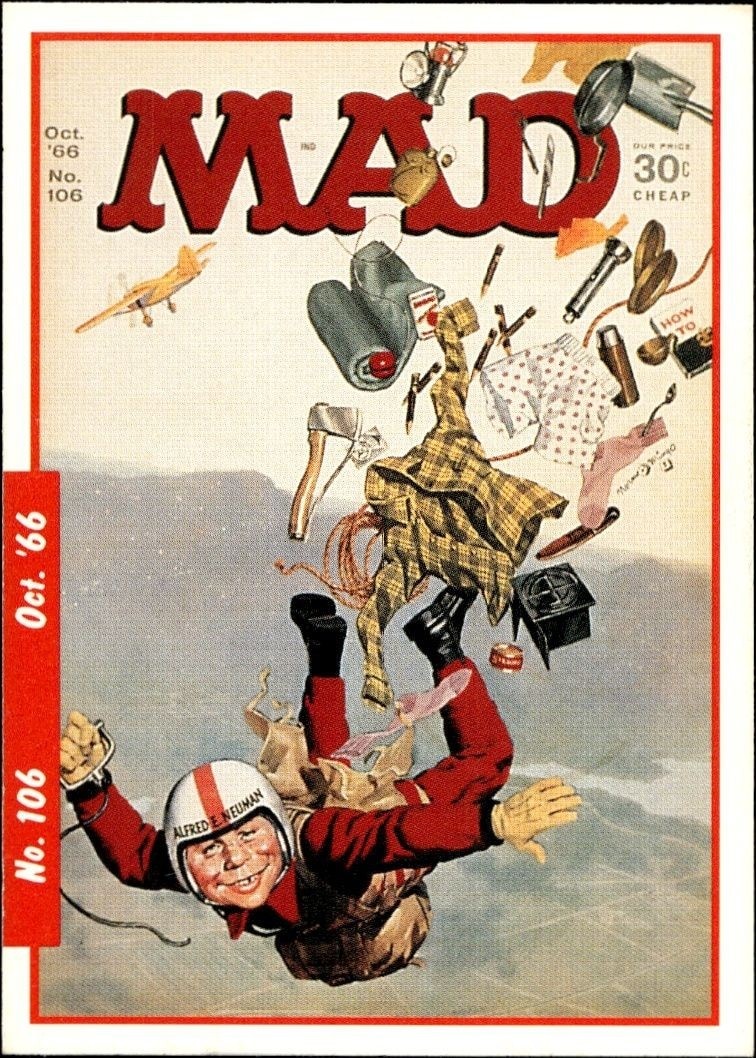
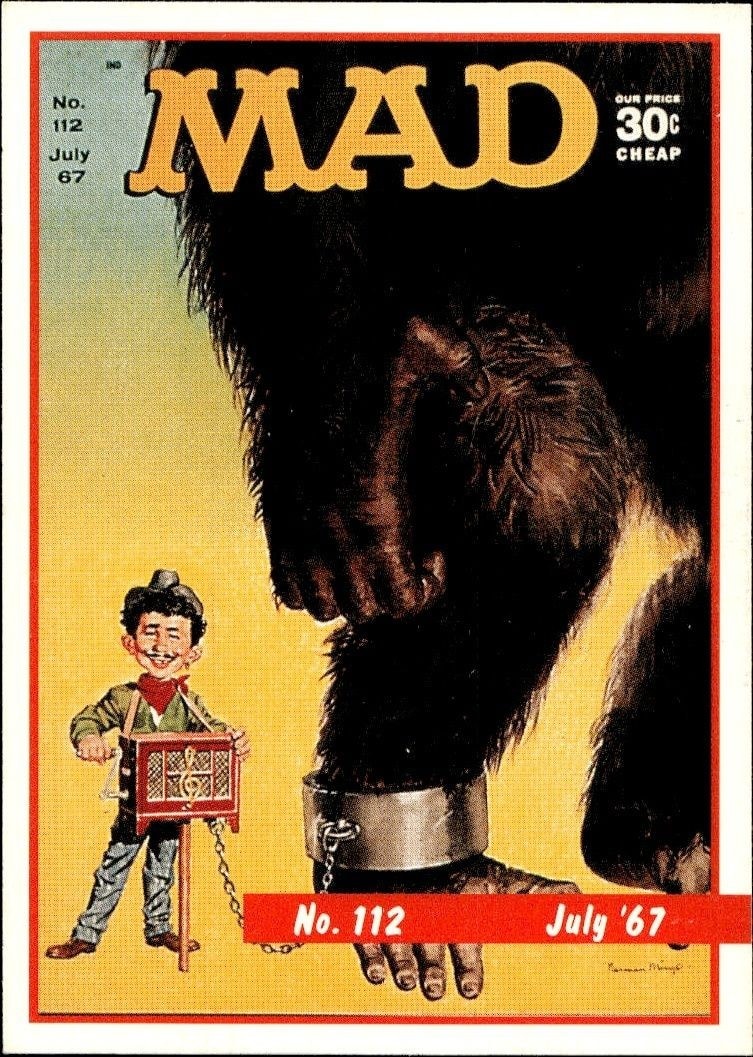
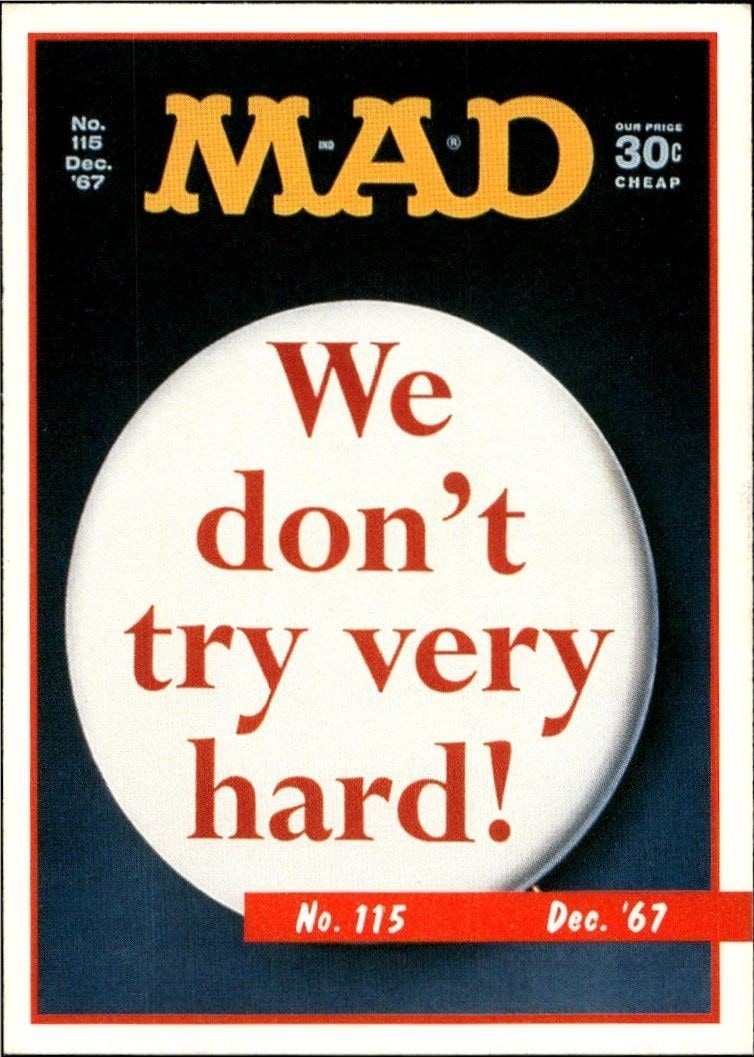
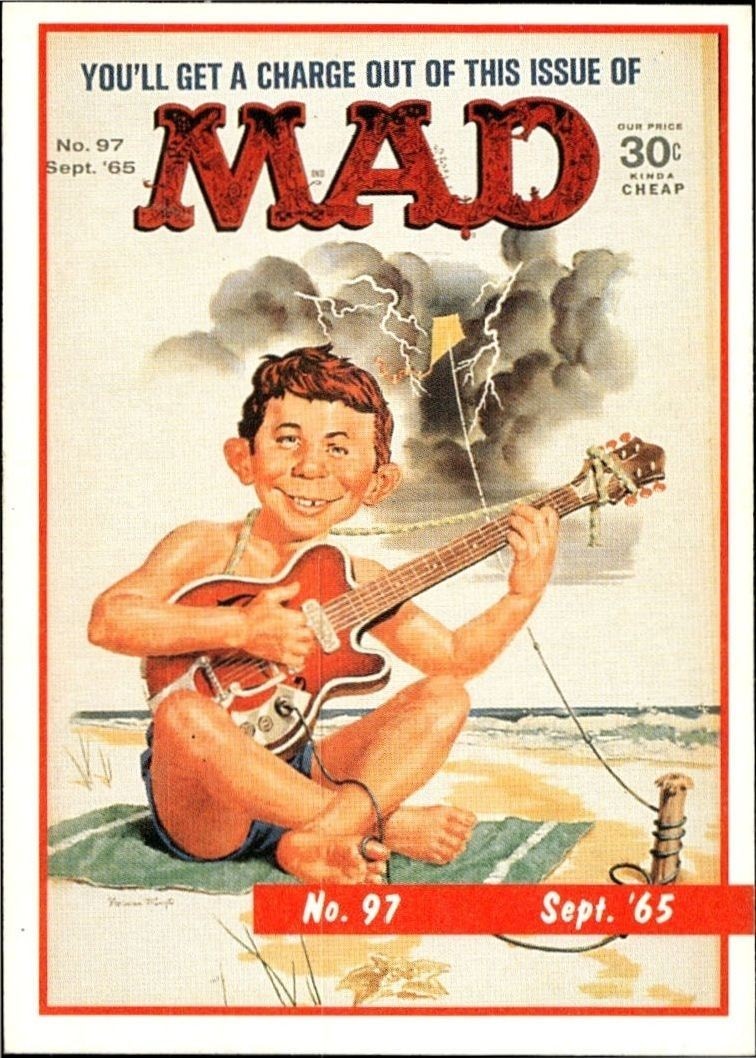
Discover the 1992 Mad Magazine Cover Card No. 97 (5B), a unique non-sports entertainment collectible featuring the iconic September 1965 cover.
1992 • Lime Rock • Mad Magazine • Cover Cards
Near Mint
5B
New
Shipping Calculated at Checkout
Arrives in 4-6 daysEstimated delivery October 30, 2026 - November 1, 2026
30-day ReturnsNo condition-by-condition breakdown has been recorded for this card yet.
The 1992 Mad Magazine Cover Card No. 97, designated as 5B, represents a fascinating intersection of entertainment history and collectible culture. Released as part of a non-sports card series, this entry highlights the enduring influence of Mad Magazine on popular media. The card features the subject identified as Mad No. 97, corresponding to the September 1965 issue, offering collectors a tangible piece of the publication's legacy. For enthusiasts of non-sports memorabilia, this product stands out due to its direct connection to a specific era of comedic satire. The 1992 release captures the aesthetic of that time, allowing hobbyists to engage with the brand's history through a structured collecting format. As a Cover Card subset item, it appeals to those who appreciate the visual and cultural impact of magazine art. Collecting this card is an excellent way to diversify a portfolio beyond traditional sports categories. The 1992 Mad Magazine series offers a unique avenue for those interested in entertainment history, pop culture, and the evolution of magazine design. Each card in the set serves as a snapshot of a particular moment in time, making this 5B variant a notable addition for focused collectors. Whether you are building a comprehensive collection of Mad Magazine merchandise or seeking unique entertainment-related items, this card provides a distinct narrative. It connects the collector to the September 1965 issue through a modern lens, bridging decades of cultural commentary. The appeal of this product lies in its specificity. It is not just a card; it is a documented reference to Mad No. 97. For investors in non-sports assets, understanding the context of the 1992 series is key. This card offers a straightforward entry point into a broader discussion about media history and collectible design. By focusing on the card number and year, collectors can track the progression of the series and appreciate the curation behind its release.
5 days ago
We'll pre-fill the product details from this catalog entry, so your listing lands on this exact page. Just add photos of your copy, pick its condition, and set your price.
The catalog profile below summarizes the card identity, featured subject, and notable collectible traits.
The core identity of the card within the set.
The subject, team, league, and sport context tied to this card.
Featured
Mad No. 97 (Sept. '65)
Production details and format-specific attributes.
Material
Card Stock
Language
English
Compare prices, grades, photos, and shipping from approved sellers.
New
Near Mint
This 1992 Lime-Rock card featuring the Sept. '65 Mad Magazine cover sits at the intersection of vintage comic nostalgia and 90s pop culture memorabilia. While it lacks specific premium attributes, its value is driven by collectors seeking to bridge the gap between classic Mad content and later commercialized merchandise. Condition sensitivity is high for this vintage crossover, as centering and corner wear significantly impact appeal among purists.
As a non-insert base card within a specific brand subset, this item relies on general print availability rather than chase mechanics or serial numbering to constrain supply. The absence of special attributes suggests it is part of a standard production run, making it more accessible than parallel variants but less scarce than unique one-offs. Supply dynamics are dictated by the overall health of the Mad Magazine licensing era rather than limited insert ratios.
Demand is sustained by completionists targeting the Mad Magazine theme, leveraging the enduring brand recognition of the publication over the specific 1992 Lime-Rock brand. The property benefits from cyclical nostalgia, though it may not experience aggressive appreciation without a resurgence in mainstream media interest. Long-term stability is likely tied to the broader collectible market's appetite for mid-90s licensed goods rather than speculative growth.