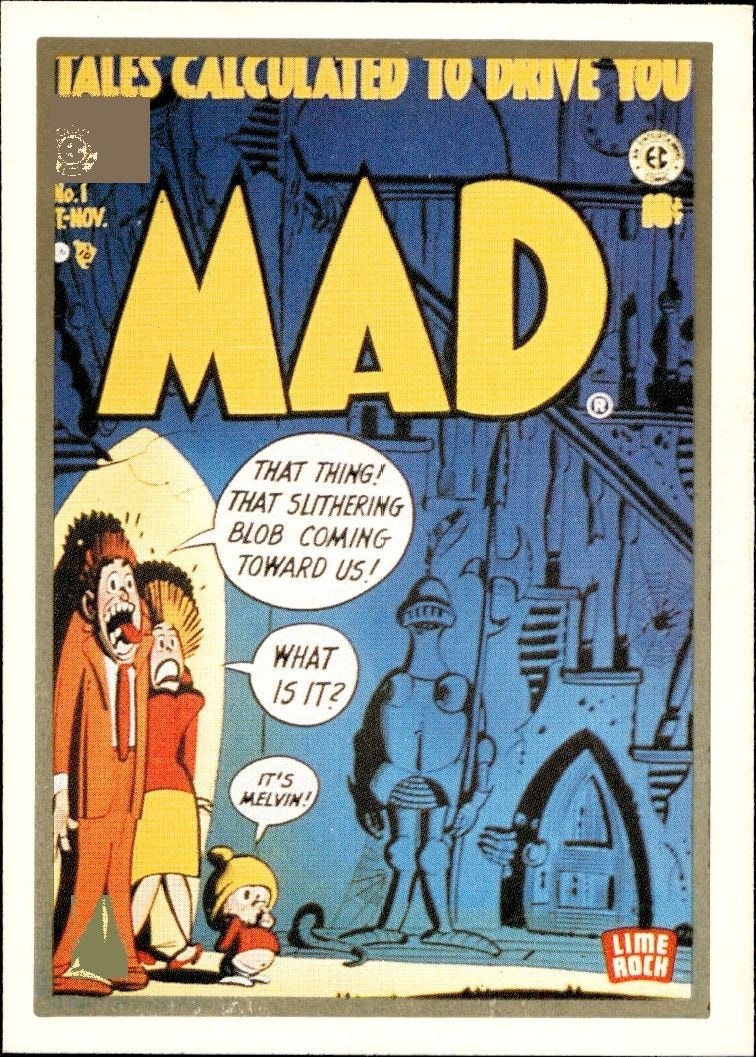
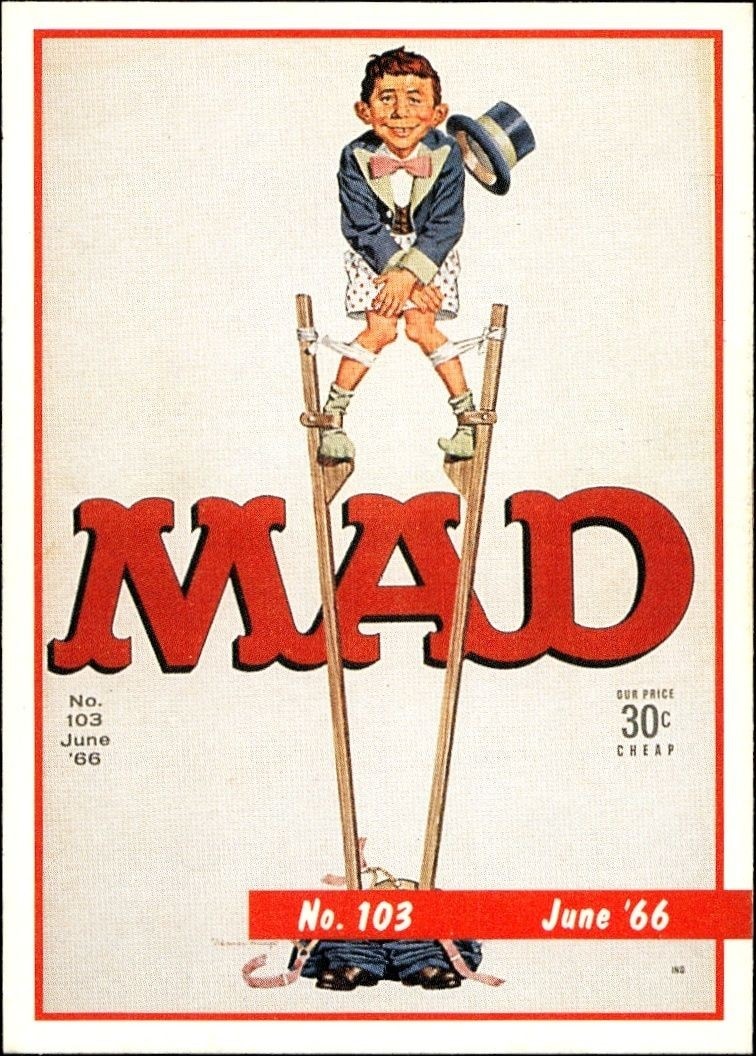
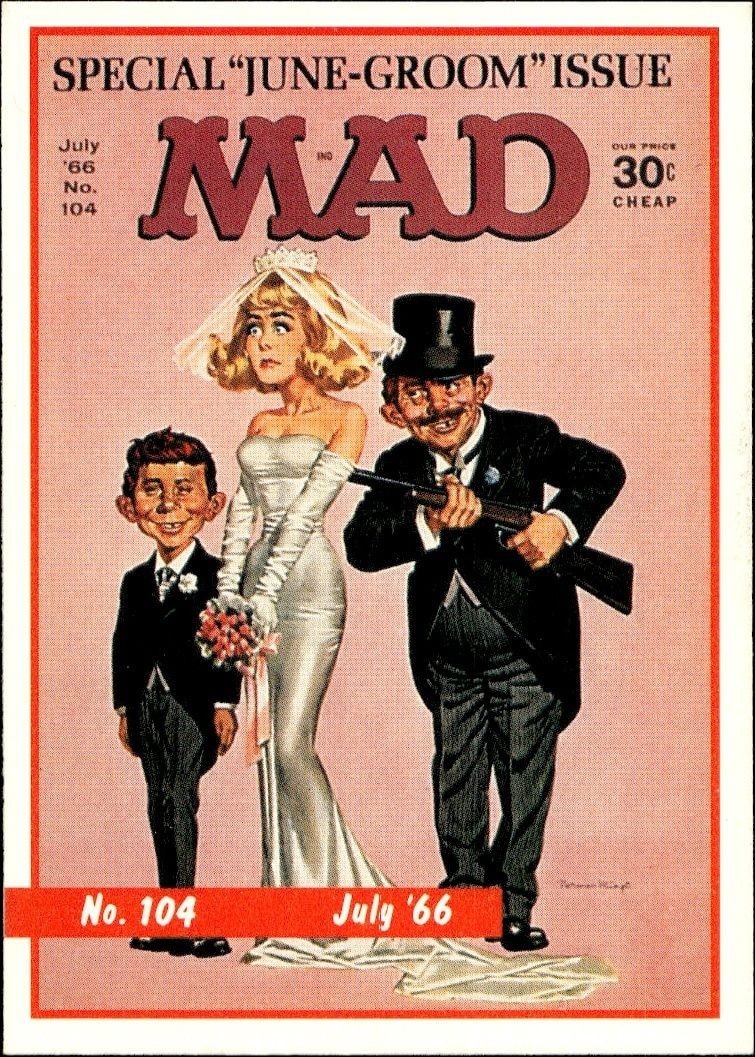
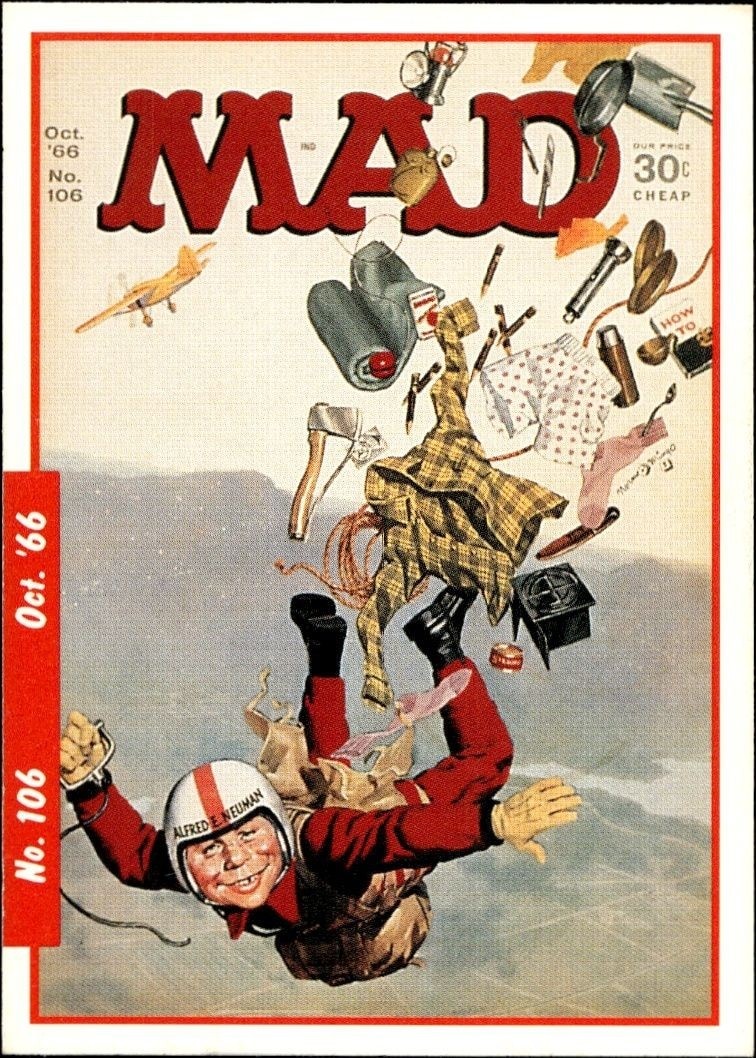
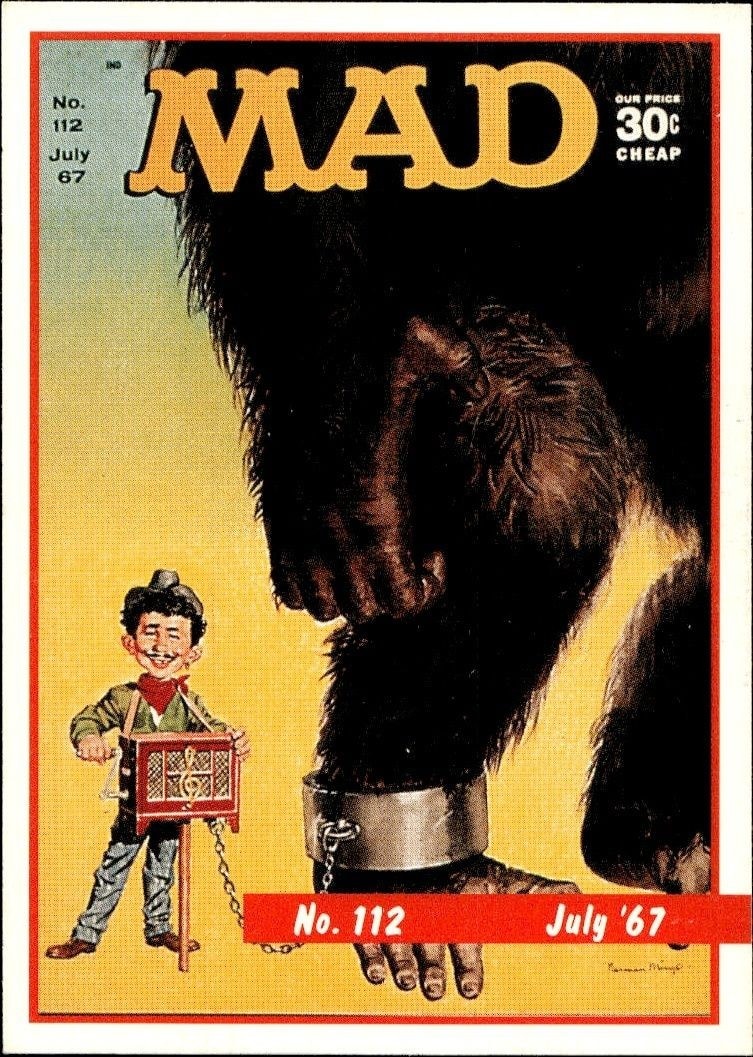
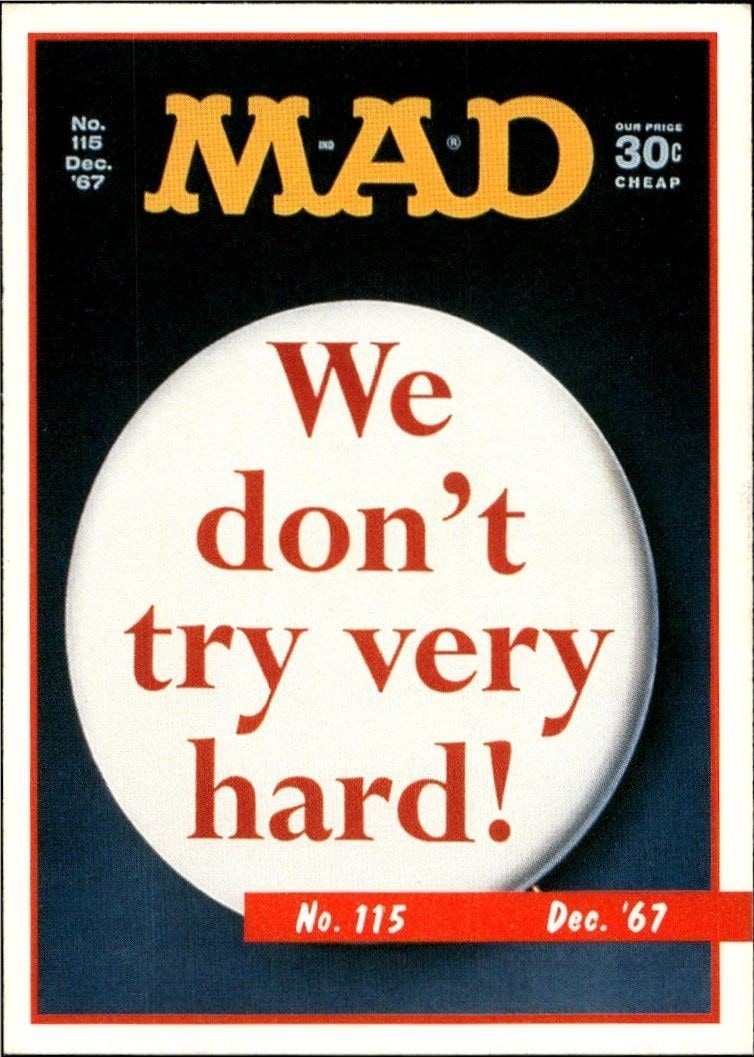
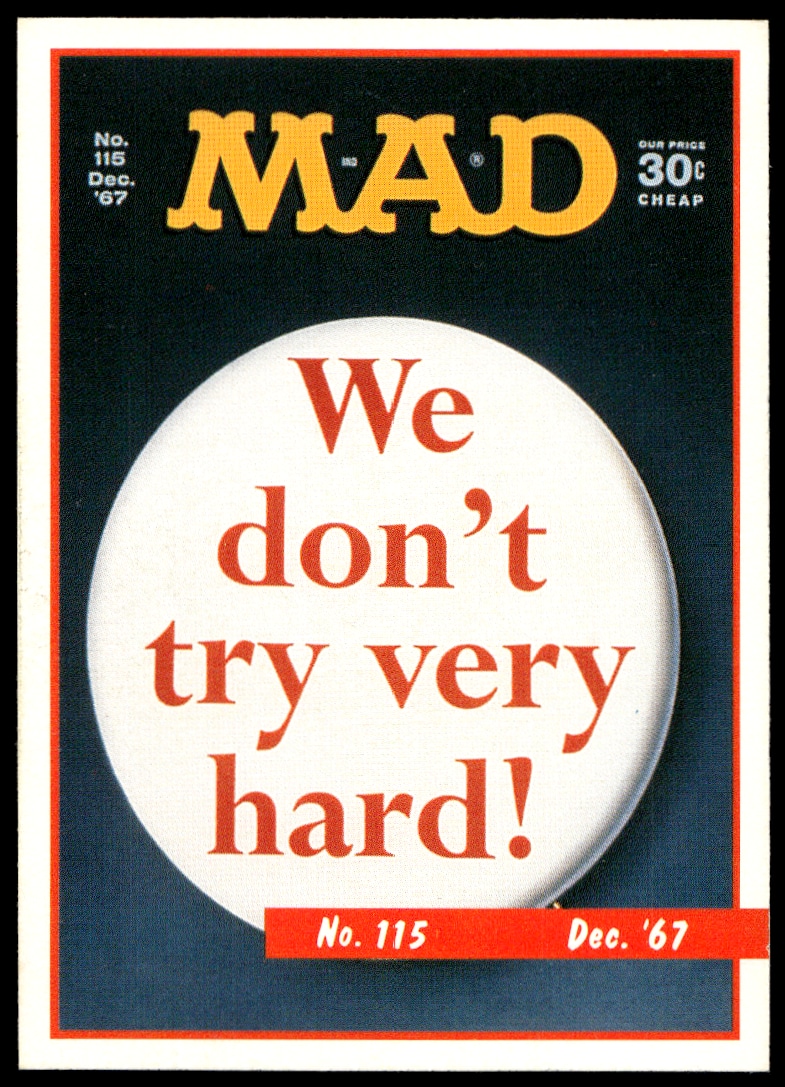
Catalog overview of the 1992 Lime Rock Mad Covers #4 trading card featuring Mad No. 4 from April-May 1953.
1992 • Lime Rock • Mad Magazine • MAD Cover
Near Mint
4
New
Shipping Calculated at Checkout
Arrives in 4-6 daysEstimated delivery October 30, 2026 - November 1, 2026
30-day ReturnsNo condition-by-condition breakdown has been recorded for this card yet.
The 1992 Lime Rock Mad Covers release offers collectors a unique entry into the world of entertainment trading cards, specifically focusing on the iconic Mad Magazine. This product focuses on card number 4, which highlights Mad No. 4, published in April-May 1953. For enthusiasts of non-sports memorabilia, this card serves as a tangible connection to the golden age of satire and pop culture history. By centering on a specific issue from the early 1950s, this card appeals to those who appreciate the evolution of American humor and graphic design. The card captures a moment in time when Mad Magazine was redefining comedic standards, making it a fascinating subject for historical collectors. Collecting items from the 1992 Lime Rock series requires an appreciation for niche entertainment markets. Unlike sports cards, these items focus on cultural impact rather than athletic performance. The Mad Covers subset is particularly valuable for building a comprehensive library of Mad Magazine history. Collectors often seek out specific issues to complete their sets, making card #4 an important component for those dedicated to the full series. Understanding the context of Mad No. 4 helps collectors appreciate its place within the broader publication timeline. The April-May 1953 issue is part of a rich lineage that has influenced generations of artists and writers. By acquiring this card, collectors invest in a piece of entertainment history that transcends typical trading card boundaries. It is an excellent addition for anyone looking to diversify their portfolio with high-quality non-sports cards. Whether you are a long-time Mad Magazine fan or a newcomer to entertainment card collecting, this release offers a glimpse into a significant era of cultural history. The focus remains on the card's identity and its role within the Lime Rock catalog, ensuring that collectors can appreciate the item for its historical and artistic merit.
5 days ago
We'll pre-fill the product details from this catalog entry, so your listing lands on this exact page. Just add photos of your copy, pick its condition, and set your price.
The catalog profile below summarizes the card identity, featured subject, and notable collectible traits.
The core identity of the card within the set.
The subject, team, league, and sport context tied to this card.
Featured
Mad No. 4 (Apr.-May 1953)
Production details and format-specific attributes.
Material
Card Stock
Language
English
Compare prices, grades, photos, and shipping from approved sellers.
New
Near Mint
This item functions as a niche crossover collectible, appealing to both vintage Mad Magazine enthusiasts and broader pop culture investors interested in 1990s licensed media. As a non-sports card, its value is heavily condition-sensitive, with centering and corner wear being primary determinants of its standing within the franchise. The singular active listing suggests a thin market, meaning liquidity may be low compared to mass-produced base cards.
Positioned as a standard issue within the Lime Rock 1992 Mad Magazine series, this card lacks the scarcity mechanics typically found in chase inserts or parallel variants. Without special attributes like serial numbering or foil treatments, its supply is constrained only by the finite print run of the base set rather than artificial distribution limits. This places it in the lower tier of rarity within the set, relying on general availability rather than unique physical traits to drive its collectibility.
Demand for this specific card is likely driven by set completionists seeking to fill gaps in the 1992 Lime Rock series rather than speculative growth. The Mad brand maintains a steady, nostalgic appeal among older demographics, but the 1992 release represents a specific era of licensed merchandise that may not see significant appreciation trends. Investors should view this as a holding for collection completeness rather than a high-growth asset.