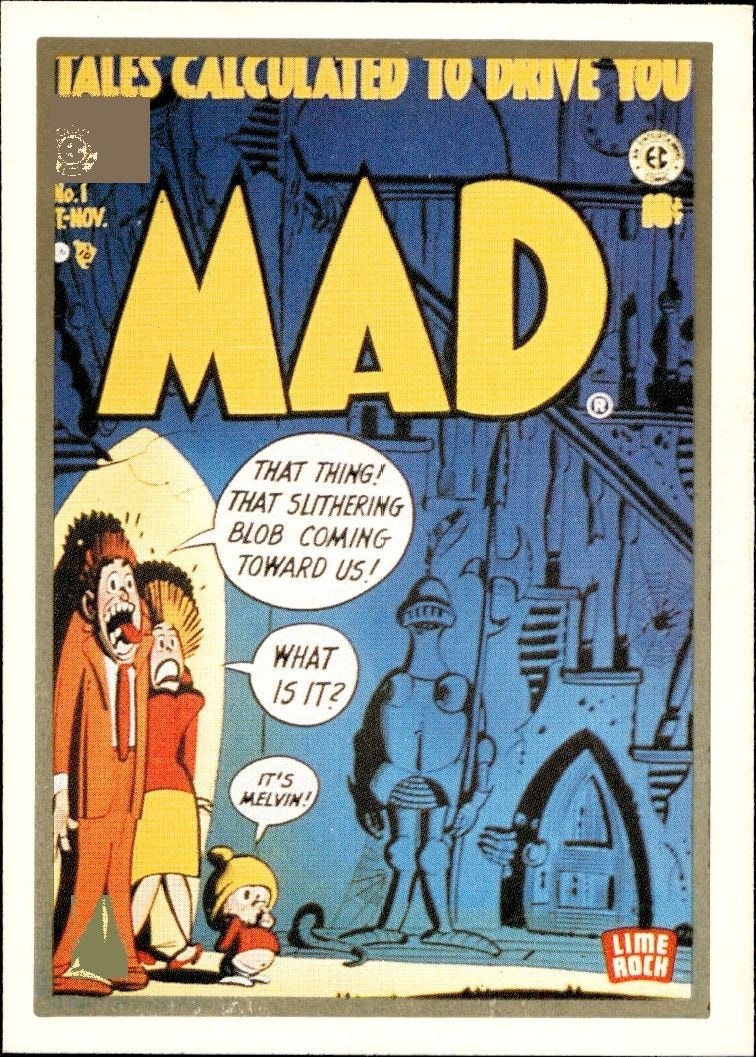
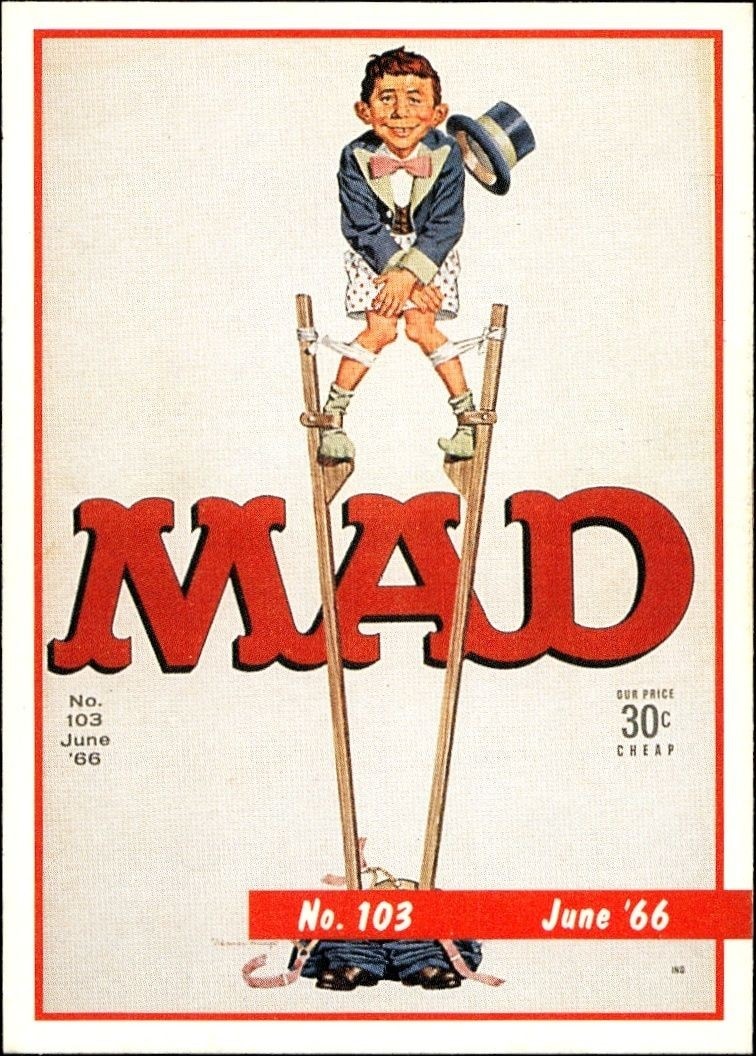
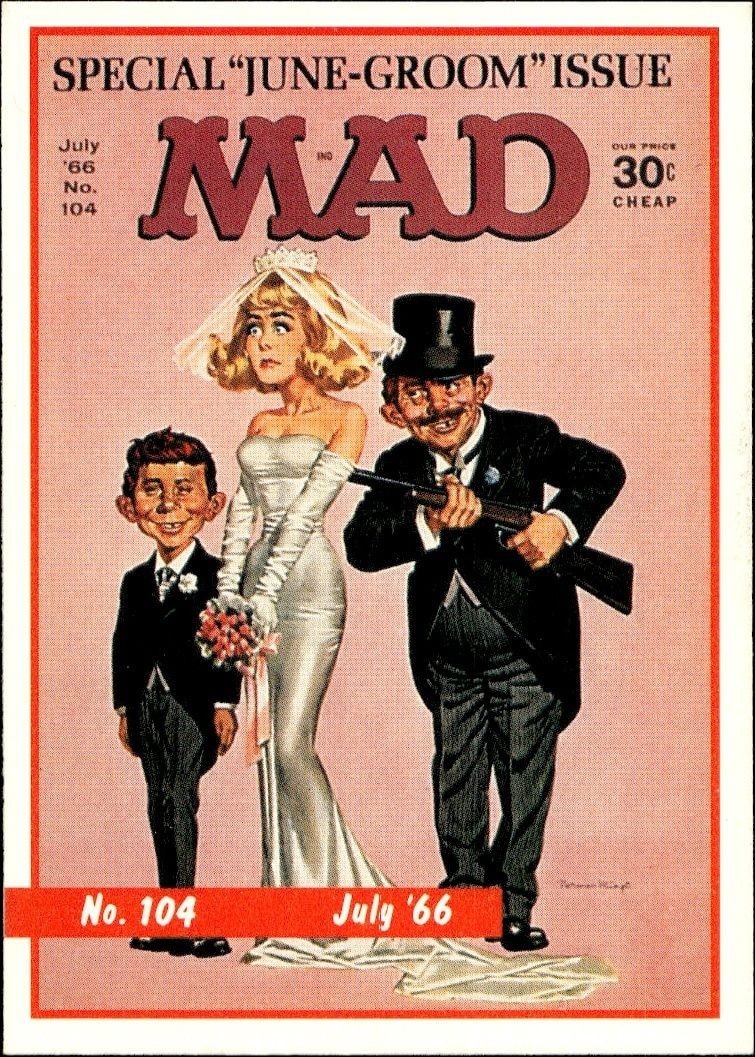
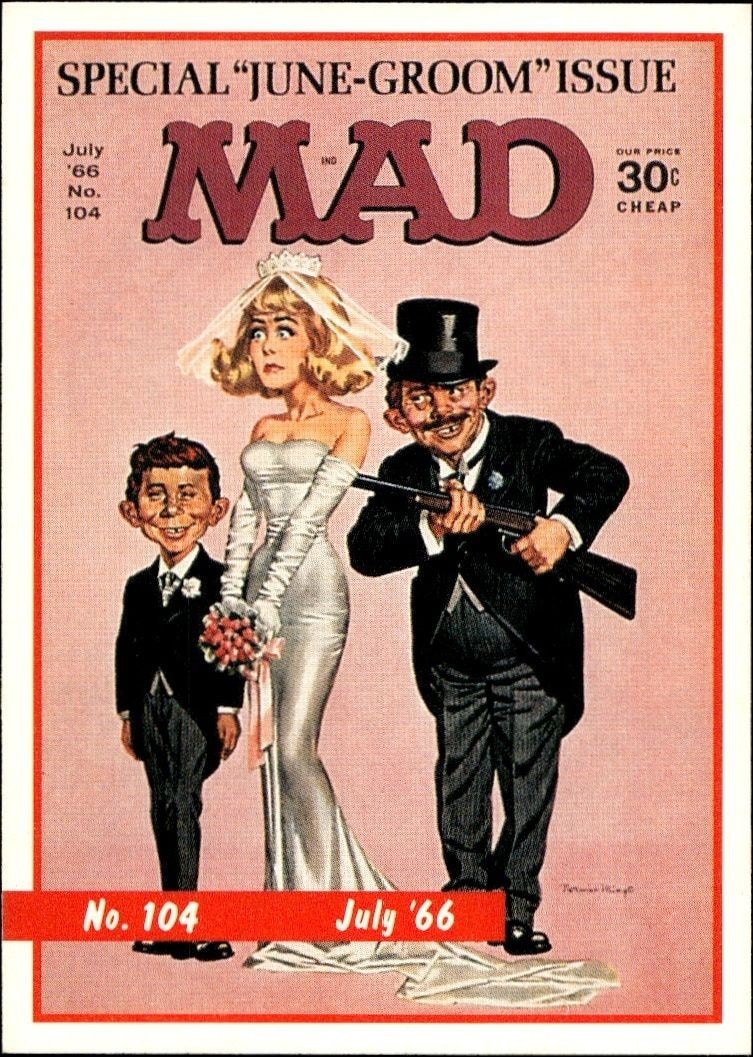
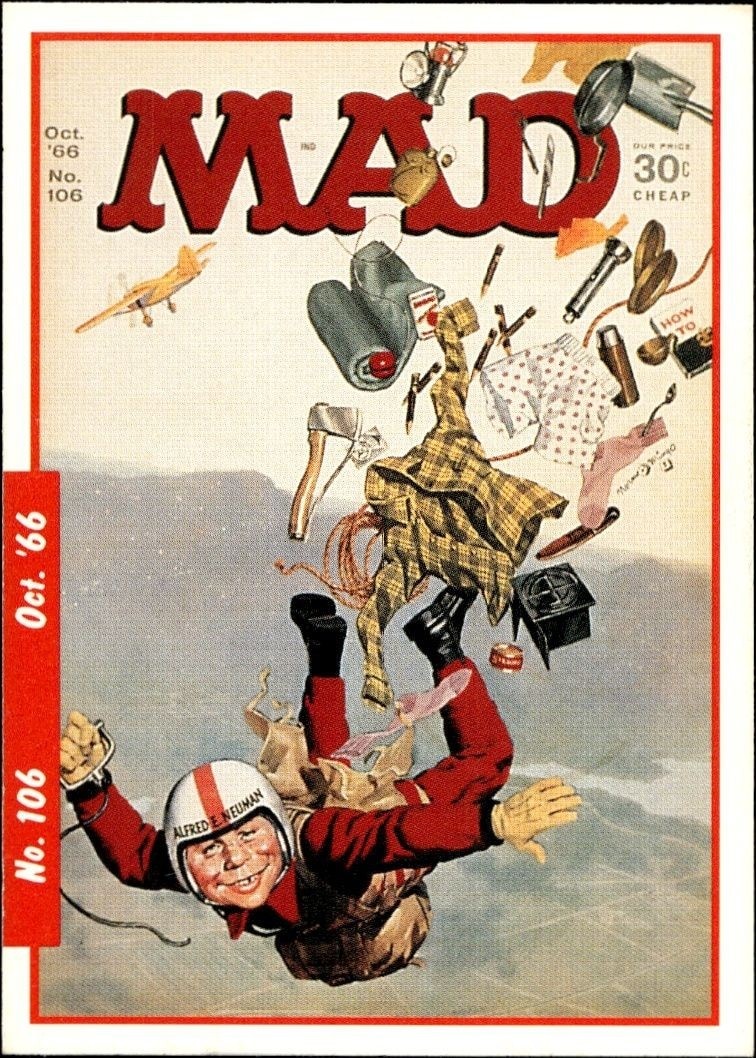
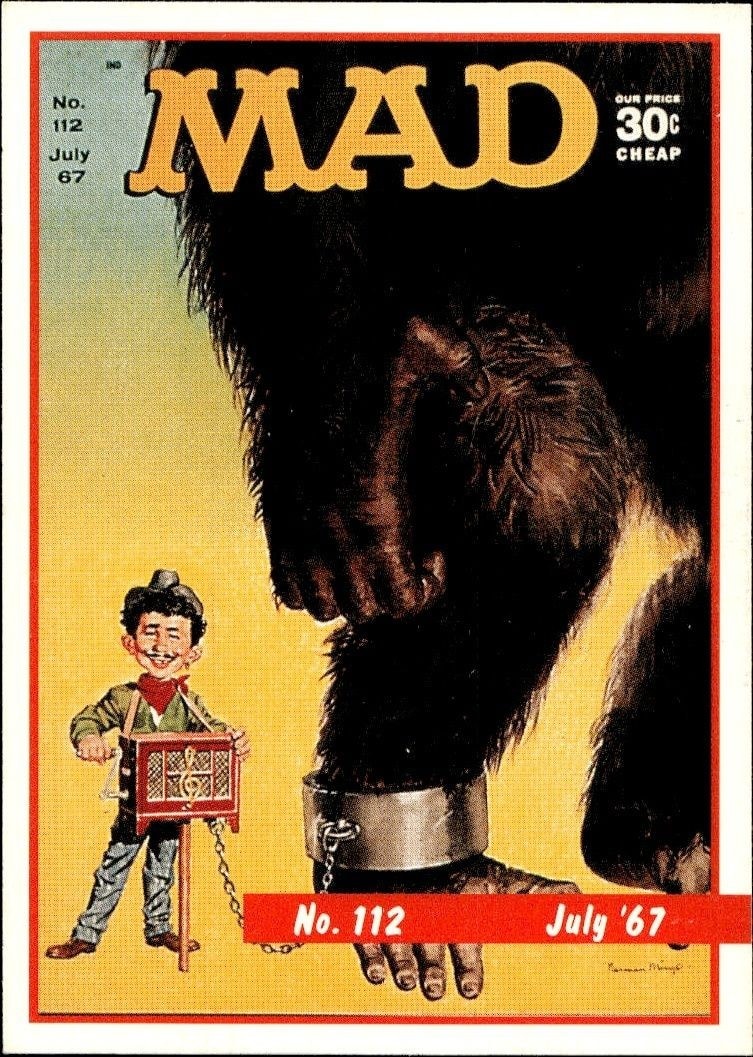
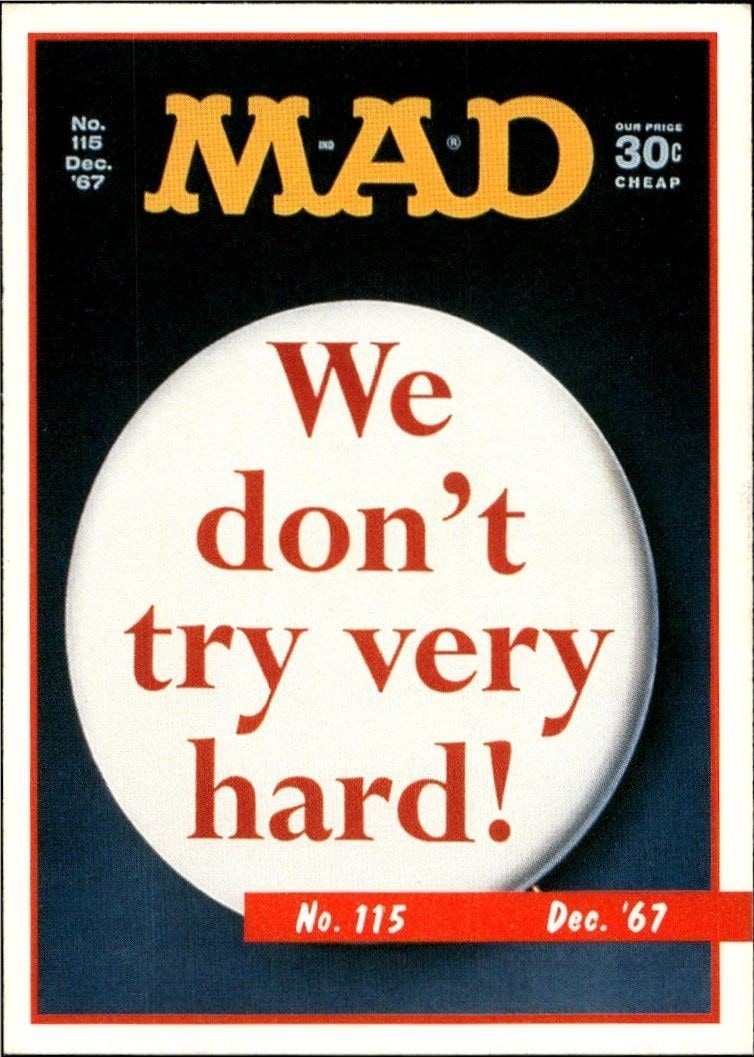
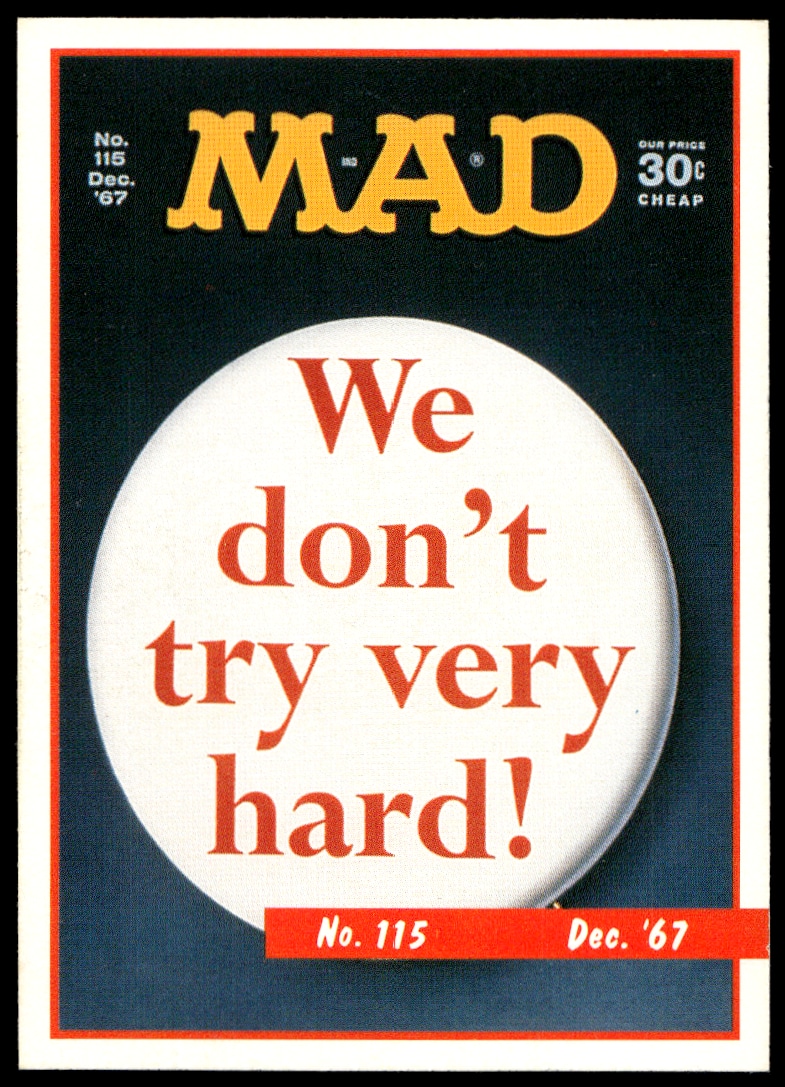
Discover the 1992 Lime Rock Mad Magazine trading card, number 116, featuring Mad No. 116 (January '68). A distinctive non-sports entertainment collectible for serious collectors.
1992 • Lime Rock • Mad Magazine
Near Mint
116
New
Shipping Calculated at Checkout
Arrives in 5-7 daysEstimated delivery October 29, 2026 - October 31, 2026
30-day Returns| Condition | Value | Source | Trend | Price Details |
|---|---|---|---|---|
$1.31As of 10/8/2026 | Asking Prices | |||
Raw / Ungraded
eBay Active Listings · Asking Prices evidence · captured Oct 8, 2026
History is building. At least two days of matching observations are needed to show a trend.
Each point is the last stored observation that day for this printing, condition, grader, autograph status and source. Gaps mean no observation; guide estimates and asking prices are not completed sales.The 1992 Lime Rock Mad Magazine trading card, designated as number 116, represents a specific niche within the broader landscape of entertainment memorabilia. This non-sports card highlights Mad No. 116, corresponding to the January 1968 issue, offering enthusiasts a tangible connection to the publication's long-running history. For collectors who focus on media franchises and pop culture artifacts, this card serves as a targeted entry point into the Mad Magazine series. Produced by Lime Rock in 1992, this product is categorized under the Entertainment sector, distinguishing it from traditional sports trading cards. The design and production value reflect the era's approach to licensing established media properties into the collectible card market. Enthusiasts of Mad Magazine will appreciate this card as a standalone piece or as part of a larger set-building endeavor. The January '68 issue holds its own place in the magazine's chronology, and this card captures that specific iteration for preservation. When evaluating this product, collectors often look at the brand reputation of Lime Rock and its contributions to the 1990s card market. The card's identity is firmly rooted in its association with the Mad Magazine brand, making it a relevant item for those tracking the evolution of licensed merchandise. Whether you are a dedicated fan of the publication or a generalist in non-sports collectibles, this card offers a clear point of focus. The straightforward numbering system allows for easy organization within a collection, ensuring that this January '68 issue can be seamlessly integrated into your existing inventory of Mad Magazine items. By focusing on the specific attributes of the 1992 release, collectors can appreciate the card for what it is: a verified piece of entertainment history. The clarity of the catalog details, including the brand, year, and series, ensures that buyers know exactly what they are acquiring. This transparency is crucial for maintaining interest in non-sports categories, where the narrative of the subject often drives the desire to collect.
3 days ago
We'll pre-fill the product details from this catalog entry, so your listing lands on this exact page. Just add photos of your copy, pick its condition, and set your price.
The catalog profile below summarizes the card identity, featured subject, and notable collectible traits.
The core identity of the card within the set.
The subject, team, league, and sport context tied to this card.
Featured
Mad No. 116 (January '68)
Production details and format-specific attributes.
Material
Card Stock
Language
English
Compare prices, grades, photos, and shipping from approved sellers.
New
Near Mint
This issue anchors the Mad Magazine set with strong crossover appeal, attracting both dedicated comic historians and niche pop culture collectors who value the brand's satirical legacy. As a non-sports vintage item, condition sensitivity is paramount, with centering and paper quality heavily influencing its standing among serious completists versus casual holders.
Positioned as a standard base card within the Lime-Rock 1992 series, this item lacks the scarcity mechanics of chase inserts or parallel variants that typically drive secondary market premiums. The absence of special attributes indicates it relies on general set demand rather than unique supply constraints, making it accessible to those building foundational collections.
Demand is primarily fueled by set completionists seeking the full 1992 Mad Magazine run rather than speculative interest in individual titles, given the property's established but static historical relevance. While nostalgia cycles sustain baseline interest, the lack of trending momentum or franchise revival suggests stable, modest growth driven by steady collector needs rather than explosive market activity.