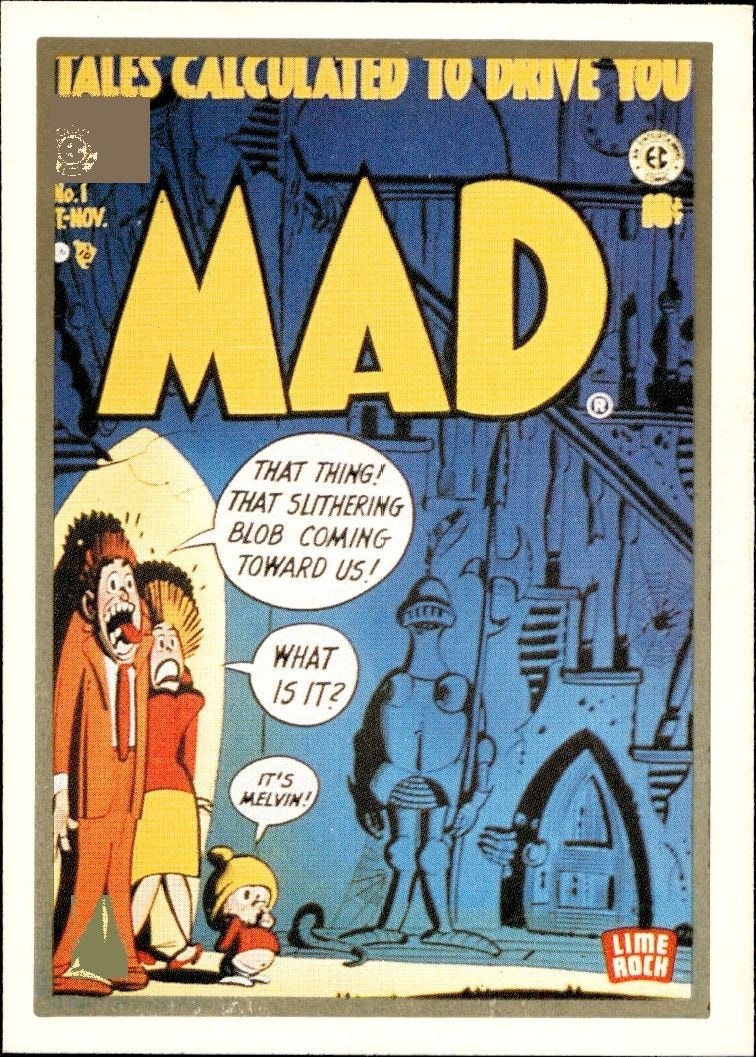
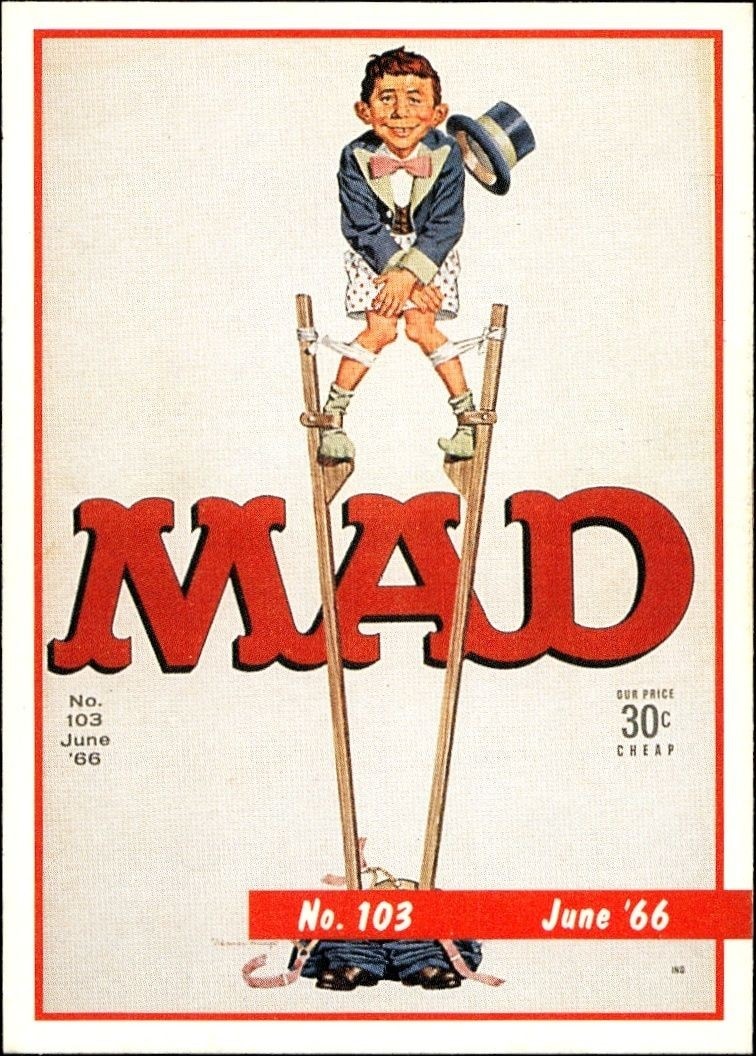
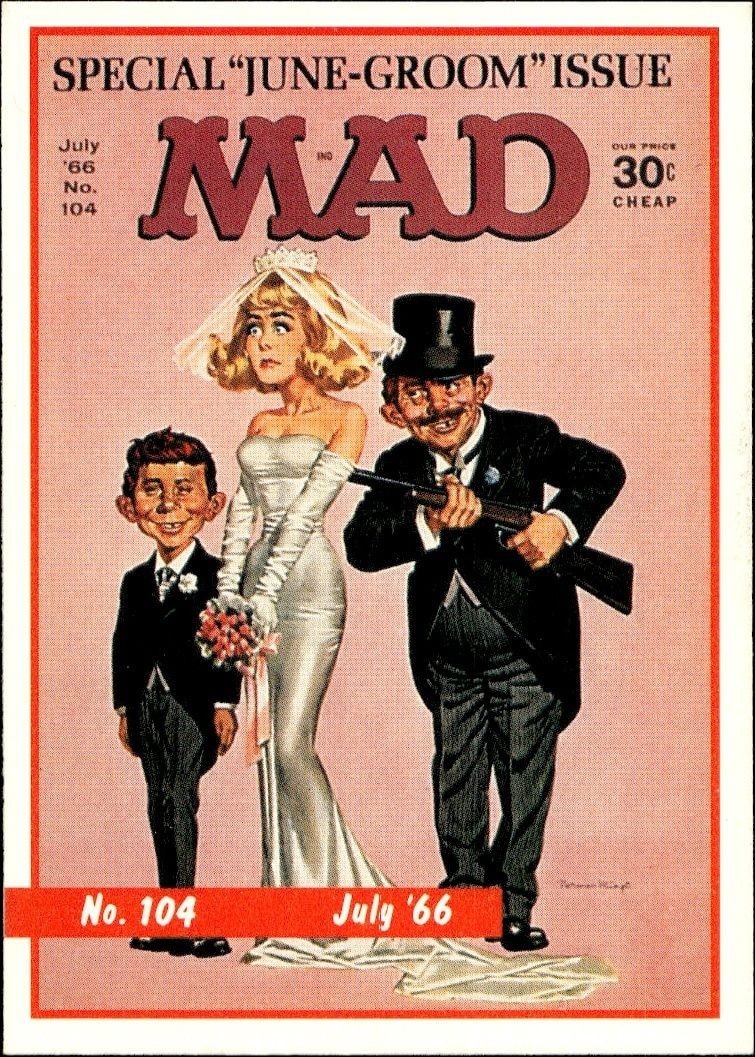
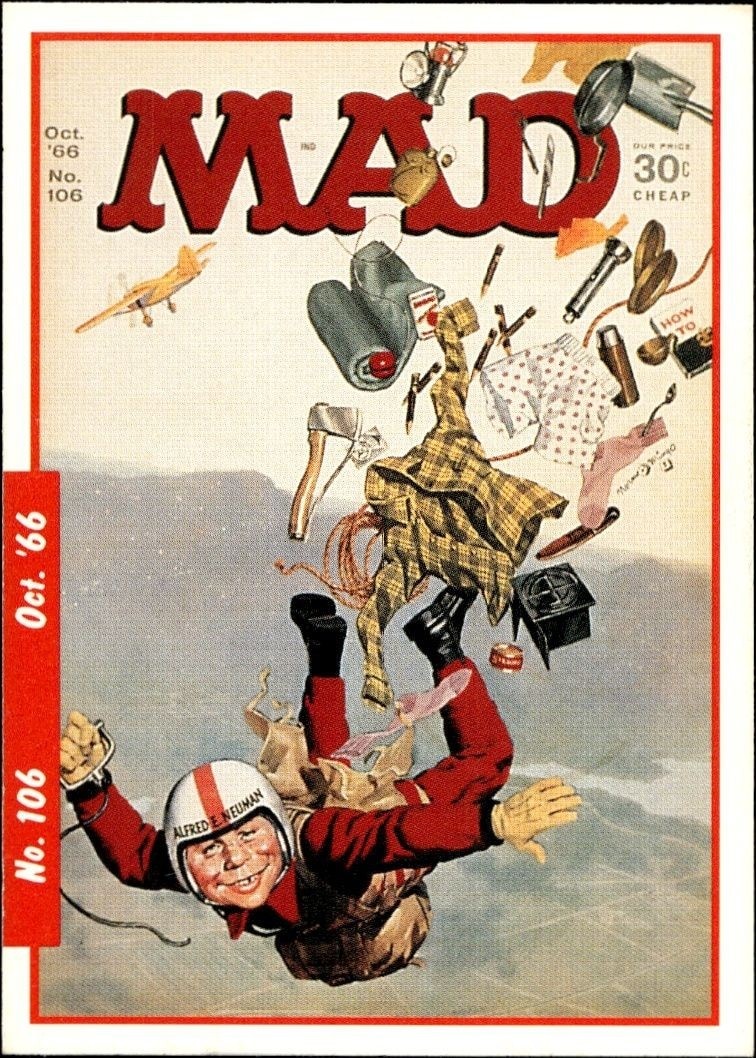
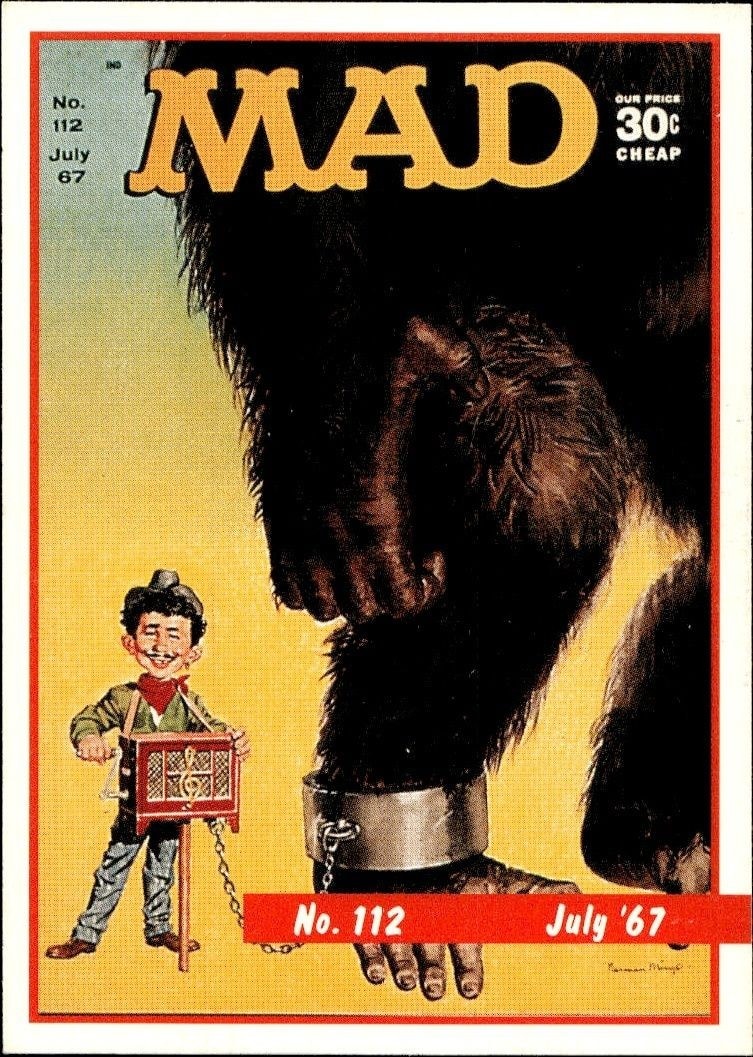
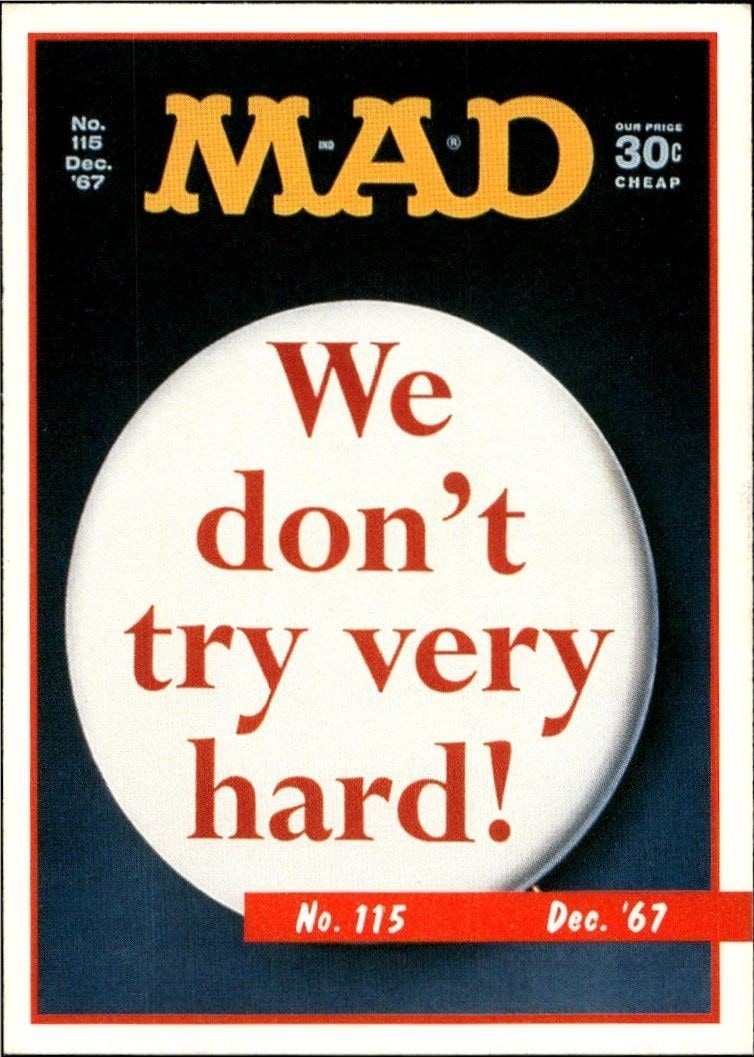
The 1992 Lime-Rock Mad Magazine #26 is a non-sports trading card highlighting Mad No. 26 from November 1955, appealing to vintage pop culture enthusiasts.
1992 • Lime Rock • Mad Magazine
Near Mint
26
New
Shipping Calculated at Checkout
Arrives in 5-7 daysEstimated delivery October 29, 2026 - October 31, 2026
30-day ReturnsNo condition-by-condition breakdown has been recorded for this card yet.
The 1992 Lime-Rock Mad Magazine #26 stands as a distinct entry in the world of non-sports trading cards, specifically targeting collectors of entertainment history and vintage media memorabilia. This card features Mad No. 26, a reference to the November 1955 issue of the iconic publication, offering a tangible link to mid-century humor and satire. For enthusiasts of the era, this card serves as a piece of cultural history, documenting the legacy of a publication that shaped American comedy for decades. Collecting from the Lime-Rock brand involves navigating a diverse landscape of pop culture references, where each card acts as a snapshot of a specific moment in time. The 1992 release year places this product in a period of renewed interest in retro media, making it a relevant addition to collections focused on 20th-century entertainment. The card number 26 within the Mad Magazine series provides a structured way for hobbyists to catalog and complete their sets, ensuring a comprehensive archive of the franchise's history. For investors and serious collectors, the value of such items often lies in their preservation and the strength of the underlying brand recognition. Mad Magazine remains a significant cultural touchstone, and cards that accurately represent its issues are highly sought after by those who appreciate the nuances of non-sports collecting. The 1992 Lime-Rock Mad Magazine #26 allows collectors to engage with this legacy in a tangible format, bridging the gap between print history and modern trading card hobbies. Whether you are building a set of vintage entertainment cards or focusing on specific decades of pop culture, this product offers a unique opportunity to expand your collection. It is particularly relevant for those interested in the intersection of publishing history and collectible media. By acquiring this card, collectors contribute to the preservation of entertainment history while adding a distinctive piece to their personal archive. The specific focus on the November 1955 issue ensures that each card carries a precise historical context, appealing to detail-oriented hobbyists who value accuracy and depth in their collections.
3 days ago
We'll pre-fill the product details from this catalog entry, so your listing lands on this exact page. Just add photos of your copy, pick its condition, and set your price.
The catalog profile below summarizes the card identity, featured subject, and notable collectible traits.
The core identity of the card within the set.
The subject, team, league, and sport context tied to this card.
Featured
Mad No. 26 (November, 1955)
Production details and format-specific attributes.
Material
Card Stock
Language
English
Compare prices, grades, photos, and shipping from approved sellers.
New
Near Mint
This item represents a unique crossover appeal, bridging the gap between traditional sports card collectors and dedicated pop culture enthusiasts who follow Mad Magazine history. As a non-sports collectible from the early 1990s, its value is heavily dependent on condition sensitivity typical of vintage print media, where centering and paper quality are critical. The single active listing indicates a thin market, suggesting that any sale will be driven by a specific buyer rather than broad liquidity.
Positioned as a standalone piece rather than a base card in a sequential set, this item lacks the insert or chase mechanics that typically drive supply constraints in modern releases. The absence of special attributes implies it is a standard issue within the 1992 lime-rock series, meaning supply is determined by general circulation rather than artificial scarcity. This straightforward nature means it does not benefit from the premium pricing often seen with numbered or parallel versions.
Demand for this collectible is likely sustained by long-term nostalgia cycles and completionists focused on Mad Magazine history rather than short-term trends. The brand's enduring cultural relevance provides a stable, albeit niche, foundation for collectors seeking to complete a franchise run. Without active market data showing upward momentum, the outlook relies on steady, slow appreciation driven by dedicated hobbyists rather than speculative growth.