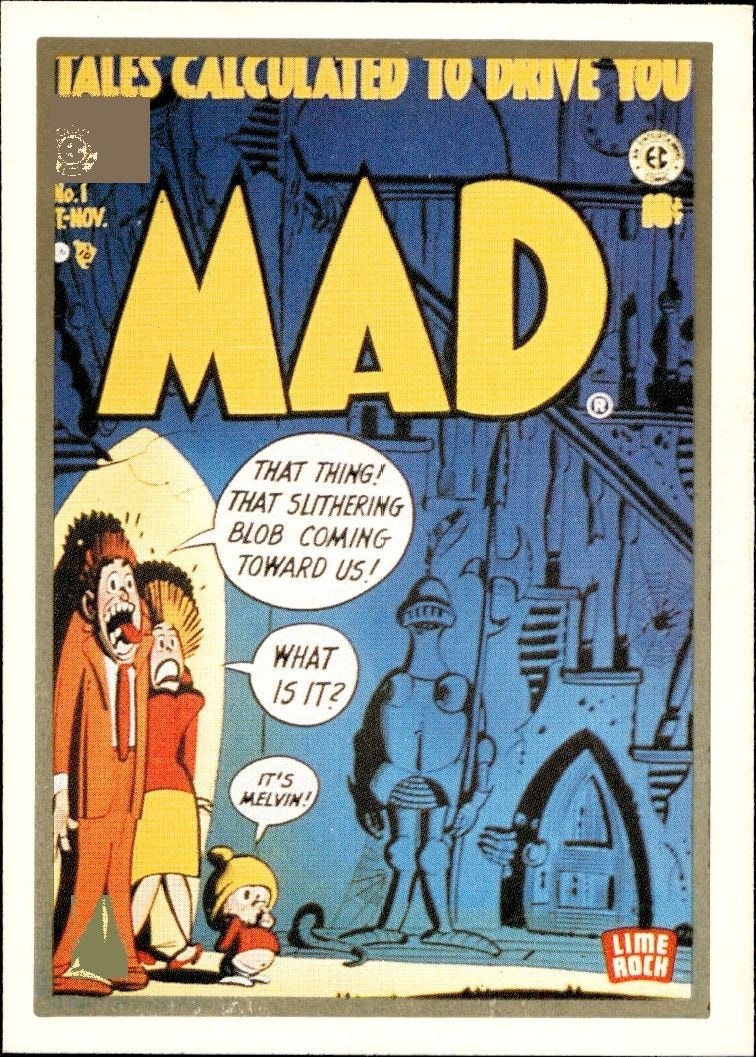
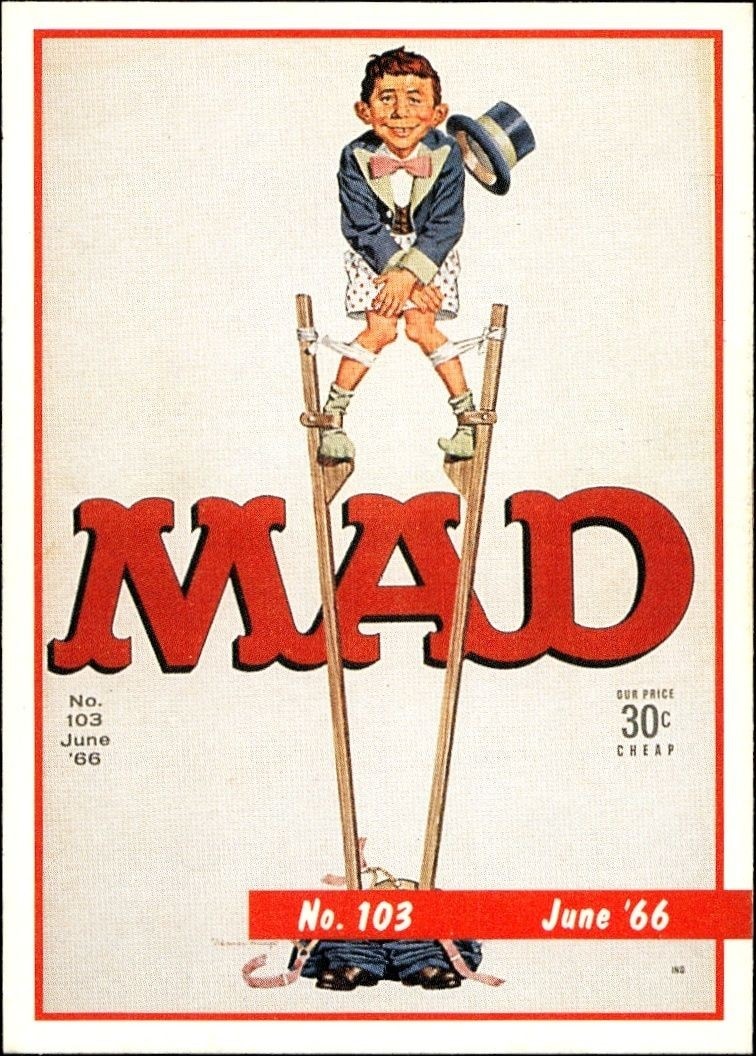
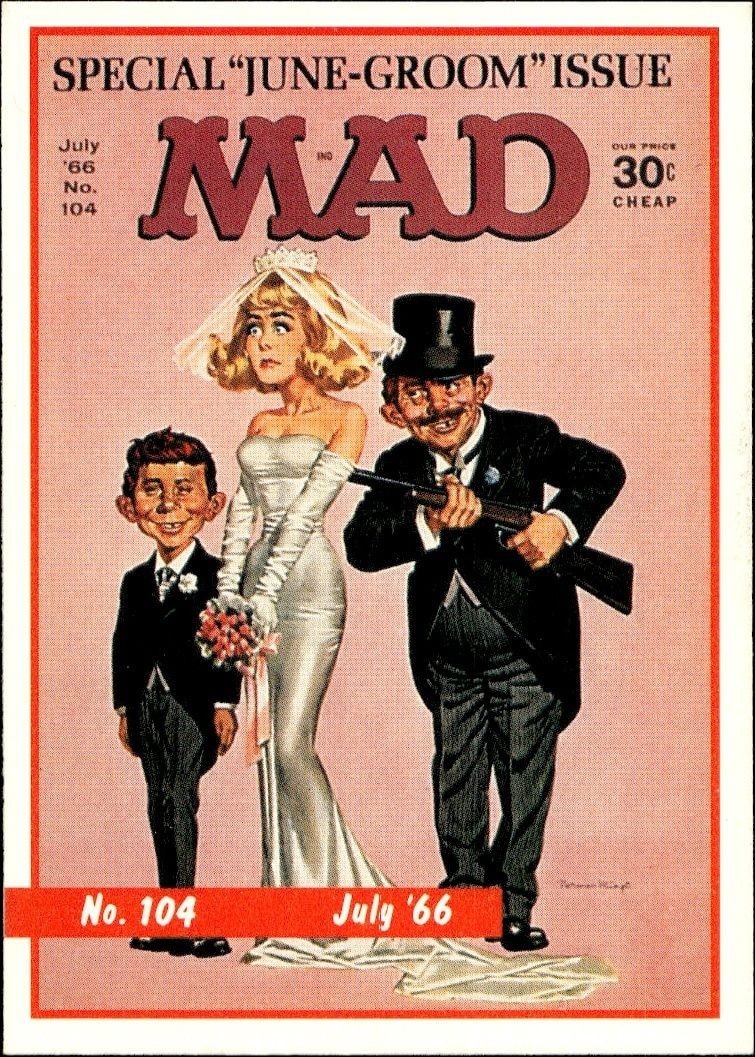
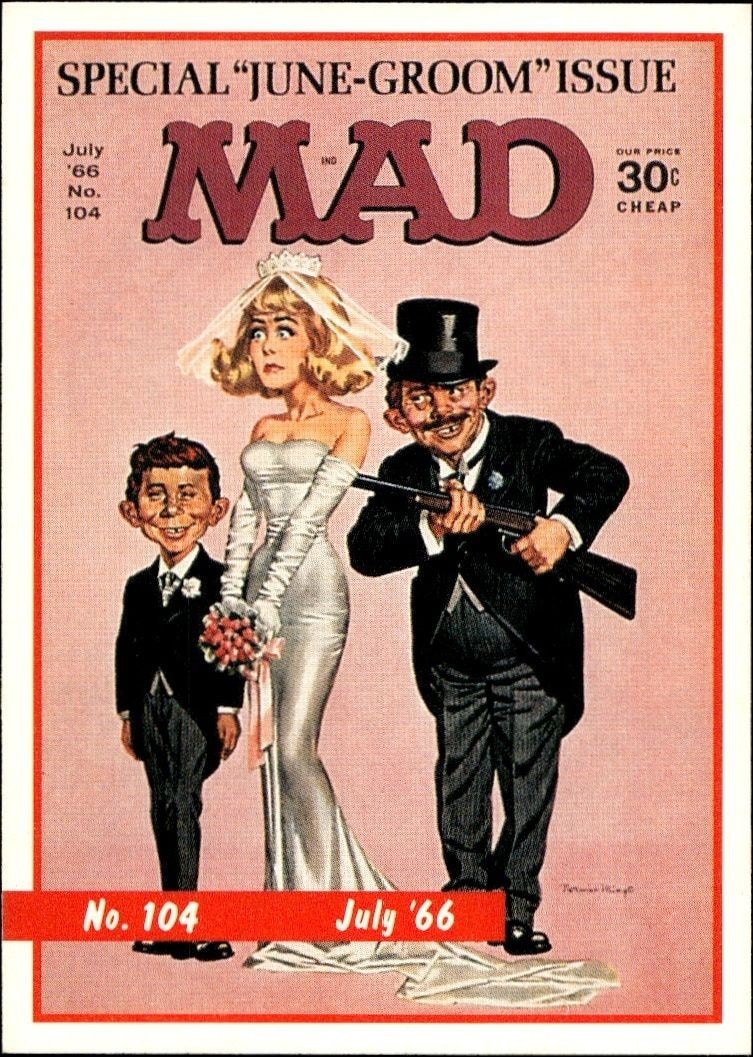
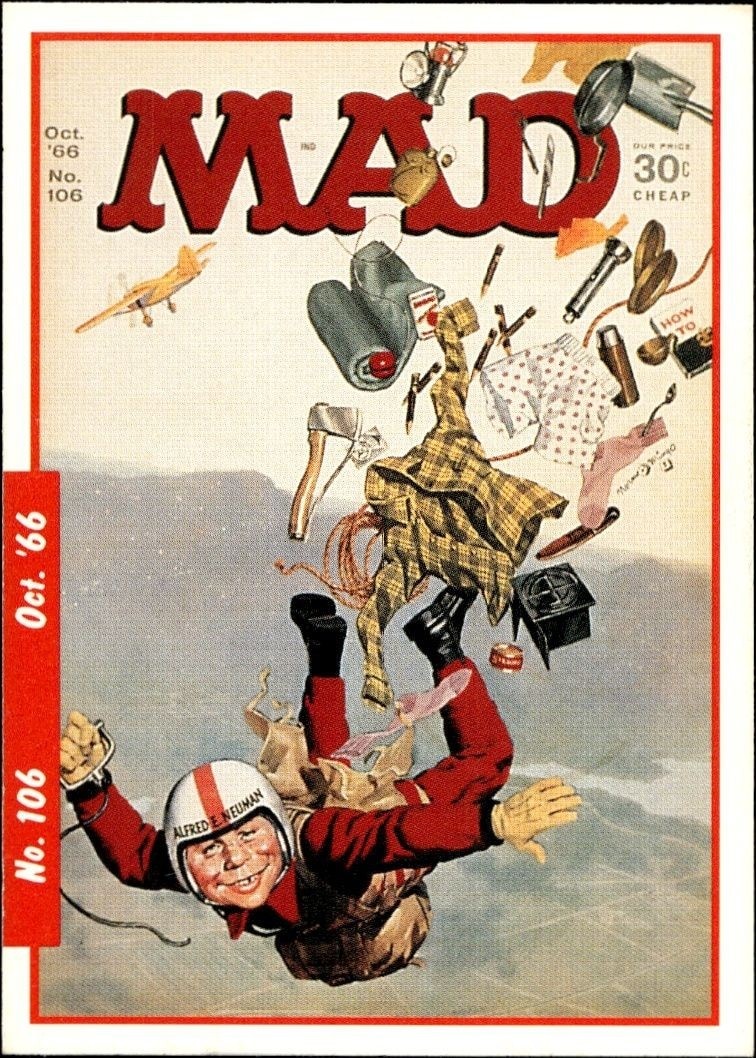
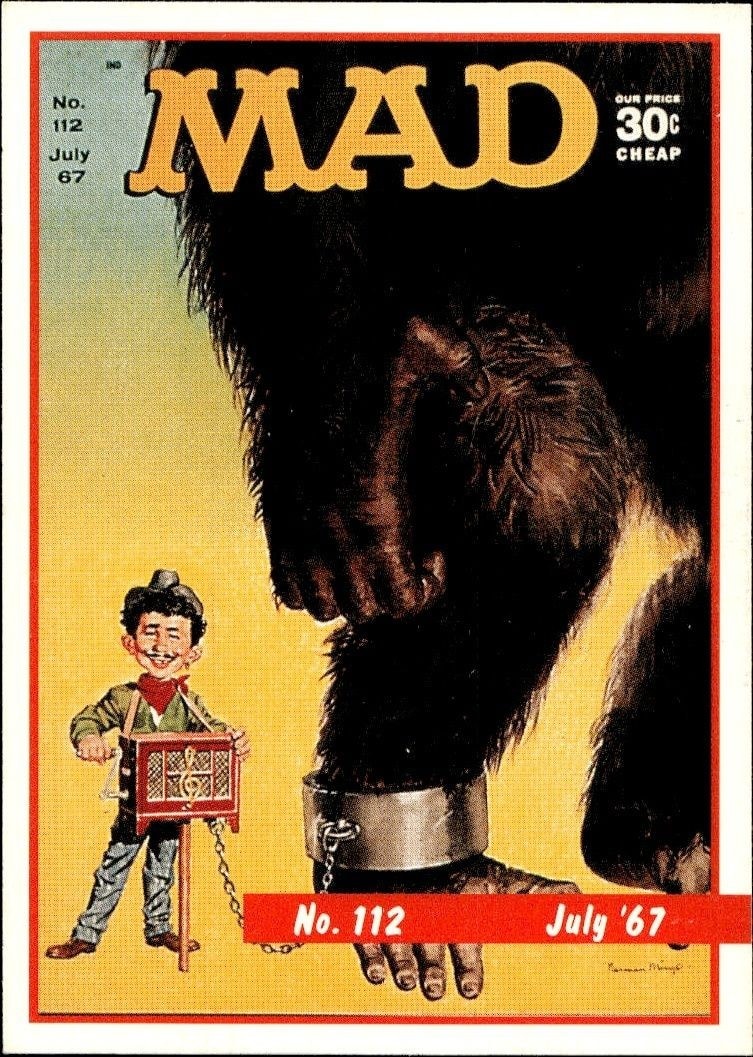
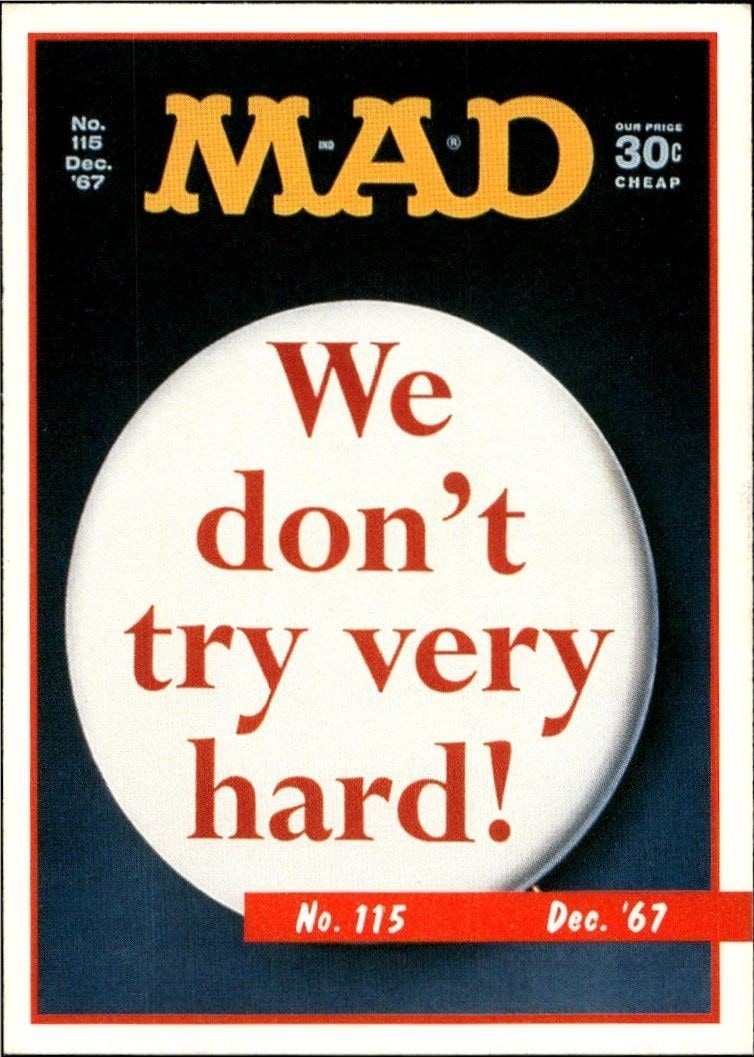
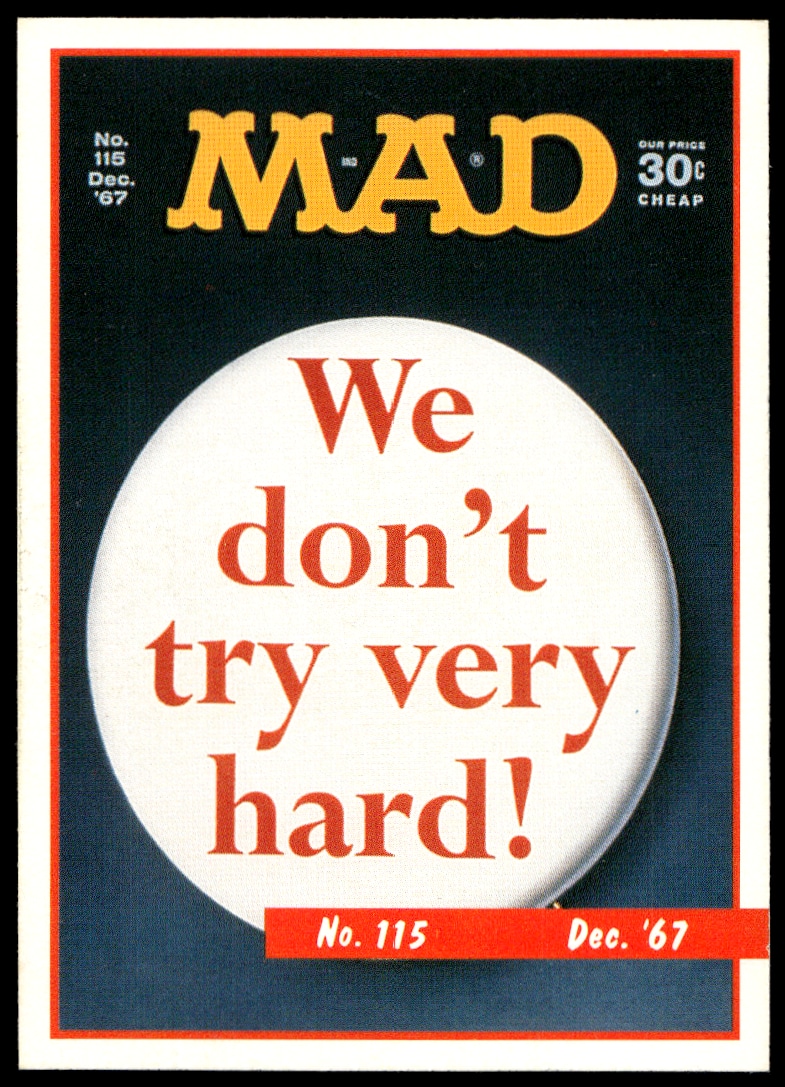
Explore the 1992 Lime Rock Mad Magazine The Lighter Side of... series, specifically card #199 featuring the June '78 character Mad No. 199. This non-sports entertainment collectible offers a distinct piece of pop culture history for dedicated hobbyists.
1992 • Lime Rock • Mad Magazine • The Lighter Side Of...
Near Mint
199
New
Shipping Calculated at Checkout
Arrives in 5-7 daysEstimated delivery October 29, 2026 - October 31, 2026
30-day ReturnsNo condition-by-condition breakdown has been recorded for this card yet.
The 1992 Lime Rock Mad Magazine The Lighter Side of... Series captures the enduring humor of the iconic publication through a dedicated trading card release. Card number 199, featuring the subject Mad No. 199 (June '78), stands as a notable entry in this non-sports entertainment catalog. Collectors often seek out these cards to preserve the legacy of Mad Magazine's unique satirical style and its impact on American pop culture. This release highlights the magazine's ability to blend wit with visual storytelling, making it a compelling addition to any non-sports card collection. The Lime Rock brand brought a fresh perspective to vintage media memorabilia, allowing fans to own a tangible piece of the publication's history. For enthusiasts of entertainment cards, this product provides a connection to a specific era of Mad Magazine's run, bridging the gap between the original comic issues and modern collectibles. Building a collection of non-sports cards requires attention to detail and a passion for the subject matter. The Lighter Side of... Subset offers a curated look at the magazine's lighter moments, appealing to those who appreciate the humor and artistry that defined the brand. Whether you are focusing on specific eras or completing a broader set of Mad Magazine merchandise, card #199 represents a key piece of that narrative. Collecting non-sports trading cards is about more than just the cards themselves; it is about the stories they tell and the cultural moments they represent. This 1992 release serves as a reminder of the magazine's enduring influence and its ability to entertain generations of readers. By focusing on the identity and context of the product, collectors can build meaningful collections that reflect their personal interests and appreciation for media history.
3 days ago
We'll pre-fill the product details from this catalog entry, so your listing lands on this exact page. Just add photos of your copy, pick its condition, and set your price.
The catalog profile below summarizes the card identity, featured subject, and notable collectible traits.
The core identity of the card within the set.
The subject, team, league, and sport context tied to this card.
Featured
Mad No. 199 (June '78)
Production details and format-specific attributes.
Material
Card Stock
Language
English
Compare prices, grades, photos, and shipping from approved sellers.
New
Near Mint
This 1992 Lime Rock Mad Magazine card captures the enduring appeal of the iconic satirical brand, appealing to both dedicated pop-culture memorabilia collectors and niche comic enthusiasts. As a non-sports item with no special attributes noted, its value is heavily dependent on condition preservation, which is often challenging for vintage paper goods from this era. The single active listing suggests a thin market, indicating that while interest exists, liquidity may be limited for casual sellers.
Positioned within the broader Mad Magazine collectibles landscape, this base card lacks the scarcity mechanics of chase inserts or serial-numbered variants, making it part of the high-volume foundation of the set. The absence of unique attributes implies it relies on the general appeal of the Mad No. 199 feature rather than intrinsic rarity drivers like holographic foil or low-number serials. Supply is constrained by the age of the product and the fragility of the material, but it does not benefit from the artificial scarcity mechanisms found in premium insert sets.
The Mad franchise maintains a steady, nostalgic relevance that supports long-term interest among completionists seeking to finish specific brand collections. Demand is likely driven by dedicated fans of the magazine's history rather than speculative trading trends, resulting in a stable but potentially slow-moving market. Investors should view this as a component play for set completion rather than a standalone growth asset, as the property remains culturally significant but dormant in terms of mainstream hype cycles.