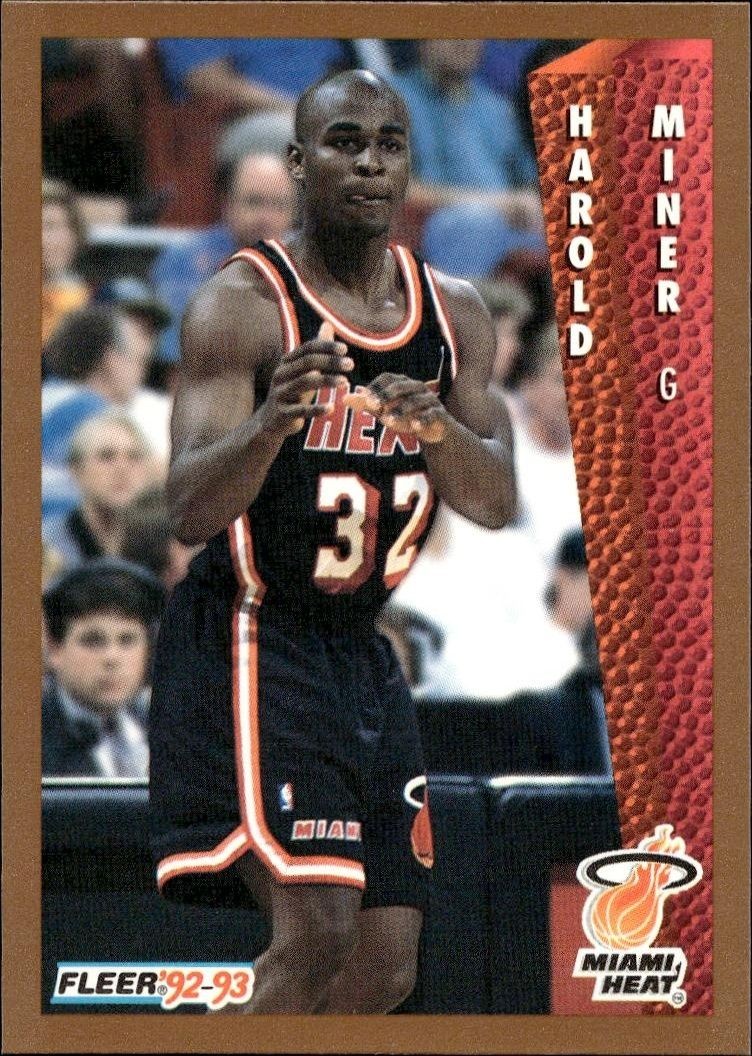



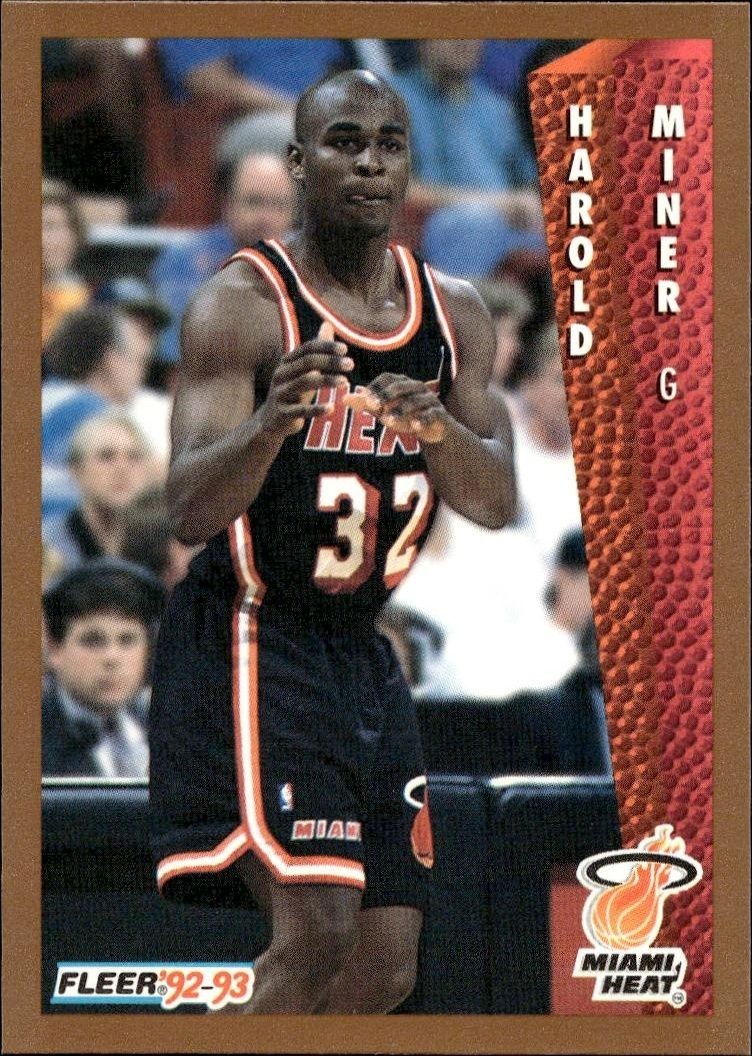

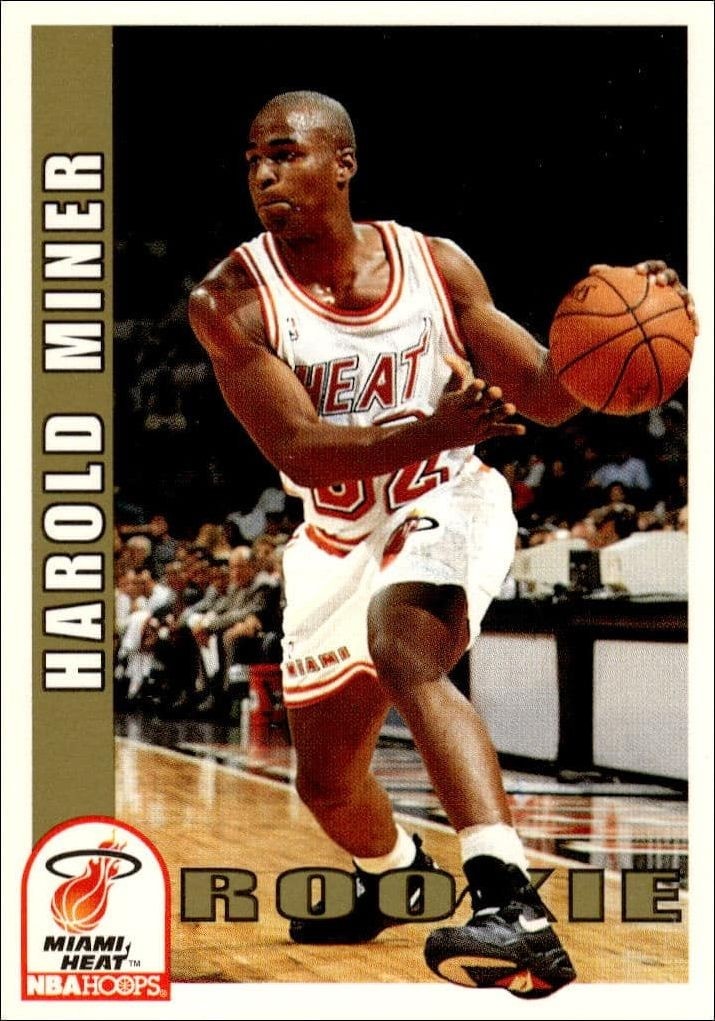
Explore the 1993-94 Fleer Harold Miner #108 basketball card, a notable entry from the Miami Heat era for serious NBA collectors.
1993-94 • Fleer
National Basketball Association • Miami Heat
Near Mint
108
New
Shipping Calculated at Checkout
Arrives in 5-7 daysEstimated delivery October 23, 2026 - October 25, 2026
Seller returns October 19, 2026.30-day Returns| Condition | Value | Source | Trend | Price Details |
|---|---|---|---|---|
$1.64As of 9/18/2026 | Guide Estimate | |||
Raw / Ungraded
PriceCharting Price Guide · Guide Estimate evidence · captured Sep 19, 2026
History is building. At least two days of matching observations are needed to show a trend.
Each point is the last stored observation that day for this printing, condition, grader, autograph status and source. Gaps mean no observation; guide estimates and asking prices are not completed sales.The 1993-94 Fleer Harold Miner #108 basketball card represents a specific moment in NBA history, capturing the young forward during his tenure with the Miami Heat. Released by Fleer during the mid-90s, this card is part of a broader series that defined the visual aesthetic of sports trading cards from that decade. For collectors, Miner’s career offers a compelling narrative, transitioning from his time with the Heat to later stints with other franchises, making this card a valuable component for those tracking player trajectories. Collecting cards from the 1993-94 Fleer set appeals to enthusiasts who appreciate the classic design elements and the historical context of the era. The #108 slot places this card within a comprehensive collection that includes many other notable athletes, allowing builders to complete the base set or focus on specific teams like the Miami Heat. As the NBA expanded its global reach during this period, Fleer’s cards remained a primary source for fans to document their favorite players and teams. Harold Miner’s inclusion in this release highlights the depth of talent in the league at the time. For investors and hobbyists alike, owning a piece of this Fleer release connects them to the rich history of professional basketball. Whether you are looking to fill a gap in your Miami Heat collection or add a unique card to your NBA roster, this 1993-94 Fleer card offers a tangible link to the sport’s past.
18 hours ago
We'll pre-fill the product details from this catalog entry, so your listing lands on this exact page. Just add photos of your copy, pick its condition, and set your price.
The catalog profile below summarizes the card identity, featured subject, and notable collectible traits.
The subject, team, league, and sport context tied to this card.
Production details and format-specific attributes.
Material
Card Stock
Language
English
Compare prices, grades, photos, and shipping from approved sellers.
New
Near Mint
See how many public collections currently include this card.
0 collectors have this card
This 1993-94 Fleer card represents a foundational entry for Harold Miner, capturing his early career significance with the Miami Heat before he moved to the Los Angeles Lakers. As a base card from a mainstream set, it occupies a lower price tier compared to premium parallels or inserts, reflecting its status as a standard issue. The current market positioning suggests it is accessible for collectors building specific team or player sets without commanding a significant condition premium.
The card lacks any special scarcity attributes such as serial numbering, short prints, or unique parallels, identifying it as a common base card within the Fleer product line. This standard production implies a high supply relative to demand, as no limited edition mechanics or one-of-one designs are present to restrict availability. Consequently, the item relies on general collector interest rather than exclusive scarcity drivers for its value.
While Miner was a notable draft pick, this specific base card does not carry a rookie-card premium due to the presence of earlier issues in his career trajectory. Investment potential is limited by the abundant supply typical of base cards from the 1990s, making it more suitable for completionists than speculative investors. Long-term value appreciation is unlikely to be significant unless broader market trends for 1990s basketball cards shift dramatically.