






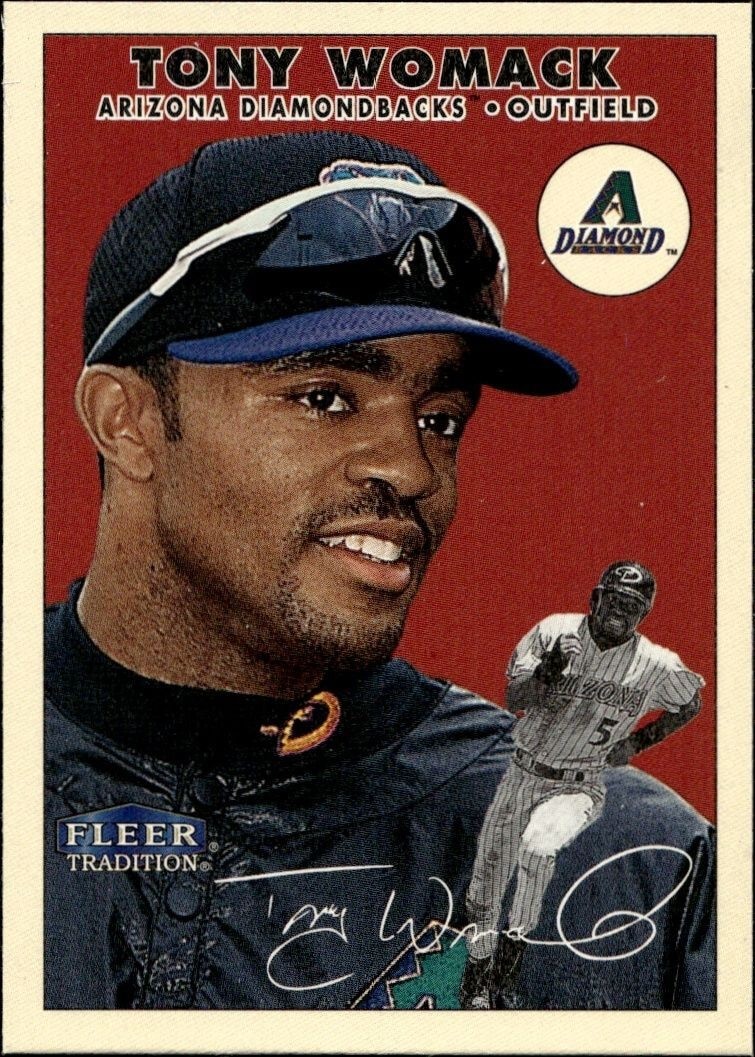
The 2000 Upper Deck Tony Womack #37 is a definitive sports trading card capturing the Arizona Diamondbacks shortstop during a pivotal era in MLB history.
2000 • Upper Deck
Major League Baseball • Arizona Diamondbacks
Near Mint
37
New
Shipping Calculated at Checkout
Arrives in 5-7 daysEstimated delivery October 23, 2026 - October 25, 2026
Seller returns October 19, 2026.30-day Returns| Condition | Value | Source | Trend | Price Details |
|---|---|---|---|---|
$1.00As of 9/26/2026 | Asking Prices | |||
Raw / Ungraded
eBay Active Listings · Asking Prices evidence · captured Sep 26, 2026
History is building. At least two days of matching observations are needed to show a trend.
Each point is the last stored observation that day for this printing, condition, grader, autograph status and source. Gaps mean no observation; guide estimates and asking prices are not completed sales.The 2000 Upper Deck Tony Womack #37 baseball card represents a significant entry for collectors focusing on late-1990s and early-2000s MLB history. Issued by Upper Deck, a premier manufacturer of sports trading cards, this release captures Tony Womack during his tenure with the Arizona Diamondbacks. The card is cataloged under number 37 in the base set, serving as a standard reference point for those organizing their collections by manufacturer and year. Tony Womack established himself as a dynamic force on the base paths and in the infield during this period. The 2000 Upper Deck release features his image and statistics, providing a tangible connection to his performance with the Diamondbacks. Collectors often target this card to complete their Arizona Diamondbacks subsets or to build comprehensive holdings of Upper Deck products from the 2000 season. The card’s identity is rooted in its association with Womack’s career and the team’s competitive window. Whether you are a dedicated Diamondbacks fan or a broader MLB historian, the 2000 Upper Deck Tony Womack #37 offers a clear window into that specific moment in baseball. It stands as a recognized item within the catalog of sports memorabilia, appealing to those who appreciate the structured history of trading card production from the turn of the millennium. As you explore your options, consider how this card fits into your broader strategy. Collecting sports cards is about more than just individual items; it is about curating a narrative. This card contributes to the story of the Arizona Diamondbacks and the evolution of the shortstop position in Major League Baseball. By adding the 2000 Upper Deck Tony Womack #37 to your inventory, you secure a piece of verified sports history produced by one of the industry's most respected brands.
22 hours ago
We'll pre-fill the product details from this catalog entry, so your listing lands on this exact page. Just add photos of your copy, pick its condition, and set your price.
The catalog profile below summarizes the card identity, featured subject, and notable collectible traits.
The subject, team, league, and sport context tied to this card.
Production details and format-specific attributes.
Material
Card Stock
Language
English
Compare prices, grades, photos, and shipping from approved sellers.
New
Near Mint
See how many public collections currently include this card.
0 collectors have this card
This 2000 Upper Deck Tony Womack card currently sits at the entry-level price tier, reflecting its status as a standard base card without special enhancements. While Womack is a recognized figure from the Diamondbacks' championship era, this specific iteration lacks the grading premiums or scarcity drivers that typically elevate player value. It trades in a high-supply environment where condition and version do not significantly differentiate its market position from the broader set.
The card possesses no special scarcity attributes, such as serial numbering, short prints, or parallel finishes, indicating it is a standard base issue. This lack of unique identifiers means the supply is constrained only by the original print run, which is typically large for mainstream products of this era. Consequently, the card does not benefit from the limited supply mechanics that drive rarity premiums in the secondary market.
As a non-rookie, base-year card, this item lacks the rookie-card premium mechanics that often serve as primary demand drivers for long-term value. Collector interest is likely limited to specific completists or fans seeking affordable representation of the Diamondbacks' 2001 title roster. Without unique scarcity or grading advantages, the card is unlikely to see significant appreciation beyond modest fluctuations in general baseball card market trends.