


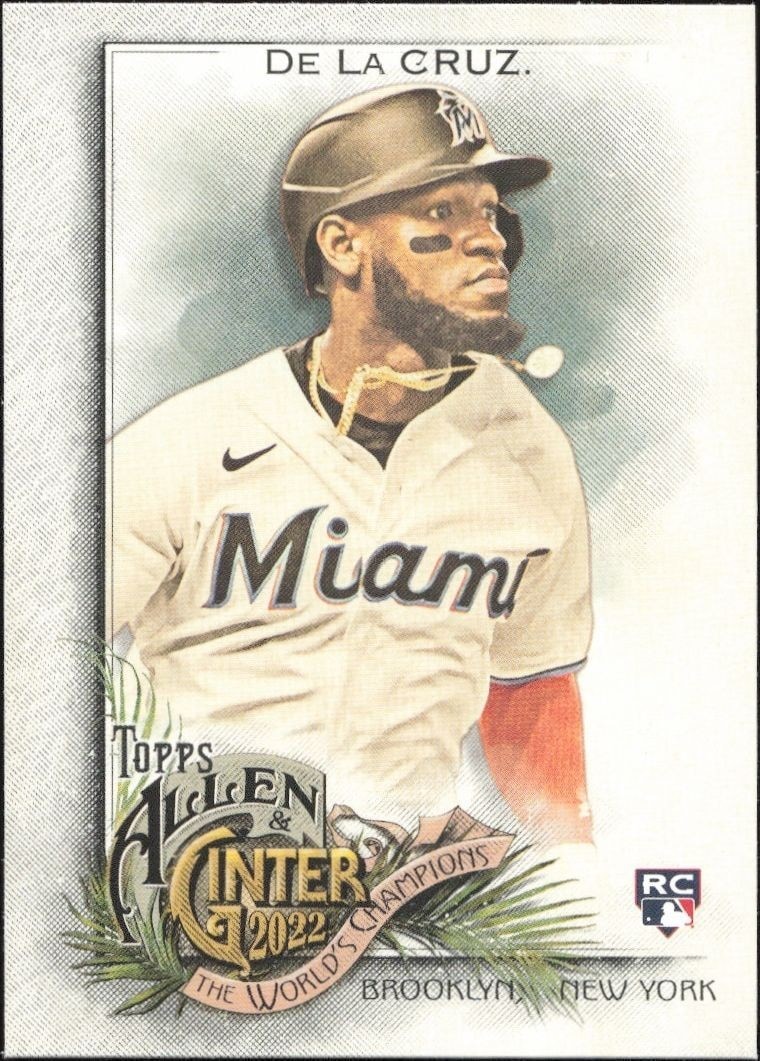


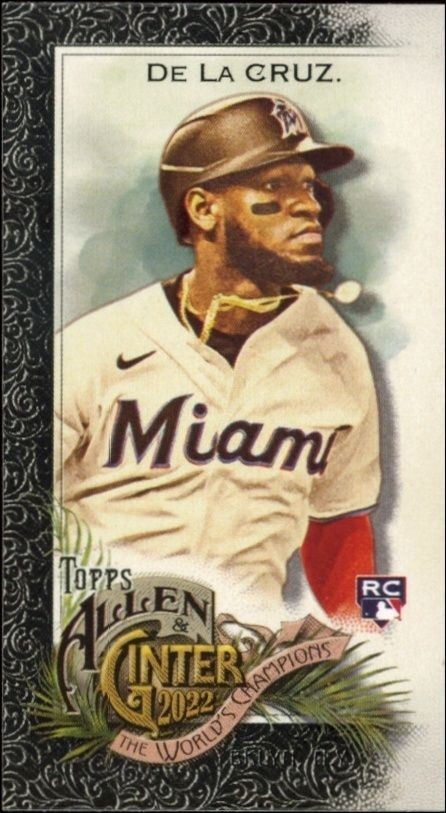
The 2022 Topps Allen & Ginter Mini release features Bryan De La Cruz as card #71, capturing the Miami Marlins infielder in the classic vintage aesthetic of the Allen & Ginter brand.
2022 • Topps • Allen & Ginter
Major League Baseball • Miami Marlins
Near Mint
71
New
Shipping Calculated at Checkout
Arrives in 5-7 daysEstimated delivery October 23, 2026 - October 25, 2026
Seller returns October 19, 2026.30-day Returns| Condition | Value | Source | Trend | Price Details |
|---|---|---|---|---|
$0.26As of 9/27/2026 | Guide Estimate | |||
Raw / Ungraded
PriceCharting Price Guide · Guide Estimate evidence · captured Sep 27, 2026
History is building. At least two days of matching observations are needed to show a trend.
Each point is the last stored observation that day for this printing, condition, grader, autograph status and source. Gaps mean no observation; guide estimates and asking prices are not completed sales.The 2022 Topps Allen & Ginter Mini series offers collectors a distinct approach to sports memorabilia by condensing the brand's signature vintage design into a compact format. Within this release, card number 71 spotlights Bryan De La Cruz, who was an active member of the Miami Marlins roster during the 2022 MLB season. This card number is a key identifier for enthusiasts tracking the progression of Marlins players through the Allen & Ginter catalog. Allen & Ginter has long been recognized for its homage to early 20th-century baseball card aesthetics, utilizing classic typography and layout structures that appeal to both modern and nostalgic collectors. The Mini subset allows for easier handling and storage while maintaining the visual integrity that defines the brand. For those focused on team-specific collections, this card serves as a documented piece of the Marlins' 2022 lineup, providing a tangible connection to the era. Collecting cards from the 2022 Topps Allen & Ginter Mini set often appeals to those who appreciate the historical design language of the brand. Whether you are building a comprehensive set or seeking specific player cards like Bryan De La Cruz #71, this release provides a structured way to engage with the sport's history. The interplay between the modern player and the traditional design elements makes each card in the Allen & Ginter series a unique object of study for baseball historians and hobbyists alike.
1 day ago
We'll pre-fill the product details from this catalog entry, so your listing lands on this exact page. Just add photos of your copy, pick its condition, and set your price.
The catalog profile below summarizes the card identity, featured subject, and notable collectible traits.
The core identity of the card within the set.
The subject, team, league, and sport context tied to this card.
Production details and format-specific attributes.
Card size
Mini
Material
Card Stock
Language
English
Compare prices, grades, photos, and shipping from approved sellers.
New
Near Mint
See how many public collections currently include this card.
0 collectors have this card
This base card sits at the lower end of Bryan De La Cruz's market value spectrum, reflecting its status as a non-premium insert within the 2022 Topps Allen & Ginter set. While the player's MLB tenure provides a baseline of relevance, the lack of special attributes means it trades well below the premiums commanded by his rookie or parallel variants. It serves as an accessible entry point for collectors focusing on the player rather than seeking high-grade investment pieces.
The card is identified as a standard base issue within the Allen & Ginter brand, meaning it lacks the supply constraints associated with serial numbering, short prints, or limited edition parallels. Its scarcity is defined purely by its inclusion in the base set run, which typically results in a higher overall population compared to special inserts. Consequently, the supply is abundant relative to the collector demand for non-premium cards from this player.
As a non-rookie base card from 2022, this item does not benefit from the rookie-card premium mechanics that typically drive long-term value appreciation. Collector demand is likely limited to those specifically completing base set subsets, resulting in steady but modest liquidity. Future value retention will depend largely on the player's continued presence in MLB rather than any intrinsic scarcity or special designation of the card itself.