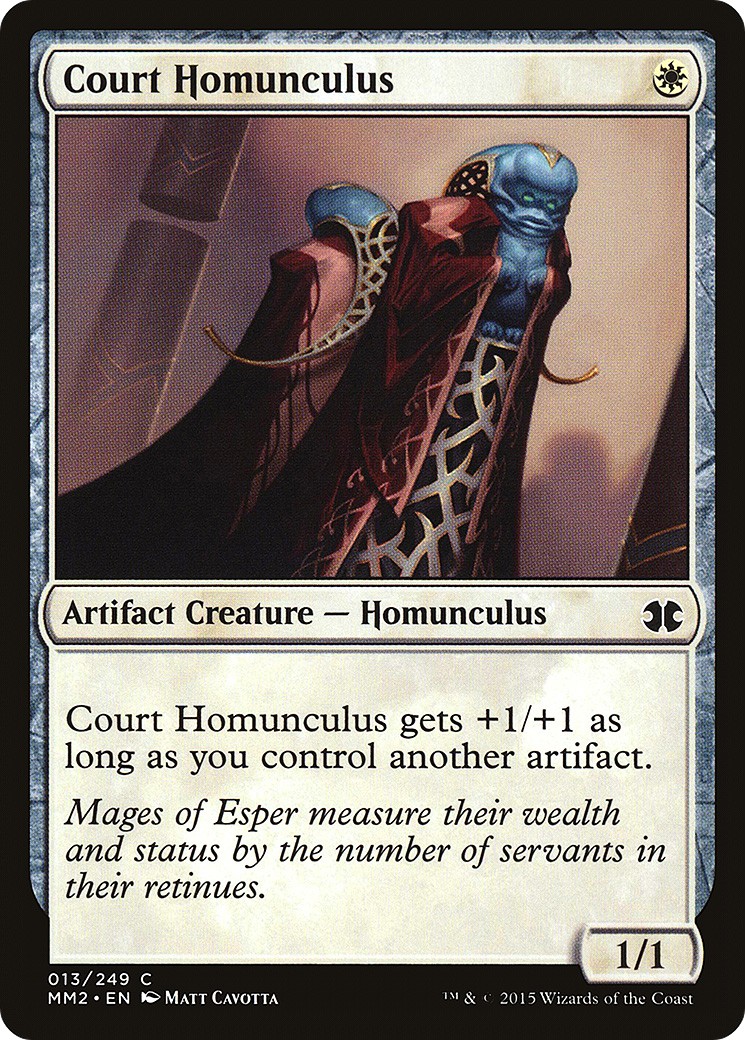
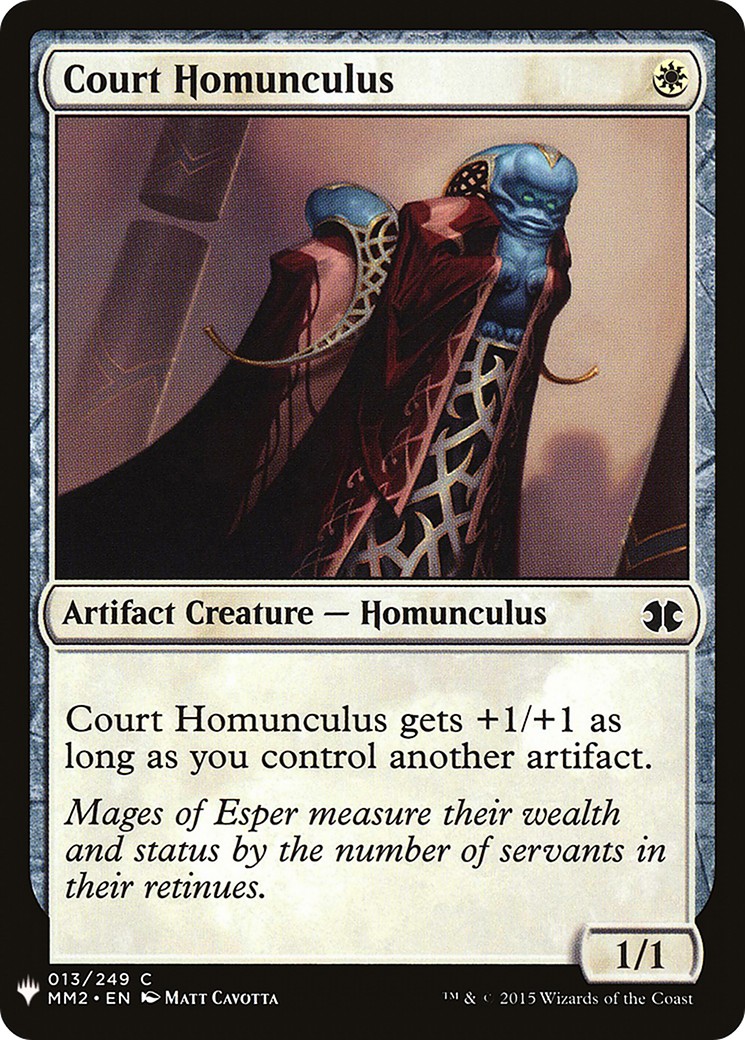
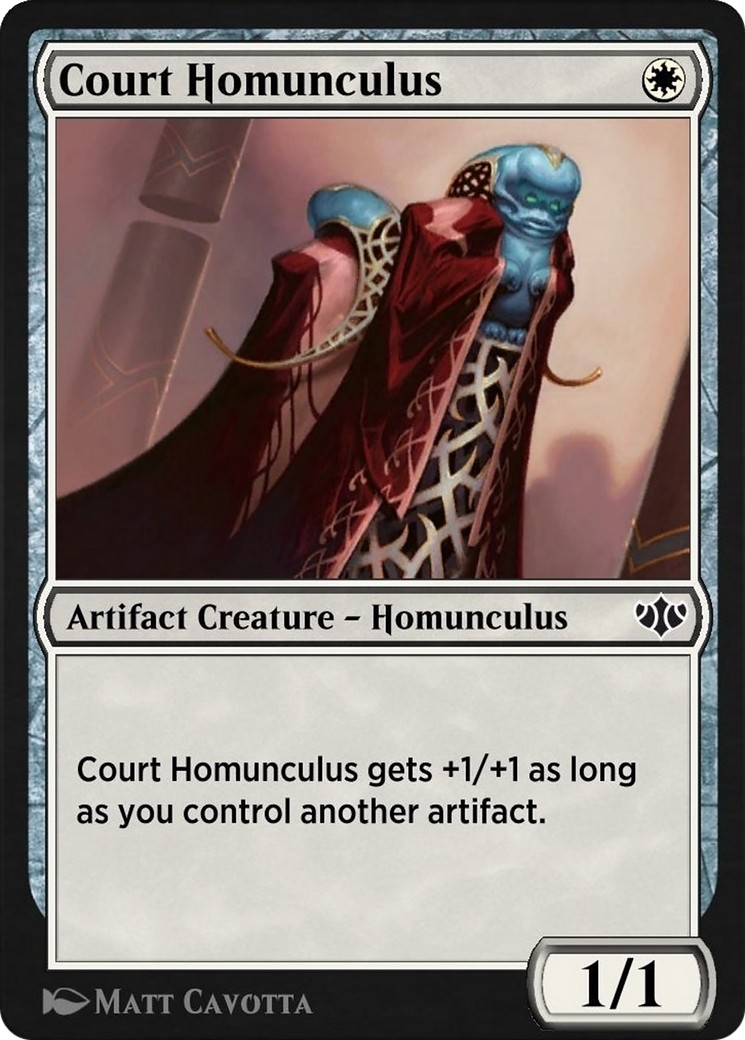
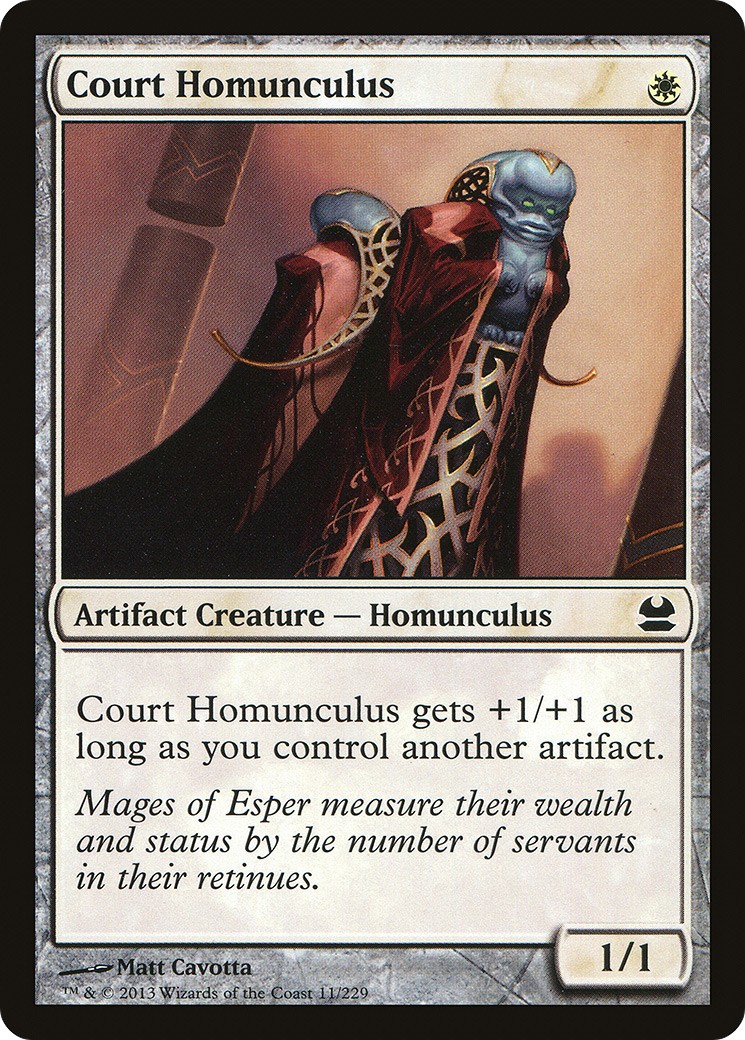
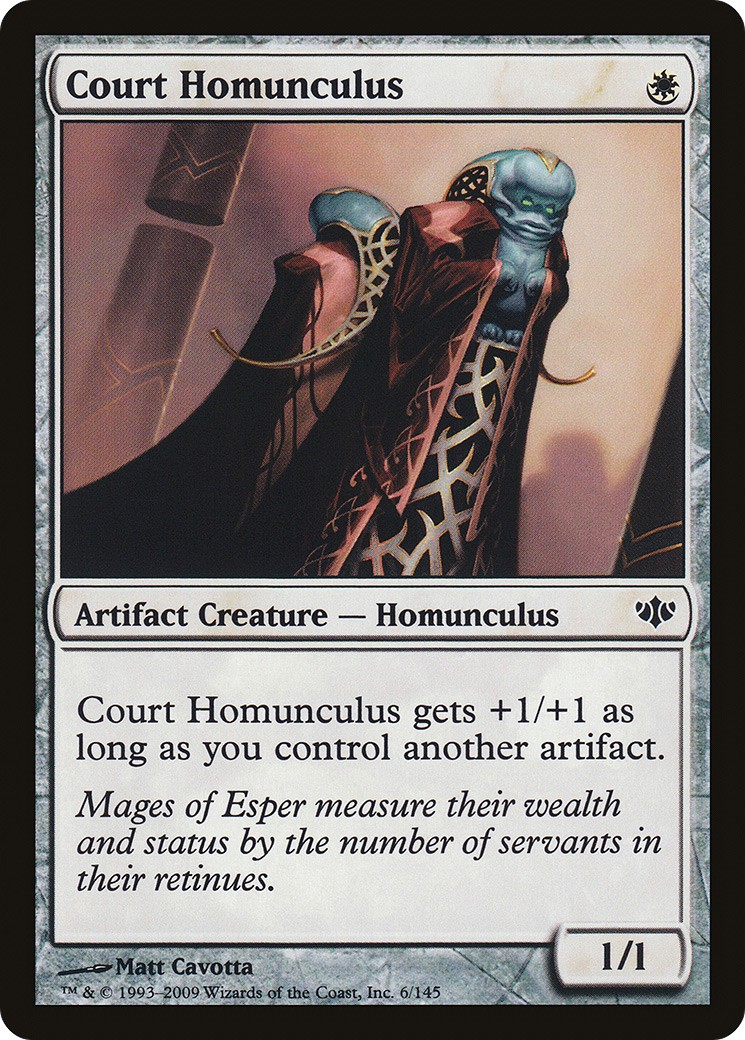
The 2015 Modern Masters release featuring the Court Homunculus foil card. This white mana artifact creature enhances deck strategies with its +1/+1 ability.
Court Homunculus
2015 • Magic: The Gathering • Modern Masters
No Listings Available
No listings available right now.
Price History
$0.13
Description
The 2015 Modern Masters expansion brought a curated selection of classic Magic: The Gathering cards to collectors and players alike, with the Court Homunculus standing out as a versatile white mana option. As card number 13 in the set, this foil common is an Artifact Creature — Homunculus that requires only one white mana to cast, making it an efficient early-game play for any deck focused on the white color identity. Collectors often seek out the foil finish of this card for its shimmering presentation, which highlights the intricate details of Matt Cavotta’s illustration. The card’s design fits seamlessly into the Modern Masters aesthetic, offering a nostalgic touch for veterans of the format while remaining a solid inclusion for new players exploring the game’s history. The Court Homunculus is particularly valued for its ability to grow in power and toughness as long as you control another artifact, a trait that synergizes well with artifact-heavy strategies. The Court Homunculus, with its straightforward yet effective rules text, serves as a foundational piece for decks looking to establish board presence early. Its flavor text hints at the lore of Esper, where mages measure status by their servants, adding a layer of narrative depth to the card’s mechanical utility. Whether you are completing a Modern Masters collection or looking to add a reliable artifact creature to your Commander deck, the Court Homunculus foil offers both aesthetic appeal and gameplay value. The card’s enduring popularity in formats like M15 and Commander underscores its lasting relevance in the Magic: The Gathering ecosystem.
Have one of these to sell?
We'll pre-fill the product details from this catalog entry, so your listing lands on this exact page. Just add photos of your copy, pick its condition, and set your price.
Card Details
The catalog profile below summarizes the card identity, featured subject, and notable collectible traits.
Catalog Profile
The core identity of the card within the set.
Featured Subject
The subject, team, league, and sport context tied to this card.
Featured
Court Homunculus
Game
Magic: The Gathering
TCG Attributes
Rarity, print treatment, and game-specific stats for this card.
Common
Matt Cavotta
Card Stock
English
Foil
{W}
Artifact Creature — Homunculus
1 / 1
W
Card Text
Abilities, attacks, oracle text, and flavor text printed on the card.
This creature gets +1/+1 as long as you control another artifact.
Mages of Esper measure their wealth and status by the number of servants in their retinues.