The 2002 Magic: The Gathering Onslaught expansion features the Quicksilver Dragon, card number 103, presented here in its foil variant.
Quicksilver Dragon
2002 • Magic: The Gathering • Onslaught
No Listings Available
No listings available right now.
Market & Price History
| Condition | Value | Source | Trend | Price Details |
|---|---|---|---|---|
$19.33 | Guide Estimate | -1.5% | ||
- $19.33
- Source
- Guide Estimate
- Trend
- -1.5%
- Price Details
30-day Price History
Raw / Ungraded
TCGplayer Market (reference) · Guide Estimate evidence · captured Nov 10, 2026
Description
Released in 2002 as part of the Onslaught block, the Quicksilver Dragon occupies a unique space in Magic: The Gathering history. As card number 103, this six-mana blue creature introduces the Morph mechanic to the format, offering players a strategic depth that was new to the game at the time. The card allows players to cast it face-down as a 2/2 creature for three mana, keeping its true identity hidden until the Morph cost of {4}{U} is paid to reveal its five-power, five-toughness form. The foil finish adds a layer of visual appeal that collectors and players alike appreciate. In a market where vintage cards from the early 2000s are increasingly sought after, the combination of a powerful creature type and a novel mechanic makes this card a staple in many collectors' minds. The Morph ability not only provides tactical flexibility but also represents a significant moment in the evolution of card design, encouraging players to think about resource management and information control. For those building a collection focused on the Onslaught block or the broader Kamigawa block era, Quicksilver Dragon serves as an essential reference point. Its ability to change targets of spells adds a layer of complexity to gameplay that remains relevant in casual and constructed formats today. The card's design and mechanics reflect the innovative spirit of Magic during this period, making it a fascinating subject for study and collection. Whether you are drawn to its strategic potential or its place in TCG history, this card stands as a testament to the enduring appeal of Magic: The Gathering.
Have one of these to sell?
We'll pre-fill the product details from this catalog entry, so your listing lands on this exact page. Just add photos of your copy, pick its condition, and set your price.
Card Details
The catalog profile below summarizes the card identity, featured subject, and notable collectible traits.
Catalog Profile
The core identity of the card within the set.
Featured Subject
The subject, team, league, and sport context tied to this card.
Featured
Quicksilver Dragon
Game
Magic: The Gathering
TCG Attributes
Rarity, print treatment, and game-specific stats for this card.
Rare
Ron Spencer
Card Stock
English
Foil
{4}{U}{U}
Creature — Dragon
5 / 5
U
Card Text
Abilities, attacks, oracle text, and flavor text printed on the card.
Flying {U}: If target spell has only one target and that target is this creature, change that spell's target to another creature. Morph {4}{U} (You may cast this card face down as a 2/2 creature for {3}. Turn it face up any time for its morph cost.)
FAQ
Frequently Asked Questions
What is the Morph mechanic on Quicksilver Dragon?
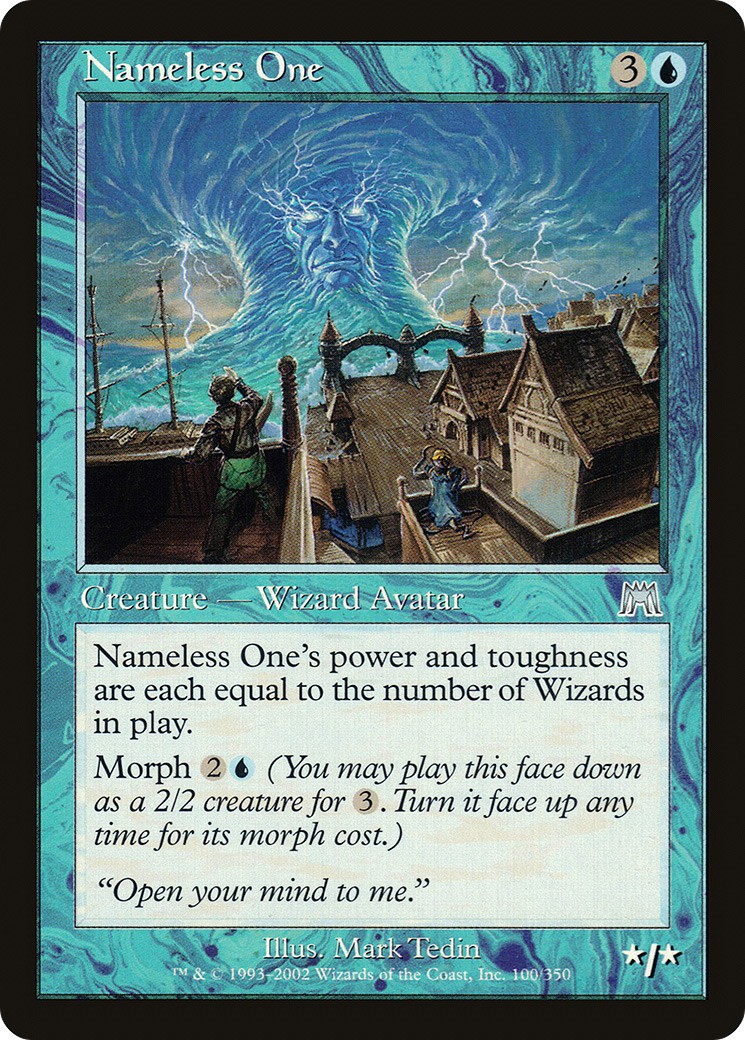
Morph allows a player to cast the card face-down as a 2/2 creature for three mana. It can then be turned face-up during any main phase by paying its morph cost of {4}{U} to reveal its true abilities.
When was the Onslaught expansion released?
The Onslaught expansion was released by Wizards of the Coast in 2002. It serves as the first set in the Onslaught block, which includes the sets Massacre and Legions.
Why is Quicksilver Dragon significant in Magic history?
Quicksilver Dragon is significant because it was one of the first cards to introduce the Morph mechanic to Magic: The Gathering. This mechanic added a new layer of strategic depth by allowing players to hide information on the battlefield.
Cards Named Quicksilver Dragon
Explore cards with this name across sets and editions. Check each card’s details before choosing a version.
Tap an image to preview it, or a card’s name to open its page.