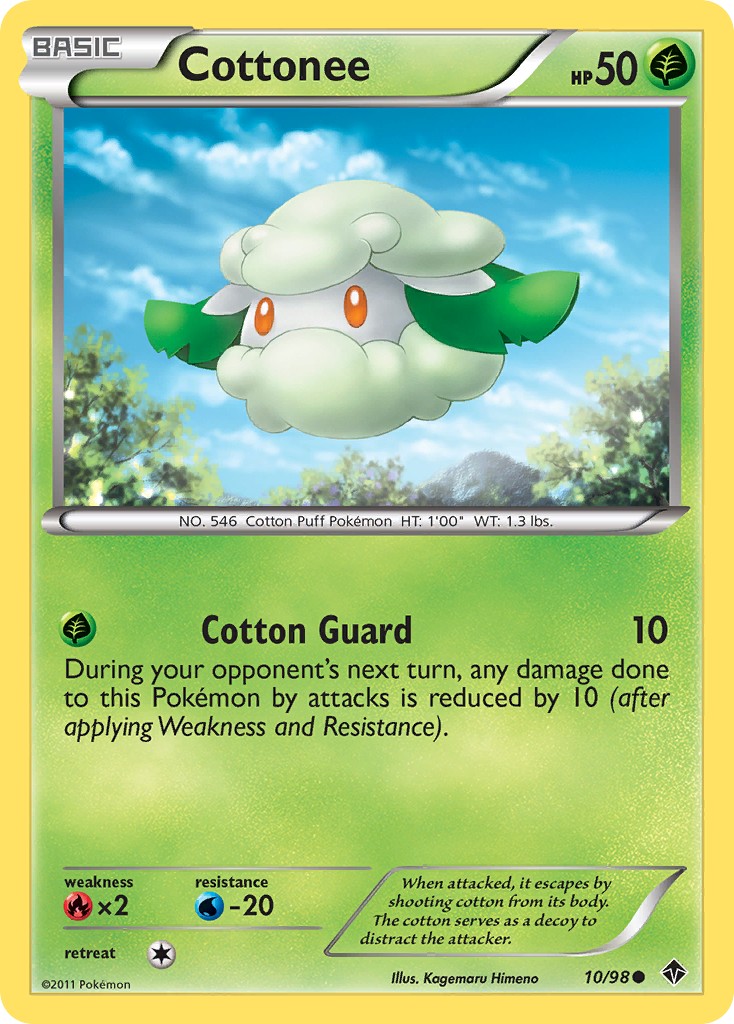
The 2011 Pokémon Emerging Powers set with this Reverse Holo Cottonee card, number 9. This Grass-type Basic Pokémon features the Grass Absorb attack.
2011 • Pokémon • Emerging Powers
No listings available right now.
| Condition | Value | Source | Trend | Price Details |
|---|---|---|---|---|
$2.58As of 9/28/2026 | Guide Estimate | |||
Raw / Ungraded
TCGplayer Market (reference) · Guide Estimate evidence · captured Sep 28, 2026
History is building. At least two days of matching observations are needed to show a trend.
Each point is the last stored observation that day for this printing, condition, grader, autograph status and source. Gaps mean no observation; guide estimates and asking prices are not completed sales.As card number 9 in the set, it features the Grass-type Pokémon Cottonee, a Basic stage creature with 40 HP. The card is designed by artist Atsuko Nishida, whose work defines the aesthetic of this era in TCG history. Cottonee is known for its fluffy, cotton-like body and wind-dependent movement patterns. In gameplay terms, this card offers the Grass Absorb attack, which allows the player to deal 10 damage and heal 10 damage from Cottonee simultaneously. This self-sustaining mechanic makes it a functional piece for deck construction, particularly for players looking to build around Grass-type strategies or support Pokémon. The Retreat Cost is listed as 1, indicating its relative mobility on the battlefield compared to heavier Pokémon. For collectors, the Reverse Holo finish adds a shimmering, textured layer to the card that contrasts with the standard foil versions found in the same set. This treatment is highly sought after by those who appreciate the tactile and visual variety within the Emerging Powers subset. The card retains its original rarity as a Common, meaning it is accessible for completionists while still holding value as part of a complete set run. Whether you are hunting for specific Reverse Holo variants or completing the full Emerging Powers roster, understanding the card's role in the game's mechanics adds depth to the collecting experience. This card remains a staple for fans of the Generation V Pokémon introduced during this period.
We'll pre-fill the product details from this catalog entry, so your listing lands on this exact page. Just add photos of your copy, pick its condition, and set your price.
The catalog profile below summarizes the card identity, featured subject, and notable collectible traits.
The core identity of the card within the set.
The subject, team, league, and sport context tied to this card.
Featured
Cottonee
Game
Pokémon
Rarity, print treatment, and game-specific stats for this card.
Common
Atsuko Nishida
Card Stock
English
Reverse Holo
40
Grass
Basic
Whimsicott
Fire ×2
Water -20
1
546
Abilities, attacks, oracle text, and flavor text printed on the card.
Attack: Absorb (10)
Heal 10 damage from this Pokémon.
They go wherever the wind takes them. On rainy days, their bodies are heavier, so they take shelter beneath big trees.
Explore cards with this name across sets and editions. Check each card’s details before choosing a version.