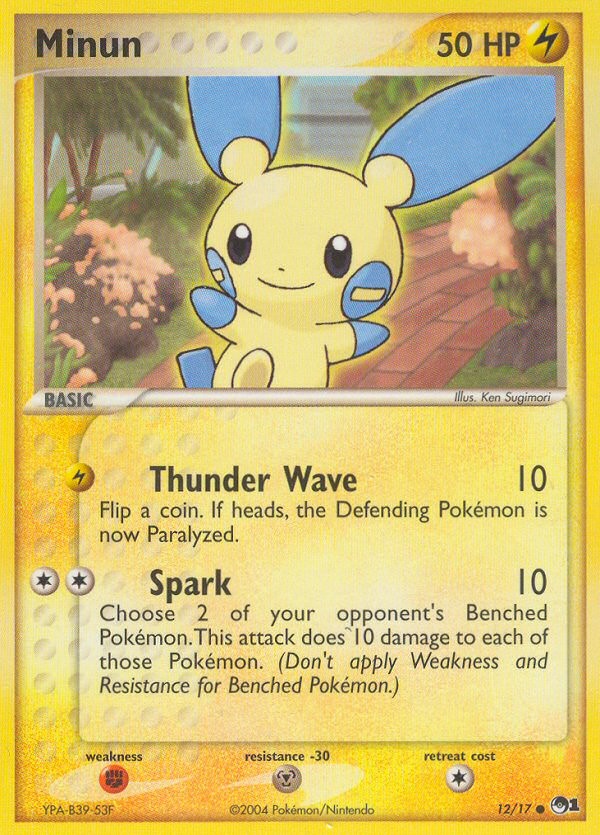
Collect the Pokémon POP Series 1 Plusle card (13), a 2004 Lightning-type Basic Pokémon featuring Ken Sugimori's art and classic gameplay mechanics.
2004 • Pokémon • POP Series 1
No listings available right now.
| Condition | Value | Source | Trend | Price Details |
|---|---|---|---|---|
$5.62As of 10/1/2026 | Guide Estimate | |||
$3.58As of 10/1/2026 | Completed Sales | |||
$23.52As of 10/1/2026 | Guide Estimate | |||
$24.49As of 10/1/2026 | Guide Estimate | |||
$27.00As of 10/1/2026 | Guide Estimate | |||
$95.00As of 10/1/2026 | Guide Estimate | |||
$25.55As of 10/1/2026 | Guide Estimate | |||
$73.16As of 10/1/2026 | Guide Estimate | |||
$44.00As of 10/1/2026 | Guide Estimate | |||
Raw / Ungraded
PriceCharting Price Guide · Guide Estimate evidence · captured Oct 1, 2026
History is building. At least two days of matching observations are needed to show a trend.
Each point is the last stored observation that day for this printing, condition, grader, autograph status and source. Gaps mean no observation; guide estimates and asking prices are not completed sales.The Pokémon POP Series 1 Plusle card, numbered 13, represents a specific entry in the 2004 expansion of the Pokémon Trading Card Game. This Basic Pokémon belongs to the Lightning type and carries 50 Hit Points, establishing its role as an early-game participant in the series. Designed by Ken Sugimori, this release captures the distinct visual style and creature design that defined the franchise's physical collectibles during the mid-2000s. Collectors of Pokémon TCG history often seek out POP Series 1 cards for their nostalgic value and the unique distribution methods associated with these promotional products. Unlike standard booster packs, these cards were often included in special promotional items, making them distinct pieces of Pokémon memorabilia for dedicated fans. The card features two primary attacks: Colorless Quick Attack, which offers variable damage based on a coin flip, and Agility, a defensive option that can negate attack effects if the coin toss succeeds. These mechanics reflect the strategic depth and randomness that made the early TCG era so engaging. For investors and hobbyists, understanding the context of the POP Series 1 is crucial. Released in 2004, these cards serve as tangible links to the franchise's peak popularity period. Completing sets from this era requires attention to detail, as promotional variants can be harder to source than common booster pack cards. Whether you are focused on completing the full POP Series 1 set or targeting specific Pokémon like Plusle, this card remains a significant component for any serious collection.
We'll pre-fill the product details from this catalog entry, so your listing lands on this exact page. Just add photos of your copy, pick its condition, and set your price.
The catalog profile below summarizes the card identity, featured subject, and notable collectible traits.
The core identity of the card within the set.
The subject, team, league, and sport context tied to this card.
Featured
Plusle
Game
Pokémon
Rarity, print treatment, and game-specific stats for this card.
Common
Ken Sugimori
Card Stock
English
50
Lightning
Basic
Fighting ×2
Metal -30
1
311
Abilities, attacks, oracle text, and flavor text printed on the card.
Attack: Quick Attack (10+)
Flip a coin. If heads, this attack does 10 damage plus 10 more damage.
Attack: Agility (20)
Flip a coin. If heads, prevent all effects of an attack, including damage, done to Plusle during your opponent's next turn.
FAQ
Plusle in the POP Series 1 set is classified as a Lightning-type Pokémon. It is a Basic stage card with 50 Hit Points, designed to fit into decks focused on energy acceleration and variable damage output.
The illustration for the Plusle card in POP Series 1 was created by Ken Sugimori, the primary artist responsible for many of the original Pokémon character designs and card art.
This card features Colorless Quick Attack, which can deal 20 damage if a coin flip is heads, and Agility, which prevents all effects of an attack if the coin flip is heads.
Explore cards with this name across sets and editions. Check each card’s details before choosing a version.