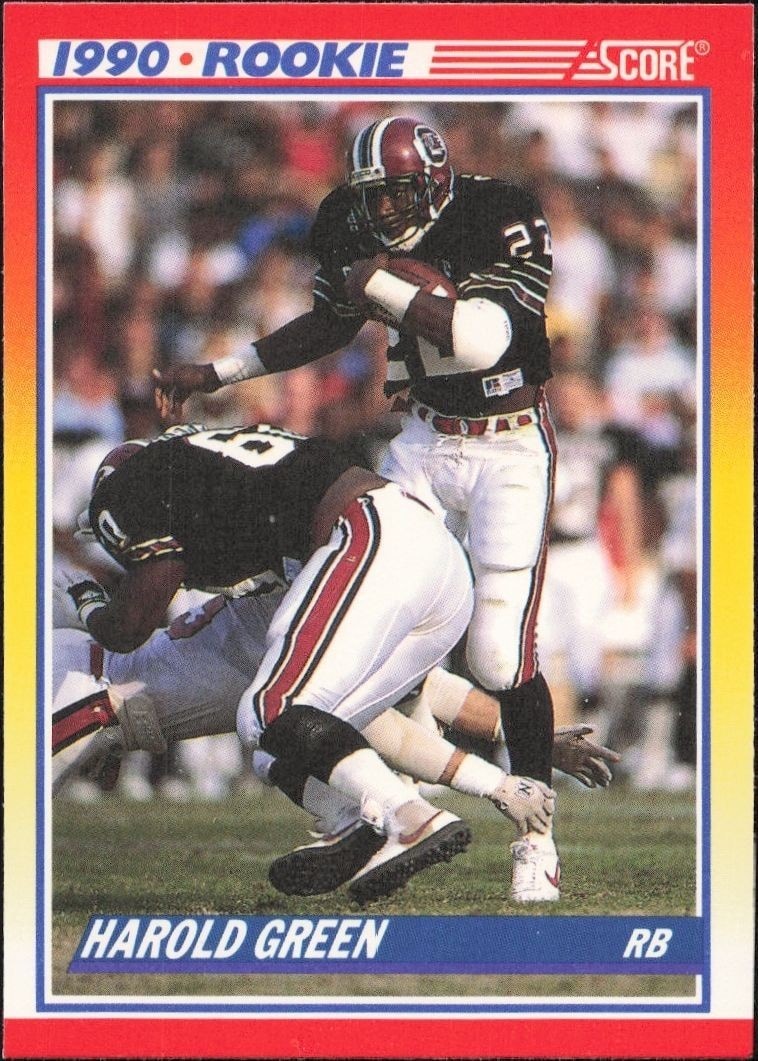
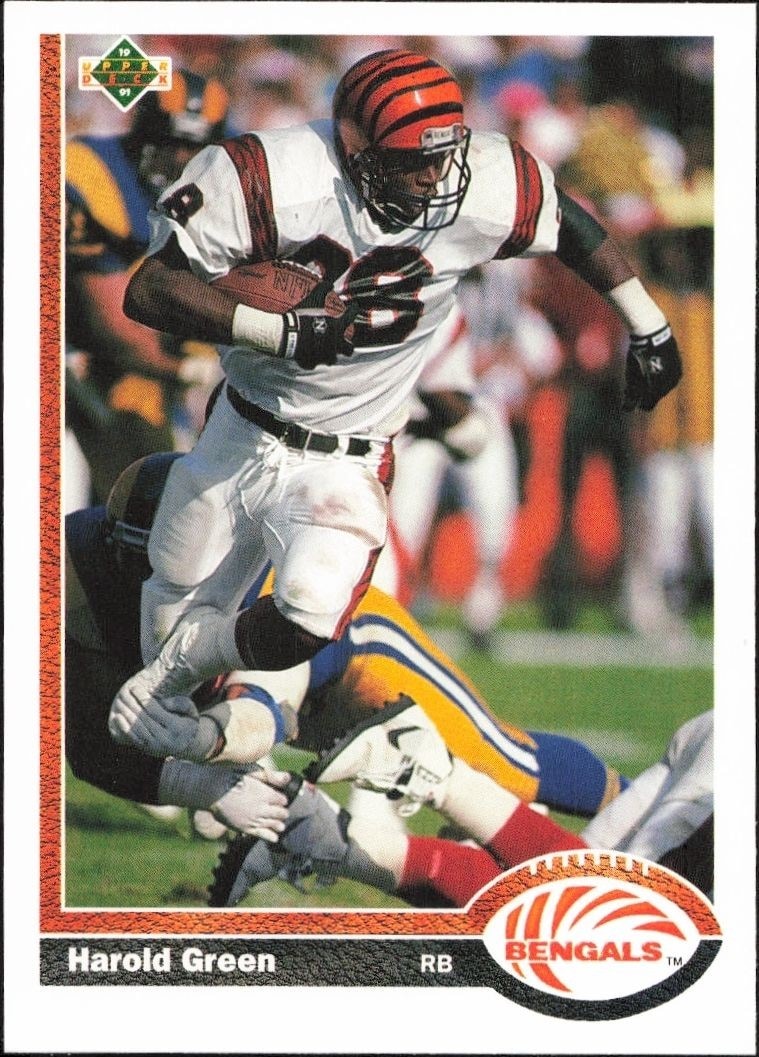
Collecting Harold Green football trading cards offers a unique opportunity to own pieces of NFL history from the early 1990s.…Read more
As a running back for the Cincinnati Bengals, Green represented a specific era of the team's roster during a transitional period in franchise history. Collectors often seek out these cards to complete sets from the 1990 and 1991 seasons, two years that define his primary presence in the hobby. The cards from this time capture his athletic profile and jersey number 32, which remains a recognizable identifier for fans of the Bengals from that decade. The market for Harold Green cards is particularly active among specialists who focus on the Upper Deck and Score brands. These manufacturers produced some of the most sought-after issues of the era, and Green's inclusion in their base sets makes them essential for completists. Upper Deck cards from this period are known for their high-quality production values, while Score cards offer a more accessible entry point for new collectors. Both brands provide a comprehensive look at Green's time in the league, allowing collectors to build a narrative around his professional journey. While Harold Green may not have the same widespread recognition as some of his contemporaries, his cards hold steady value within niche circles. Investors and hobbyists appreciate the stability of 1990s football cards, especially those from reputable brands like Upper Deck and Score. The scarcity of certain parallels and insert cards from these years can drive interest, making even common base cards desirable for those aiming to finish a master set. Additionally, the enduring appeal of the Cincinnati Bengals ensures a consistent demand for players who wore the black and orange during the early 90s. Whether you are looking to add a specific card to your collection or build a portfolio of 1990s football memorabilia, Harold Green cards provide a tangible connection to the sport's past. The catalog features a diverse selection of his releases, ensuring that collectors can find pieces that match their budget and collecting goals. By focusing on the tangible attributes of these cards—their brand, year, and team affiliation—collectors can make informed decisions that enhance the long-term value of their holdings.