








Gary Carter
1982 • Topps
#730
$199.99
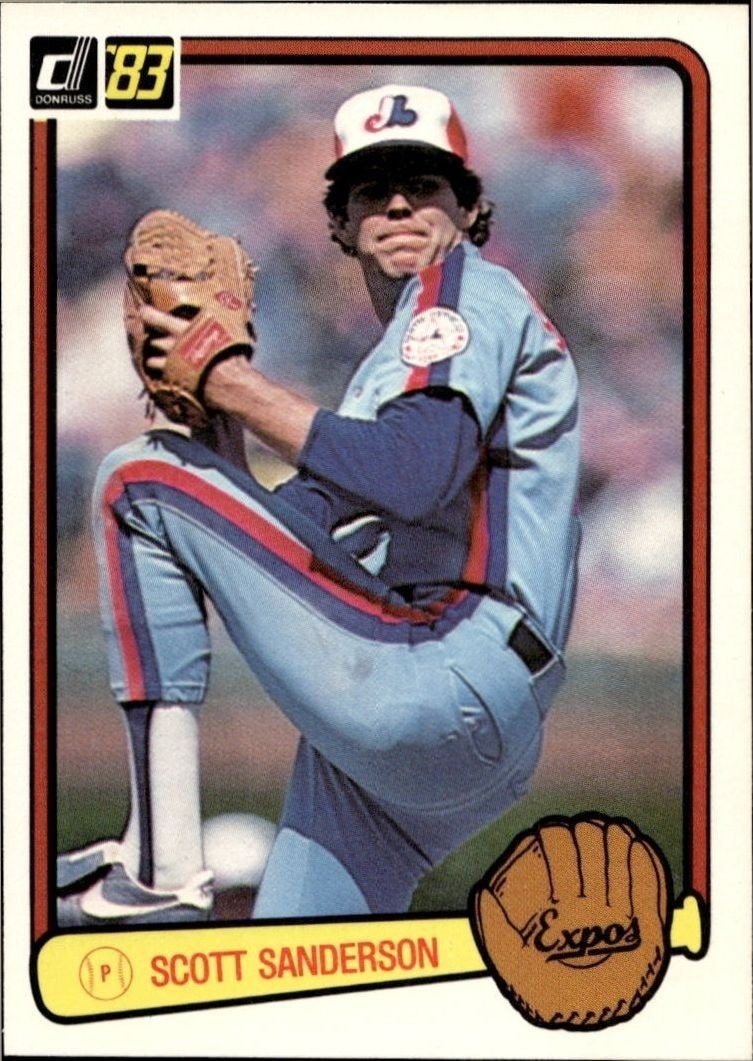
Scott Sanderson's 1982 Topps baseball card #7 represents a specific moment in Montreal Expos history, offering collectors a tangible connection to the team's roster during that era.
1982 • Topps
Major League Baseball • Montreal Expos
Excellent
7
New
Shipping Calculated at Checkout
Arrives in 5-7 daysEstimated delivery October 23, 2026 - October 25, 2026
Seller returns October 19, 2026.30-day Returns| Condition | Value | Source | Trend | Price Details |
|---|---|---|---|---|
$1.49As of 9/25/2026 | Guide Estimate | |||
$1.00As of 9/25/2026 | Completed Sales | |||
$8.66As of 9/25/2026 | Guide Estimate | |||
$10.00As of 9/25/2026 | Guide Estimate | |||
$11.00As of 9/25/2026 | Guide Estimate | |||
Raw / Ungraded
PriceCharting Price Guide · Guide Estimate evidence · captured Sep 26, 2026
History is building. At least two days of matching observations are needed to show a trend.
Each point is the last stored observation that day for this printing, condition, grader, autograph status and source. Gaps mean no observation; guide estimates and asking prices are not completed sales.The 1982 Topps Scott Sanderson #7 baseball card stands as a definitive entry for collectors of Montreal Expos memorabilia and vintage sports trading cards. Released during a pivotal period in Major League Baseball history, this card captures Sanderson in his role as a key pitcher for the Expos, providing a visual record of the team's composition during the early 1980s. For hobbyists focused on team-specific collections, this numbered card serves as an essential component for those aiming to complete their 1982 Topps set. Scott Sanderson's presence in the 1982 Topps base set highlights the breadth of talent on the Expos roster at the time. Collectors often seek out individual cards from this era to document the careers of players who contributed to the team's legacy. The #7 designation places this card within the early sequence of the Topps release, a detail that appeals to sequential collectors and those interested in the structural organization of the set. As a standard issue from a major manufacturer, it reflects the design and printing conventions of the time, making it a relevant piece for understanding the evolution of sports card production. For investors and hobbyists alike, the 1982 Topps Scott Sanderson #7 baseball card offers a stable entry point into vintage baseball collecting. It is particularly valuable for those building comprehensive libraries of Expos history or tracking the performance of pitchers from that decade. Whether used to fill gaps in a personal archive or to enhance a broader collection of MLB cards, this product provides a clear link to the past. The card's enduring appeal lies in its ability to preserve the memory of a specific season and player, making it a worthwhile addition for any serious collector of sports trading cards focused on authenticity and historical context. By focusing on the identity and era of the product, collectors can make informed decisions about their acquisitions.
12 hours ago
We'll pre-fill the product details from this catalog entry, so your listing lands on this exact page. Just add photos of your copy, pick its condition, and set your price.
The catalog profile below summarizes the card identity, featured subject, and notable collectible traits.
The subject, team, league, and sport context tied to this card.
Production details and format-specific attributes.
Material
Card Stock
Language
English
Compare prices, grades, photos, and shipping from approved sellers.
New
Excellent
See how many public collections currently include this card.
0 collectors have this card
This 1982 Topps Scott Sanderson card represents a foundational entry-level piece for collectors focusing on Montreal Expos history, trading at a modest tier relative to more prominent franchise figures. As a standard base card from a widely distributed set, it lacks the condition premiums or scarcity drivers that elevate similar era cards, resulting in accessible pricing for casual enthusiasts. Its value is anchored by its role as a recognizable image of a key rotation member during the Expos' competitive years rather than speculative appreciation mechanics.
The card carries no special scarcity attributes such as serial numbering, short printing, or parallel variants, meaning it exists as a standard base insert within the 1982 Topps product. This lack of distinct rarity markers implies a high print run relative to special parallels, keeping the available supply abundant and easily accessible to the market. Consequently, the card does not benefit from limited edition mechanics that typically constrain supply and drive collector competition.
As a non-rookie card from a mass-produced brand, this item offers limited growth potential for serious investors, serving primarily as a filler card for set completists rather than a standalone asset. Collector demand is likely driven by nostalgia for the 1980s Expos rather than long-term appreciation, making it a stable but low-yield holding. The absence of unique attributes suggests its market position will remain stable within the lower end of the vintage baseball spectrum.