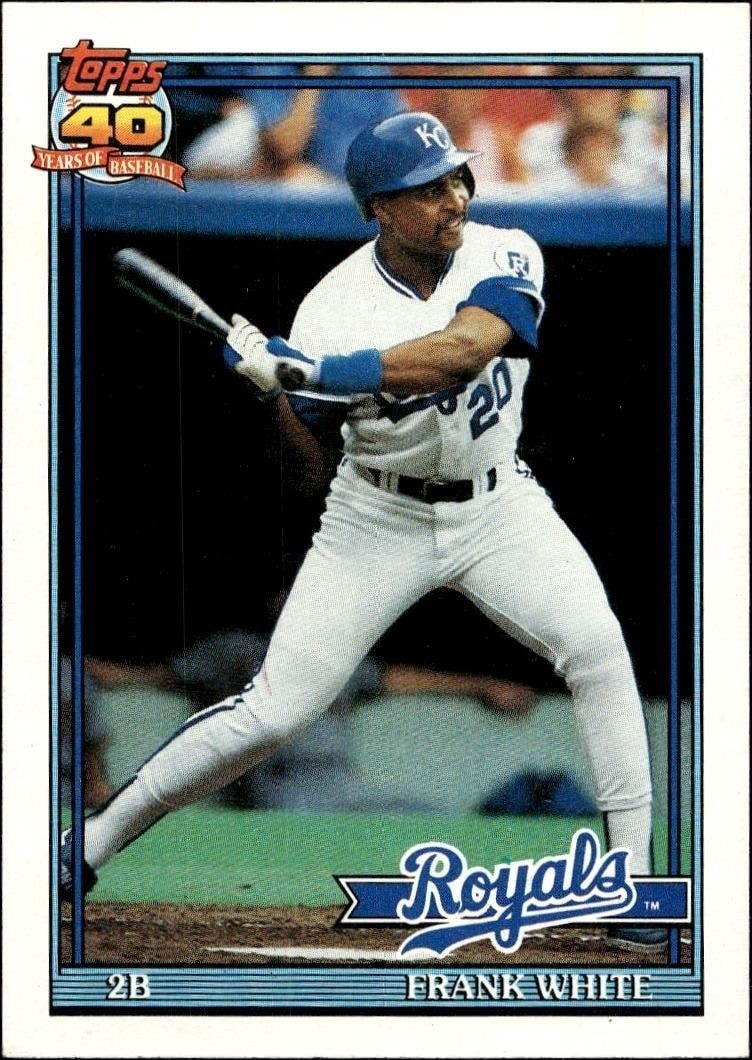





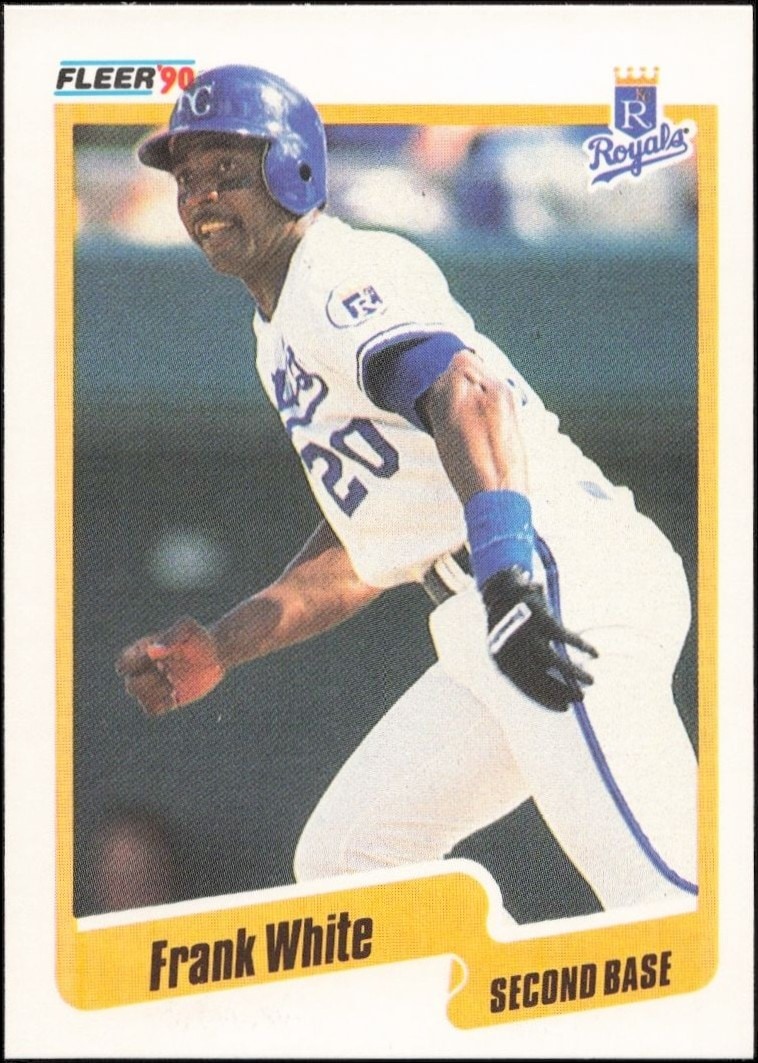
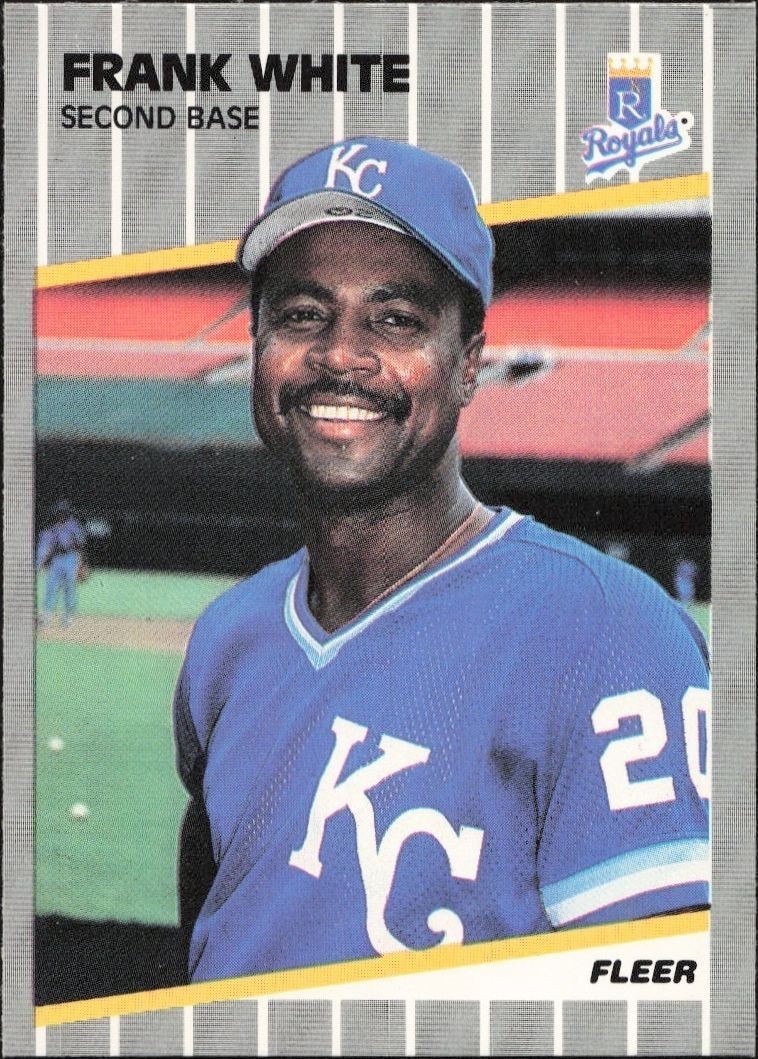

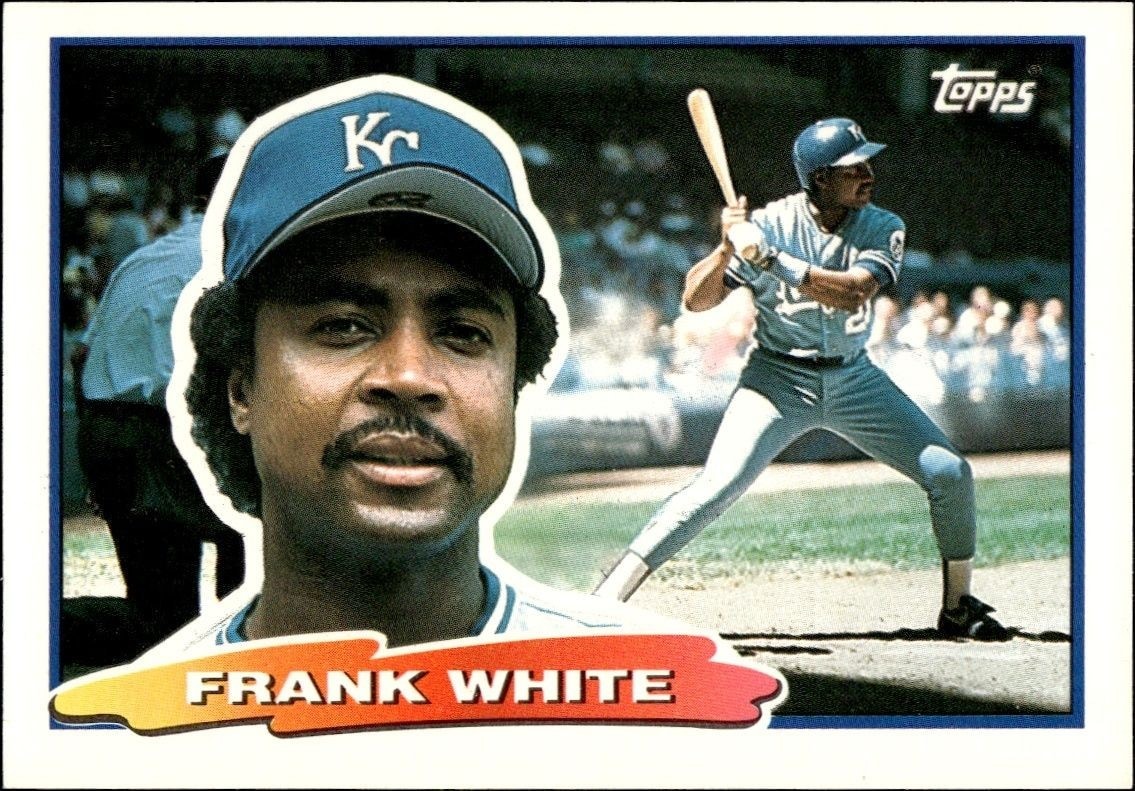
The 1988 Fleer Frank White #273 card captures the Kansas City Royals second baseman in the brand's first major foray into baseball trading cards.
1988 • Fleer
Major League Baseball • Kansas City Royals
Excellent
273
New
Shipping Calculated at Checkout
Arrives in 6-8 daysEstimated delivery October 23, 2026 - October 25, 2026
Seller returns October 19, 2026.30-day Returns| Condition | Value | Source | Trend | Price Details |
|---|---|---|---|---|
$1.00As of 9/22/2026 | Guide Estimate | |||
Raw / Ungraded
PriceCharting Price Guide · Guide Estimate evidence · captured Sep 22, 2026
History is building. At least two days of matching observations are needed to show a trend.
Each point is the last stored observation that day for this printing, condition, grader, autograph status and source. Gaps mean no observation; guide estimates and asking prices are not completed sales.The 1988 Fleer Frank White #273 card occupies a unique space in sports card history as part of Fleer's pivotal return to the baseball market. After a long absence from the hobby, Fleer reintroduced itself with this set, offering collectors a fresh aesthetic compared to the dominant Topps and Donruss products of the era. Frank White, the longtime second baseman for the Kansas City Royals, is featured on card number 273, representing his standing within the roster during his final seasons with the team. For vintage baseball enthusiasts, this release represents a significant chapter in the evolution of the industry. Collectors often seek out specific cards from this run to complete base sets or to explore the parallels and inserts that defined Fleer's comeback strategy. The #273 designation places White among the infielders and key position players highlighted in the series. Owning a piece of the 1988 Fleer release allows fans to connect with a specific moment in Kansas City Royals history. As White's career concluded shortly after this season, cards from this era hold nostalgic value for those who remember his tenure on the diamond. The product serves as a tangible link to the late 1980s baseball landscape, appealing to historians and set builders alike. Whether you are looking to diversify a vintage portfolio or add a classic Royals player to your collection, this card offers a direct connection to the brand's influential 1988 catalog.
1 day ago
We'll pre-fill the product details from this catalog entry, so your listing lands on this exact page. Just add photos of your copy, pick its condition, and set your price.
The catalog profile below summarizes the card identity, featured subject, and notable collectible traits.
The subject, team, league, and sport context tied to this card.
Production details and format-specific attributes.
Material
Card Stock
Language
English
Compare prices, grades, photos, and shipping from approved sellers.
New
Excellent
See how many public collections currently include this card.
0 collectors have this card
This 1988 Fleer card represents a budget-friendly entry point into Frank White's collection, reflecting the broader market trends for non-premium issue cards from the late 1980s. While it lacks the premium valuation of rookie or parallel variants, it remains a tangible piece of White's tenure with the Kansas City Royals. The current active listings suggest a stable, albeit low-volume, secondary market presence for this specific base card.
As a standard base card from the 1988 Fleer set, this item does not carry inherent scarcity mechanics such as serial numbering, short-print status, or limited edition designations. Its supply is determined by the original mass production run typical of mainstream baseball cards from that era. Consequently, it relies on general availability rather than constrained distribution to define its rarity profile.
Investment potential for this specific card is limited by its position as a common base issue rather than a rookie card or high-tier parallel. Demand is likely driven by collectors seeking affordable components for complete set building or specific team collections featuring Frank White. Long-term value appreciation is unlikely to outpace more scarce variants, making it a supplemental rather than primary holding for serious investors.