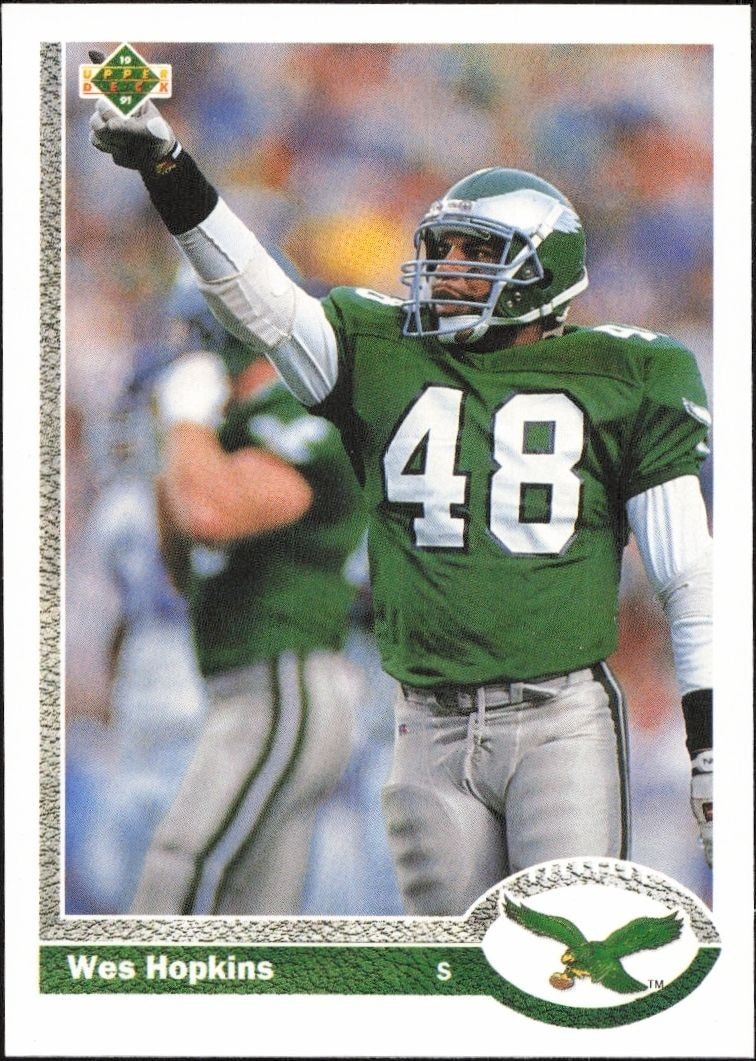

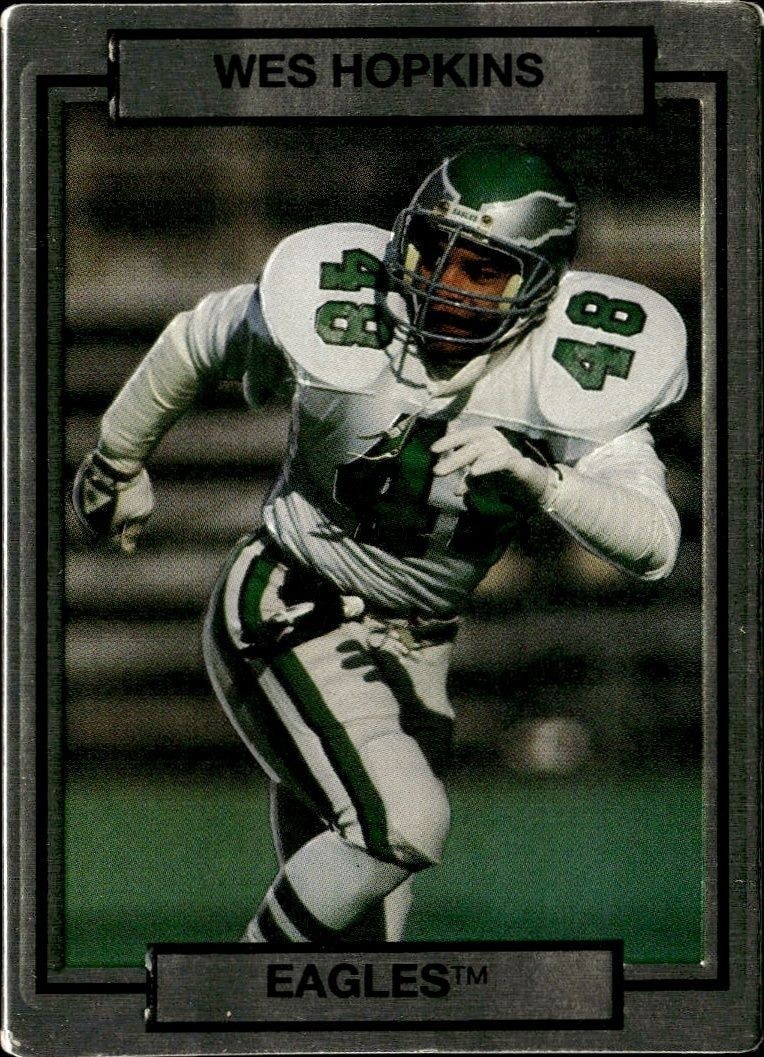
The 1989 Pro Set Wes Hopkins card (No. 317) captures the Philadelphia Eagles linebacker during his tenure in the NFL.
1989 • Pro Set
National Football League • Philadelphia Eagles
Excellent
317
New
Shipping Calculated at Checkout
Arrives in 5-7 daysEstimated delivery October 23, 2026 - October 25, 2026
Seller returns October 19, 2026.30-day Returns| Condition | Value | Source | Trend | Price Details |
|---|---|---|---|---|
$0.35 | Guide Estimate | 0% | ||
$19.95 | Guide Estimate | 0% | ||
$22.00 | Guide Estimate | 0% | ||
Raw / Ungraded
PriceCharting Price Guide · Guide Estimate evidence · captured Oct 8, 2026
The 1989 Pro Set Wes Hopkins card, numbered 317, serves as a tangible link to the Philadelphia Eagles roster of the late 1980s. Hopkins played the linebacker position, a role that placed him at the center of defensive strategies during an era defined by physical play and strategic evolution. For collectors of vintage football memorabilia, this card represents a specific moment in franchise history, documenting Hopkins' presence within the team's lineup. Pro Set entered the trading card market in the late 1980s, challenging established manufacturers by offering bold designs and diverse rosters. The 1989 issue featured comprehensive coverage of NFL teams, making it a staple for those building historical collections. Wes Hopkins, appearing in this card number, provides a focal point for enthusiasts tracking individual player contributions during this period. The card’s design reflects the aesthetic trends of the time, prioritizing clarity and team branding. Collectors often seek out cards from this era to complete set benchmarks or to acquire pieces related to specific franchises. For investors and hobbyists alike, cards from this period offer a window into the past, preserving the visual identity of players like Hopkins. Whether you are a dedicated Eagles collector or a general football enthusiast, this card provides a concrete connection to the sport's heritage. The 1989 Pro Set Wes Hopkins card is a notable addition for anyone interested in the history of the Philadelphia Eagles or the broader NFL landscape of the 1980s.
20 hours ago
We'll pre-fill the product details from this catalog entry, so your listing lands on this exact page. Just add photos of your copy, pick its condition, and set your price.
The catalog profile below summarizes the card identity, featured subject, and notable collectible traits.
The subject, team, league, and sport context tied to this card.
Production details and format-specific attributes.
Material
Card Stock
Language
English
Compare prices, grades, photos, and shipping from approved sellers.
New
Excellent
See how many public collections currently include this card.
0 collectors have this card
This 1989 Pro Set Wes Hopkins card sits in an entry-level price tier, reflecting the typical market positioning for base rookie cards of role players from this era. As a Philadelphia Eagles player from the late 80s, the card represents a specific snapshot of NFL history rather than a high-demand star asset, resulting in modest trading activity. The current market value indicates a stable but low-volume interest level consistent with non-marquee athletes from this production year.
The card is identified as a standard base issue with no special attributes noted, meaning it lacks the supply constraints of serial numbers, short prints, or parallels. Consequently, the supply is determined solely by the original base print run of the 1989 Pro Set football set, which was generally high for mass-market products of that time. Without distinct scarcity mechanics like one-of-one designs or limited edition markings, the card remains widely available in the secondary market.
As a rookie card for a player who did not achieve prolonged stardom or Hall of Fame recognition, the long-term appreciation potential is limited by the sheer volume of surviving copies. Collector demand is primarily driven by niche Eagles history or specific team-set completists rather than broad market speculation. The investment outlook suggests holding this card as a low-cost historical artifact rather than an asset with significant growth trajectory.