


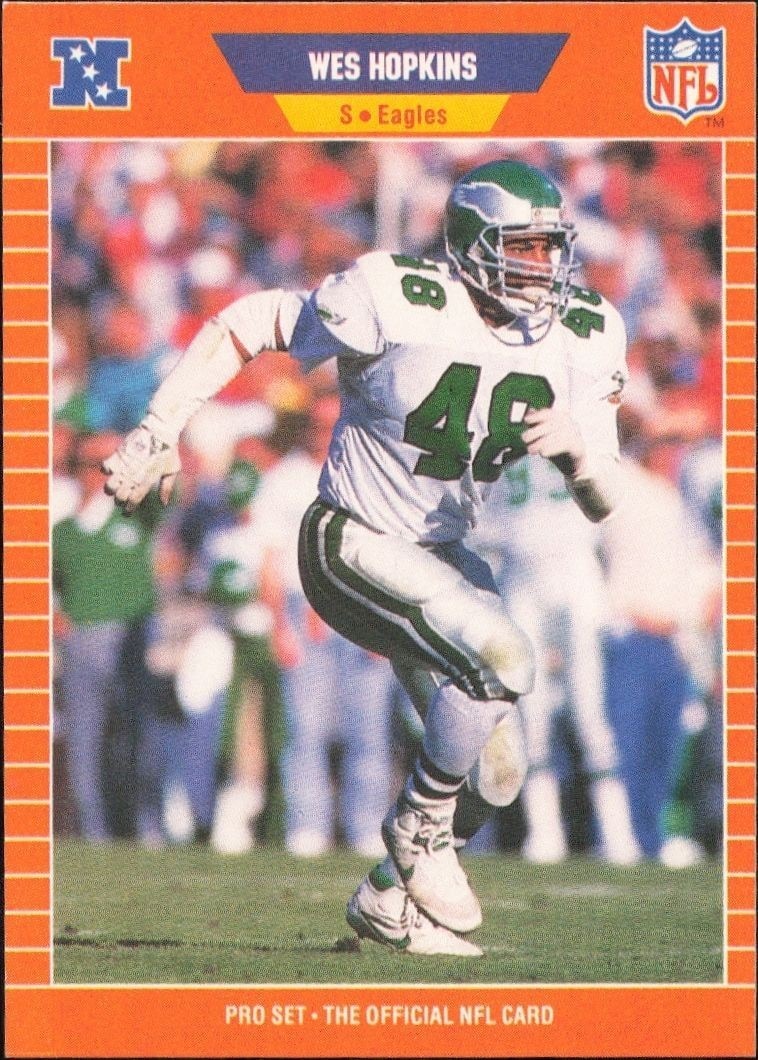

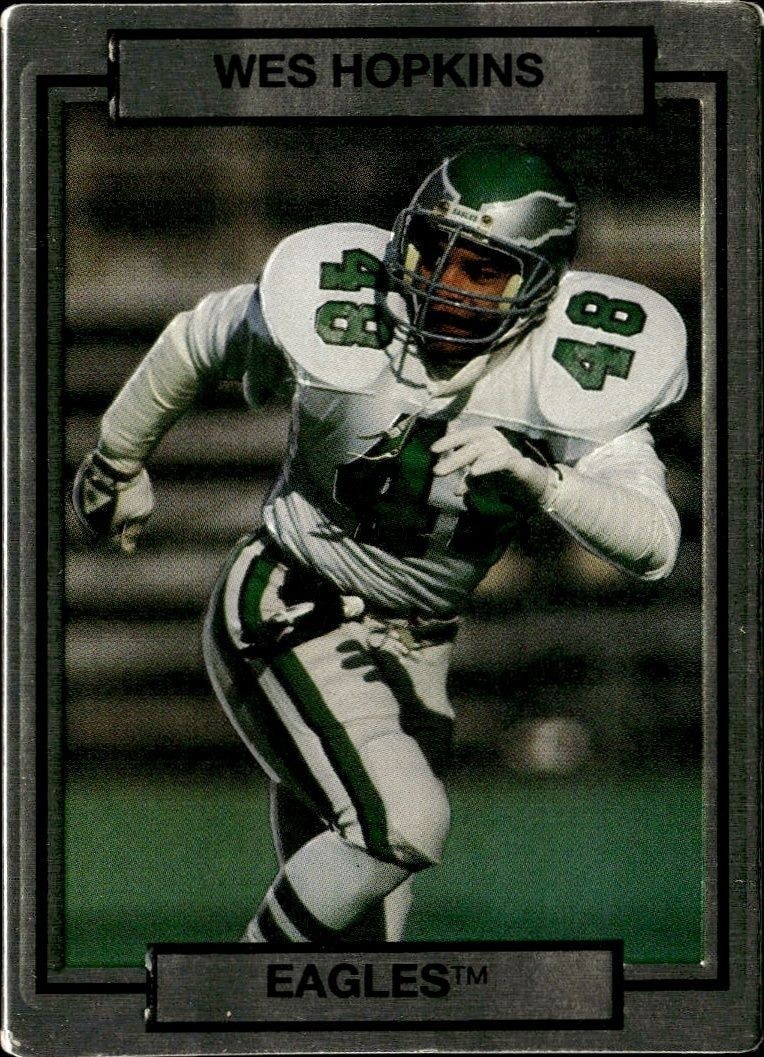
This catalog entry covers the 1991 Upper Deck football trading card featuring Philadelphia Eagles player Wes Hopkins, card number 106.
1991 • Upper Deck
National Football League • Philadelphia Eagles
Near Mint
106
New
Shipping Calculated at Checkout
Arrives in 4-6 daysEstimated delivery October 25, 2026 - October 27, 2026
30-day Returns| Condition | Value | Source | Trend | Price Details |
|---|---|---|---|---|
$1.50 | Asking Prices | +15.4% | ||
Raw / Ungraded
eBay Active Listings · Asking Prices evidence · captured Oct 19, 2026
Collectors looking to explore the early years of Upper Deck football cards will find the 1991 release to be a significant milestone in trading card history. As one of the first major brands to introduce the glossy, full-color photographic style that defined the 1990s, Upper Deck shifted the visual standards for sports memorabilia. This release, identified as card number 106, features Wes Hopkins, who played as a running back for the Philadelphia Eagles during that season. Wes Hopkins, a second-year player at the time, is depicted in his Eagles uniform, representing the team's roster during a transitional period in the early 1990s. For investors and set builders, the 1991 Upper Deck football set remains a popular target due to its historical importance and the eventual rise in value of its base cards. While Hopkins was not a rookie in this release, cards from his career offer a glimpse into the NFL landscape of the era. The card's straightforward design allows the player's image to stand out, reflecting the aesthetic preferences of the time. Whether you are building a complete 1991 Upper Deck football set or focusing on Philadelphia Eagles history, this card serves as a key component. The product's enduring appeal lies in its place in the evolution of sports card manufacturing and its connection to the NFL's rich legacy. Collectors often seek out this card to complete their vintage collections or to add a piece of Eagles history to their displays. Understanding the context of the 1991 Upper Deck release helps collectors appreciate the nuances of vintage card collecting. The brand's entry into the football market was highly anticipated, and this set remains a benchmark for quality and design in the hobby.
7 hours ago
We'll pre-fill the product details from this catalog entry, so your listing lands on this exact page. Just add photos of your copy, pick its condition, and set your price.
The catalog profile below summarizes the card identity, featured subject, and notable collectible traits.
The subject, team, league, and sport context tied to this card.
Production details and format-specific attributes.
Material
Card Stock
Language
English
Compare prices, grades, photos, and shipping from approved sellers.
New
Near Mint
See how many public collections currently include this card.
0 collectors have this card
This 1991 Upper Deck Wes Hopkins card sits in an entry-level price tier, reflecting the general market trends for non-star rookies from this era. As a backup player for the Philadelphia Eagles during a period of roster turnover, the card lacks the premium pricing power associated with franchise cornerstones. Its current valuation indicates it trades in line with standard base cards from the same set, offering minimal condition-based appreciation potential for the average collector.
The card is identified as a standard base issue with no noted special attributes, meaning it lacks the scarcity drivers of serial numbering, short prints, or parallel variants. Without unique distribution mechanics, the supply is determined solely by the original print run, which was likely substantial for a standard insert in a major release. Consequently, the item does not benefit from the limited supply dynamics that typically elevate value in the secondary market.
As a non-rookie card from a 1991 release, this item does not capture the rookie-card premium that often drives long-term growth in football collectibles. Collector demand is primarily driven by nostalgia for the early-90s Upper Deck brand rather than player performance metrics, limiting upside potential. It serves best as a budget-friendly addition for set builders rather than a standalone investment vehicle, with stability being its primary characteristic over aggressive growth.