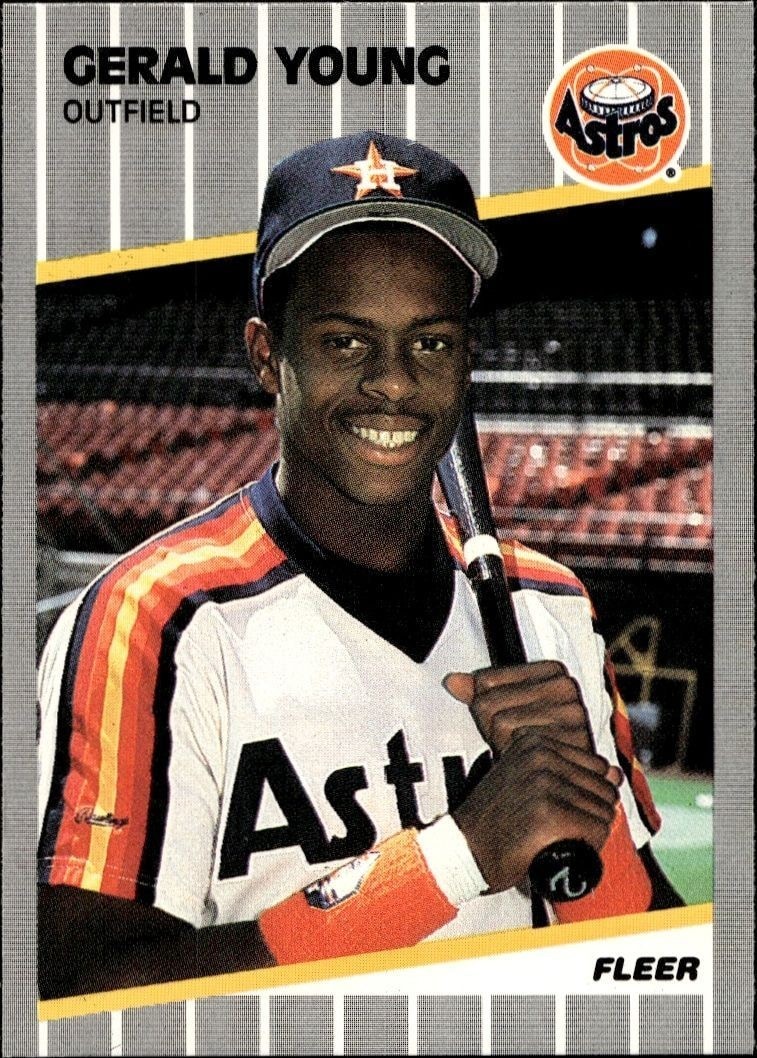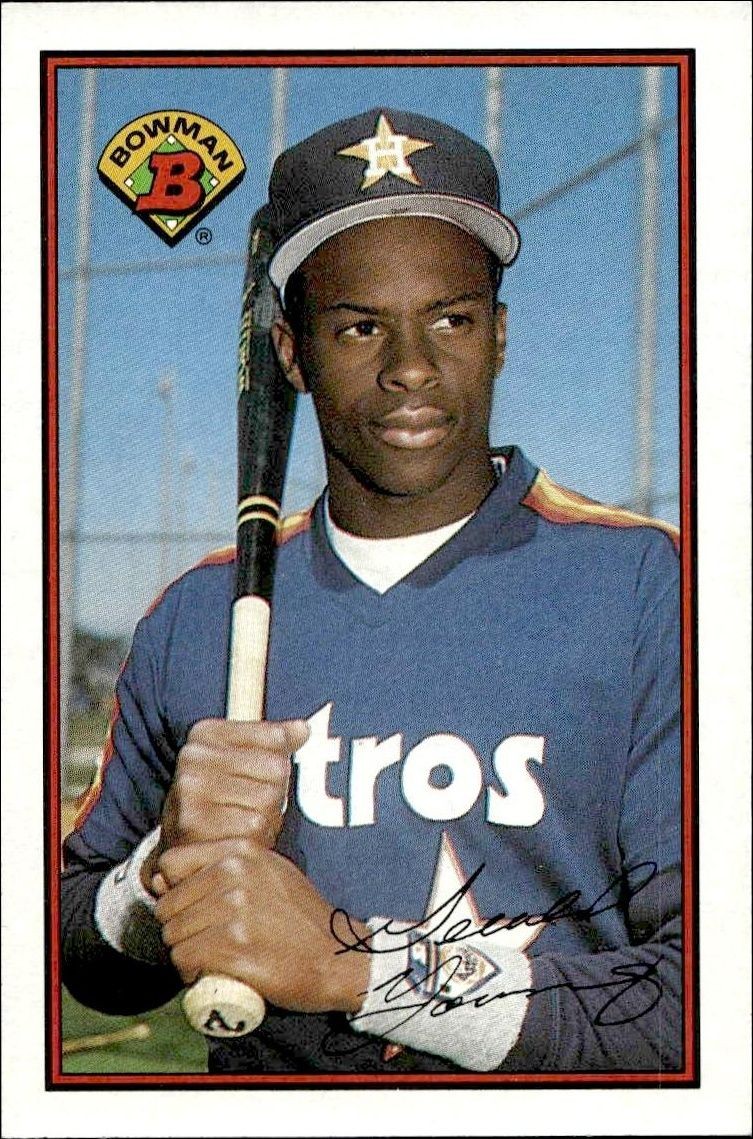
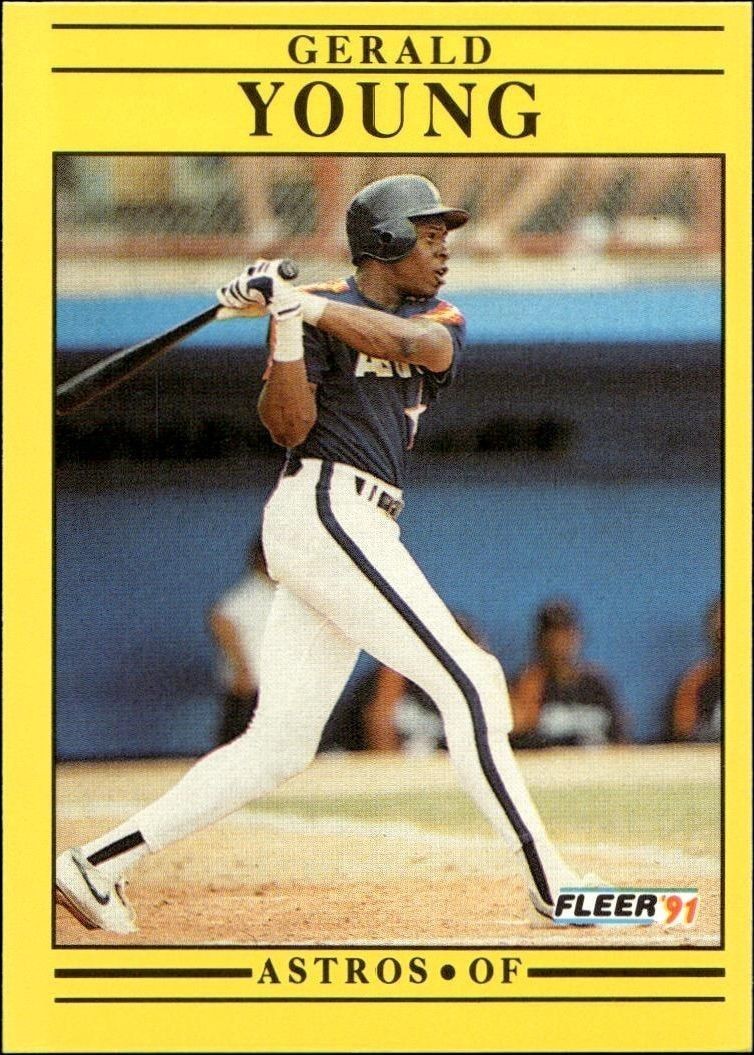

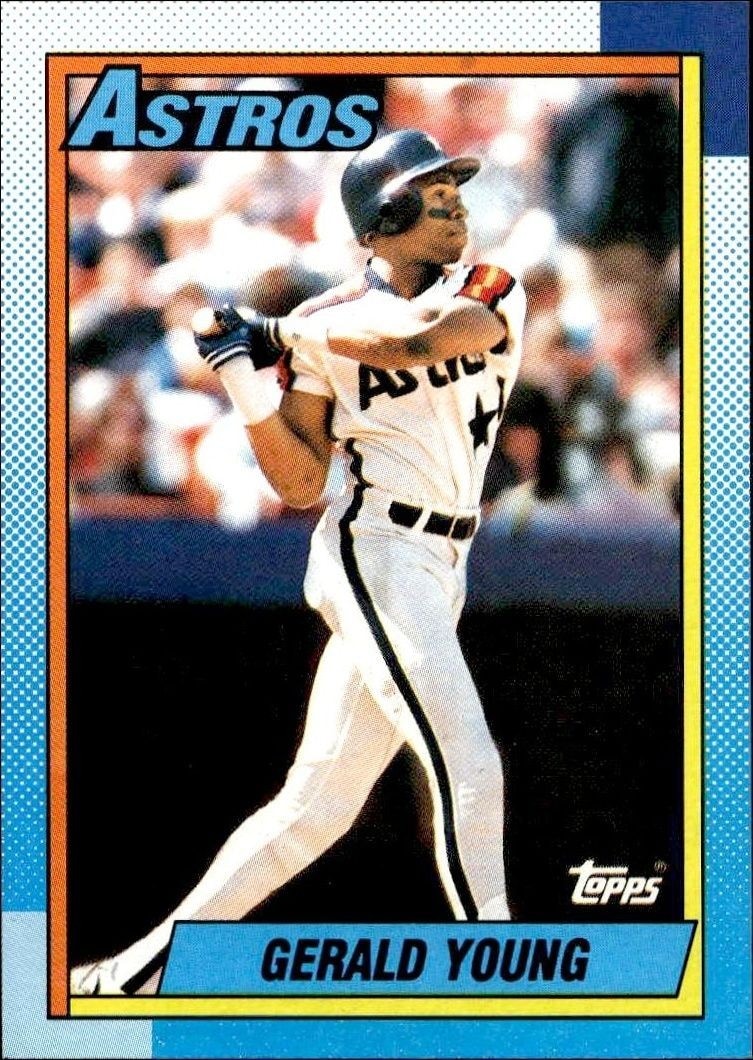
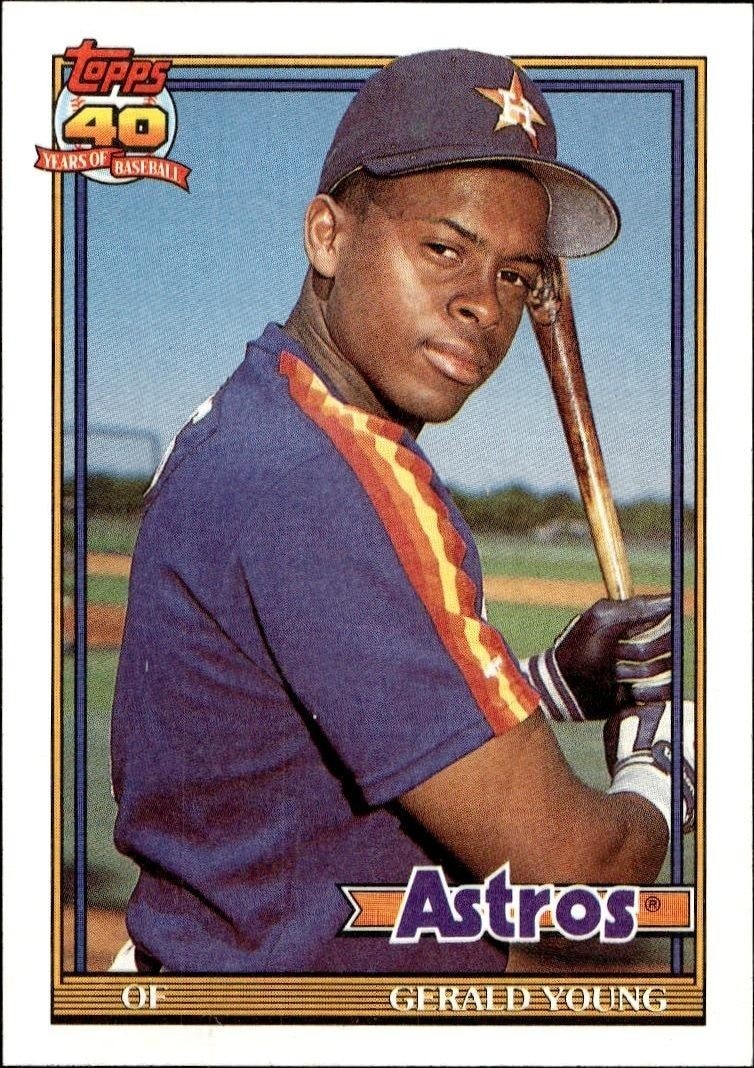
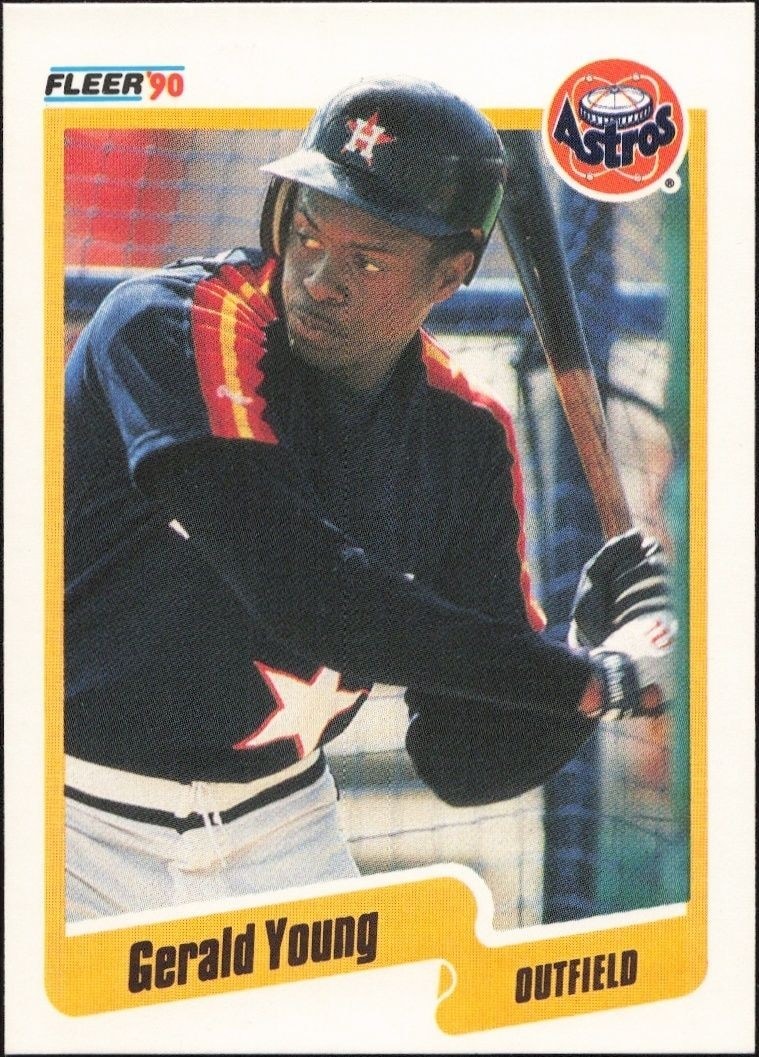
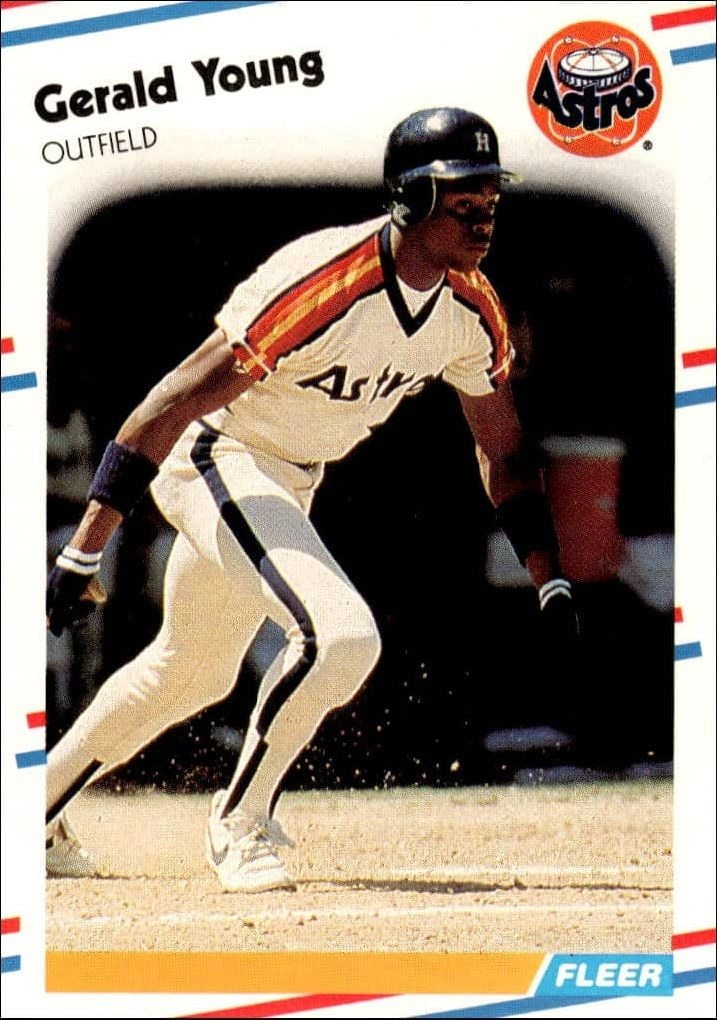
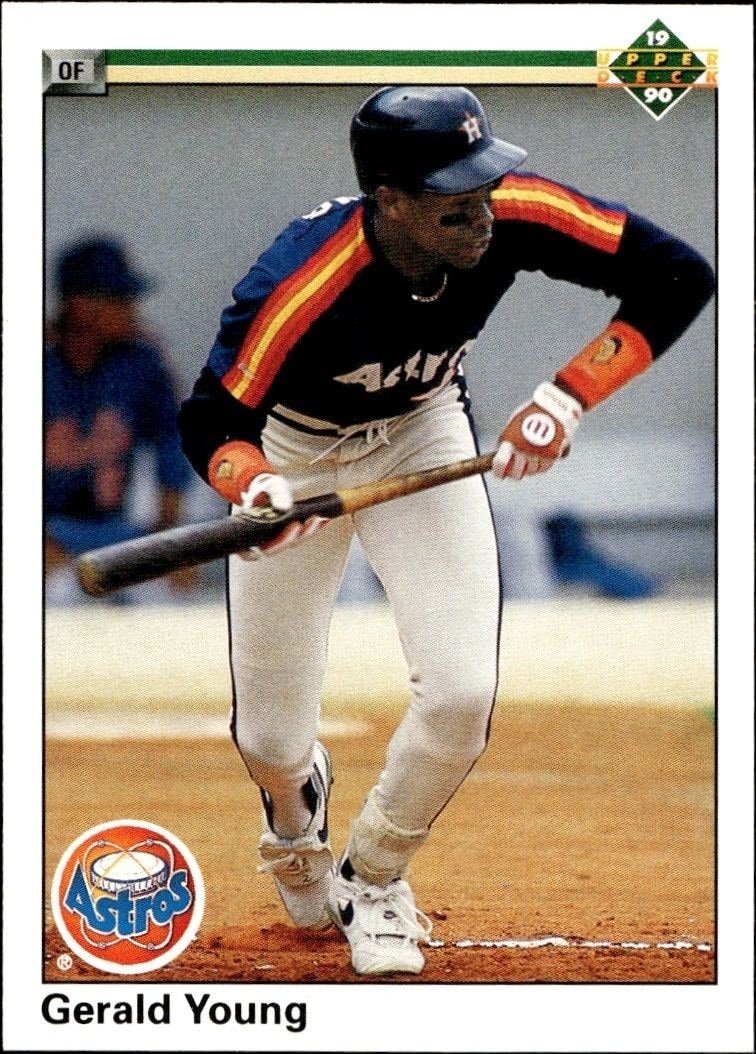
Explore the 1989 Topps Gerald Young #95 baseball card, featuring the Houston Astros player in this essential vintage issue for dedicated collectors.
1989 • Topps
Major League Baseball • Houston Astros
Excellent
95
New
Shipping Calculated at Checkout
Arrives in 5-7 daysEstimated delivery October 23, 2026 - October 25, 2026
Seller returns October 19, 2026.30-day Returns| Condition | Value | Source | Trend | Price Details |
|---|---|---|---|---|
$1.38As of 9/28/2026 | Guide Estimate | |||
$24.00As of 9/28/2026 | Guide Estimate | |||
$11.00As of 9/28/2026 | Guide Estimate | |||
$18.26As of 9/28/2026 | Guide Estimate | |||
$11.00As of 9/28/2026 | Guide Estimate | |||
Raw / Ungraded
PriceCharting Price Guide · Guide Estimate evidence · captured Sep 28, 2026
History is building. At least two days of matching observations are needed to show a trend.
Each point is the last stored observation that day for this printing, condition, grader, autograph status and source. Gaps mean no observation; guide estimates and asking prices are not completed sales.The 1989 Topps Gerald Young #95 baseball card represents a specific moment in the history of the Houston Astros franchise. As part of the 1989 Topps base set, this card is cataloged with the number 95 and identifies Gerald Young as the featured subject. Collectors often seek this card to complete specific run sets or to add a piece of Houston Astros history to their sports card collections. Gerald Young, appearing on card #95, is depicted in his Astros uniform, making this product for fans and researchers tracking the team's roster during that season. The card serves as a tangible link to the player's tenure with the club, offering a straightforward yet valuable addition to any vintage baseball collection. For investors and hobbyists alike, the 1989 Topps set remains a foundational series in the sports card hobby. Cards from this year are appreciated for their historical context and the way they capture the sport's mid-80s aesthetic. Gerald Young's presence in the set provides a unique entry point for those interested in the deeper cuts of the Astros' lineup. Whether you are focused on team-specific collecting or general vintage baseball, this card offers a clear and identifiable piece of the 1989 Topps universe. By focusing on the catalog details and historical significance, we help you build a collection that is both comprehensive and meaningful. Explore the broader Topps catalog to find other key cards from this era and expand your knowledge of baseball history.
5 hours ago
We'll pre-fill the product details from this catalog entry, so your listing lands on this exact page. Just add photos of your copy, pick its condition, and set your price.
The catalog profile below summarizes the card identity, featured subject, and notable collectible traits.
The subject, team, league, and sport context tied to this card.
Production details and format-specific attributes.
Material
Card Stock
Language
English
Compare prices, grades, photos, and shipping from approved sellers.
New
Excellent
See how many public collections currently include this card.
0 collectors have this card
This 1989 Topps card of Gerald Young sits in an entry-level price tier, reflecting his status as a minor league or fringe MLB player rather than a franchise icon. The current valuation indicates modest collector interest, typical for base cards from this era featuring players with limited long-term visibility in the majors. Condition and centering likely play a significant role in determining whether this specific unit trades above or below the current market average.
As a standard base card within the 1989 Topps set, this item does not possess inherent scarcity mechanics such as serial numbering, short printing, or parallel variants. Supply is determined by the original print run of the base set, which was substantial, meaning this card is readily available to collectors seeking complete set fillers. The lack of special attributes means its rarity is identical to the vast majority of other base cards in this product.
The investment potential is limited by the card's position as a common base issue and the subject's relatively low profile in baseball history. While nostalgia for the late 1980s drives demand for the set as a whole, individual cards of non-star players rarely appreciate significantly without exceptional condition. Collectors primarily acquire this card for completion purposes rather than as a standalone speculative asset.