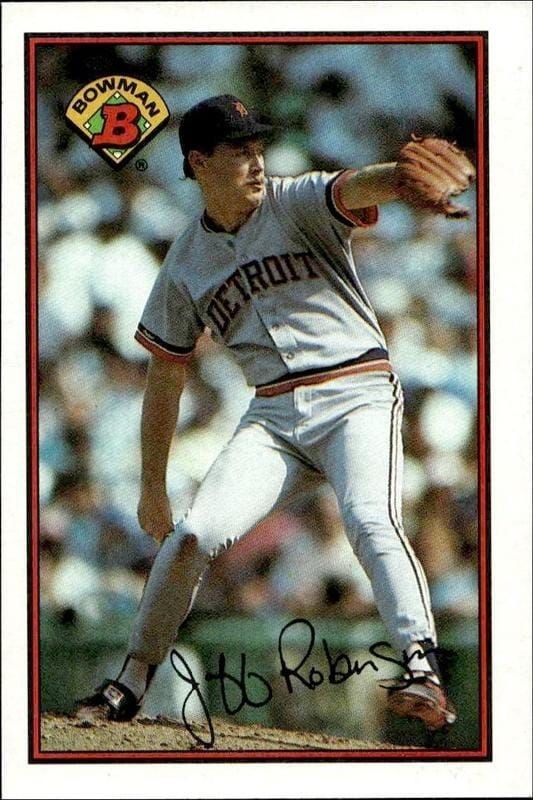















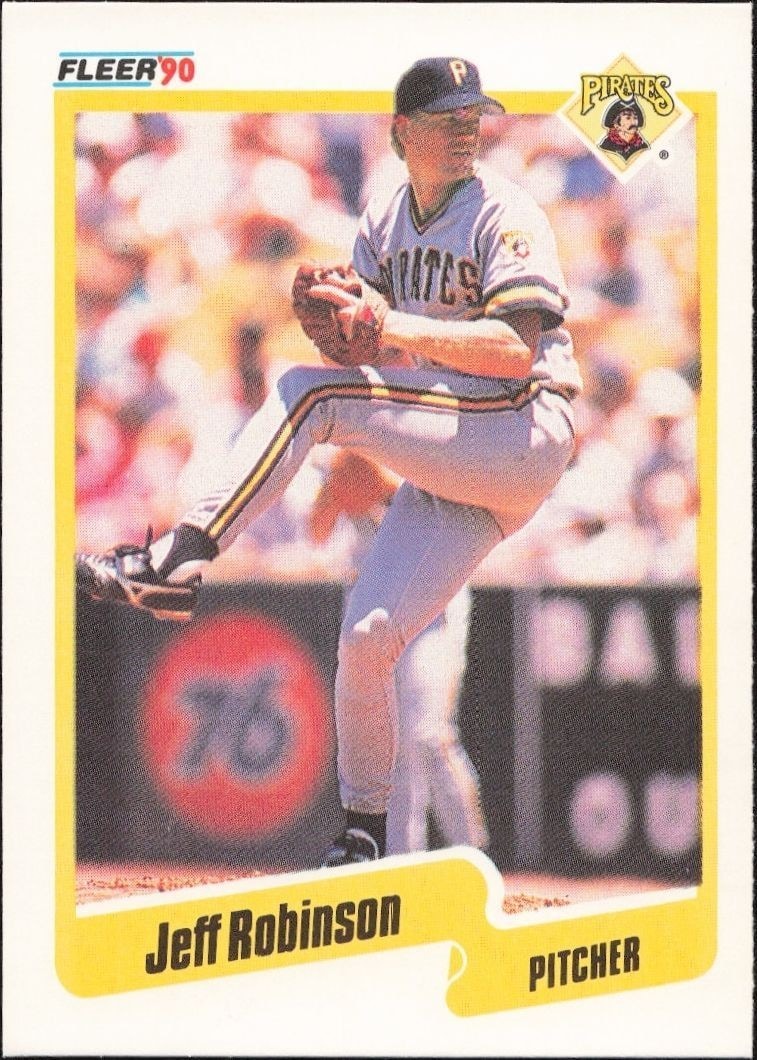
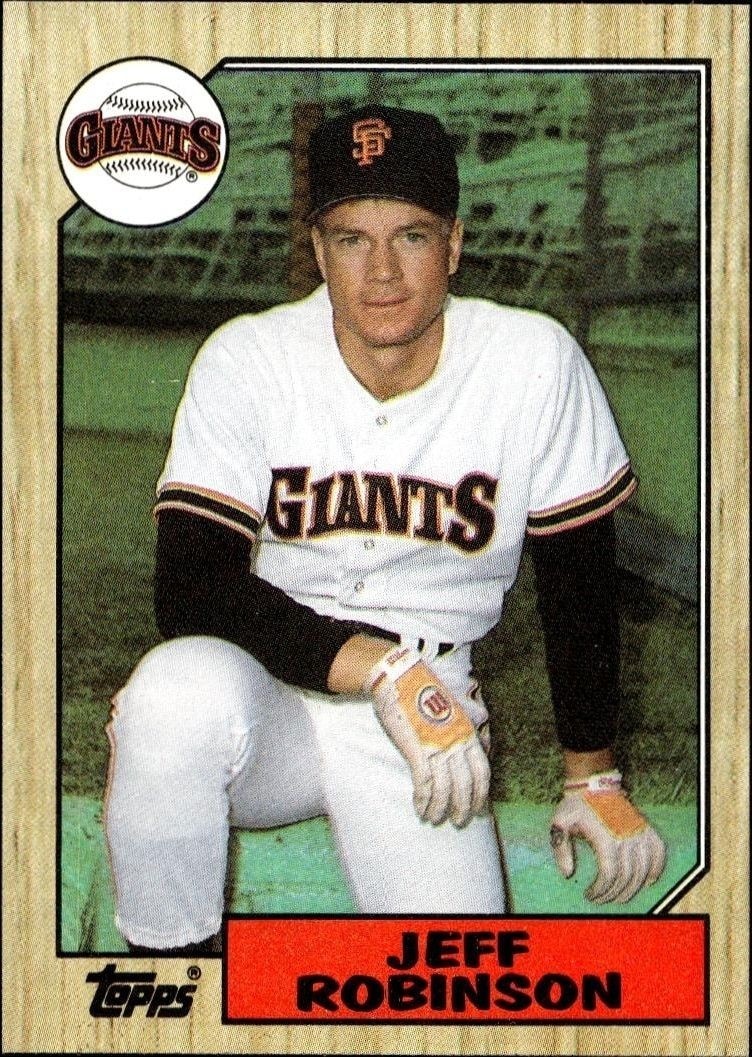
A 1989 Topps baseball card featuring Jeff Robinson of the Detroit Tigers, card #267 from the classic Topps release.
1989 • Topps
Major League Baseball • Detroit Tigers
Excellent
267
New
Shipping Calculated at Checkout
This seller is away until 10/19/2026 — orders are still accepted and ship after they return.30-day Returns| Condition | Value | Source | Trend | Price Details |
|---|---|---|---|---|
$1.46 | Guide Estimate | |||
$26.00 | Guide Estimate | |||
$12.00 | Guide Estimate | |||
$20.21 | Guide Estimate | |||
$12.00 | Guide Estimate | |||
Raw / Ungraded
PriceCharting Price Guide · Guide Estimate evidence · captured Oct 15, 2026
History is building. At least two days of matching observations are needed to show a trend.
Each point is the last stored observation that day for this printing, condition, grader, autograph status and source. Gaps mean no observation; guide estimates and asking prices are not completed sales.The 1989 Topps baseball card set remains a cornerstone of vintage sports card collecting, and card #267 featuring Jeff Robinson of the Detroit Tigers exemplifies the era's design and appeal. Released during a pivotal period in baseball card history, this Topps issue captures the aesthetic and photographic style that defined late-1980s collectibles. Jeff Robinson pitched for the Tigers during his major league career, and his appearance in the 1989 Topps set reflects the comprehensive roster coverage that made Topps releases essential for team collectors and completionists. The card's design—featuring Topps' signature layout, player photography, and statistical information—has made it a consistent draw for vintage baseball enthusiasts. Collectors pursue 1989 Topps cards for several reasons: completing full-set collections, building team-specific portfolios, or assembling vintage lots from a specific era. The condition and availability of individual cards from this set varies, making each acquisition meaningful for serious collectors. Whether you're filling gaps in an existing collection or exploring vintage Topps from the late 1980s, the 1989 Topps #267 Jeff Robinson card represents an authentic piece of baseball card history available.
1 day ago
We'll pre-fill the product details from this catalog entry, so your listing lands on this exact page. Just add photos of your copy, pick its condition, and set your price.
The catalog profile below summarizes the card identity, featured subject, and notable collectible traits.
The subject, team, league, and sport context tied to this card.
Production details and format-specific attributes.
Material
Card Stock
Language
English
Compare prices, grades, photos, and shipping from approved sellers.
New
Excellent
See how many public collections currently include this card.
0 collectors have this card
This 1989 Topps Jeff Robinson card represents an entry-level tier within the Detroit Tigers franchise collectibles, reflecting its status as a non-premium base card from a high-volume set. While it lacks the scarcity premiums of short-printed parallels, it maintains a stable, accessible price point suitable for budget-conscious collectors filling specific team gaps. The value is driven primarily by the enduring demand for Tigers memorabilia rather than individual player stardom or card rarity.
As a standard base card from the 1989 Topps set, this item carries no special scarcity mechanics such as serial numbering, parallel coloring, or short-print status. The supply is effectively unlimited relative to collector demand, as it was produced in mass quantities typical of mainstream baseball releases from this era. Consequently, it does not benefit from the supply constraints that drive value in limited-edition or unique variants.
The investment potential is modest, anchored by the nostalgic appeal of late-80s baseball and the historical significance of the Detroit Tigers organization. Demand is likely sustained by collectors seeking complete set completions or team-specific portfolios rather than speculative growth. Its stability lies in its ubiquity, making it a low-risk addition for diversification rather than a high-growth asset.