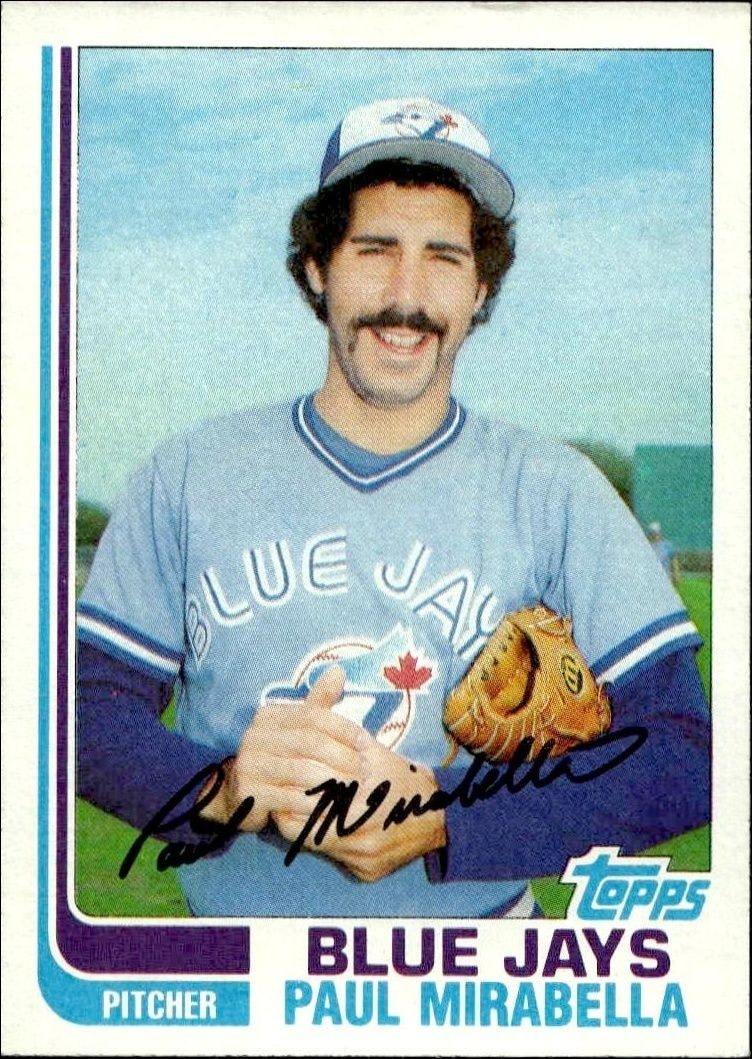

The 1989 Topps Paul Mirabella #192 baseball card features the Milwaukee Brewers player in this standard Topps release, offering a tangible piece of baseball history for dedicated collectors.
1989 • Topps
Major League Baseball • Milwaukee Brewers
Excellent
192
New
Shipping Calculated at Checkout
Arrives in 5-7 daysEstimated delivery October 23, 2026 - October 25, 2026
Seller returns October 19, 2026.30-day Returns| Condition | Value | Source | Trend | Price Details |
|---|---|---|---|---|
$1.24 | Guide Estimate | -3.1% | ||
$37.00 | Guide Estimate | 0% | ||
$17.00 | Guide Estimate | 0% | ||
$28.09 | Guide Estimate | 0% | ||
$17.00 | Guide Estimate | 0% | ||
Raw / Ungraded
PriceCharting Price Guide · Guide Estimate evidence · captured Oct 16, 2026
The 1989 Topps Paul Mirabella #192 baseball card stands as a distinct entry in the history of sports memorabilia, capturing a specific moment from a notable year in the hobby. For those who appreciate the tactile nature of physical cards, this piece offers a direct connection to the era's design sensibilities and production standards. Paul Mirabella is featured prominently on this card, representing his time with the Milwaukee Brewers. Collectors who focus on team-specific sets or player collections often seek out this card number to complete their portfolios. The #192 designation places it within the broader sequence of the 1989 Topps set, allowing hobbyists to track progress and identify gaps in their assembly. Whether you are building a complete set from start to finish or acquiring individual cards to fill specific holes, this card serves as a recognized component of the collection. This 1989 release provides that context, linking the player, the team, and the manufacturer into a single collectible object. The design reflects the aesthetic choices of the late 1980s, making it a relevant item for those who enjoy vintage aesthetics. For investors and hobbyists alike, the 1989 Topps Paul Mirabella #192 baseball card offers a straightforward yet meaningful addition to any serious accumulation. It is a product that respects the traditions of the sport and the hobby, providing a clear and identifiable piece for display or storage.
14 hours ago
We'll pre-fill the product details from this catalog entry, so your listing lands on this exact page. Just add photos of your copy, pick its condition, and set your price.
The catalog profile below summarizes the card identity, featured subject, and notable collectible traits.
The subject, team, league, and sport context tied to this card.
Production details and format-specific attributes.
Material
Card Stock
Language
English
Compare prices, grades, photos, and shipping from approved sellers.
New
Excellent
See how many public collections currently include this card.
0 collectors have this card
This 1989 Topps Paul Mirabella card sits at the entry-level tier of the hobby, reflecting the typical market positioning for non-star players from this era. While the active listings are limited, the card represents a standard baseline value for Milwaukee Brewers memorabilia from the late 1980s. It trades in a volume-driven segment where condition variations have a minimal impact on overall pricing compared to higher-profile counterparts.
As a base card with no noted special attributes, serial numbering, or parallel finishes, this item carries no inherent supply constraints beyond the original print run. The scarcity is driven entirely by the general attrition of common cards from a mass-produced set rather than any intentional short-print or limited-edition mechanic. Consequently, it remains widely available relative to insert or specialty parallels within the same product line.
The investment potential is limited by the absence of rookie-card status or high-demand team affiliation, as Mirabella is not a primary franchise figure. Collector interest is likely restricted to specialized Brewers set completists or those focusing on niche 1989 Topps issues. Long-term value appreciation is unlikely to outpace standard inflation given the high supply of base cards and lack of unique scarcity drivers.