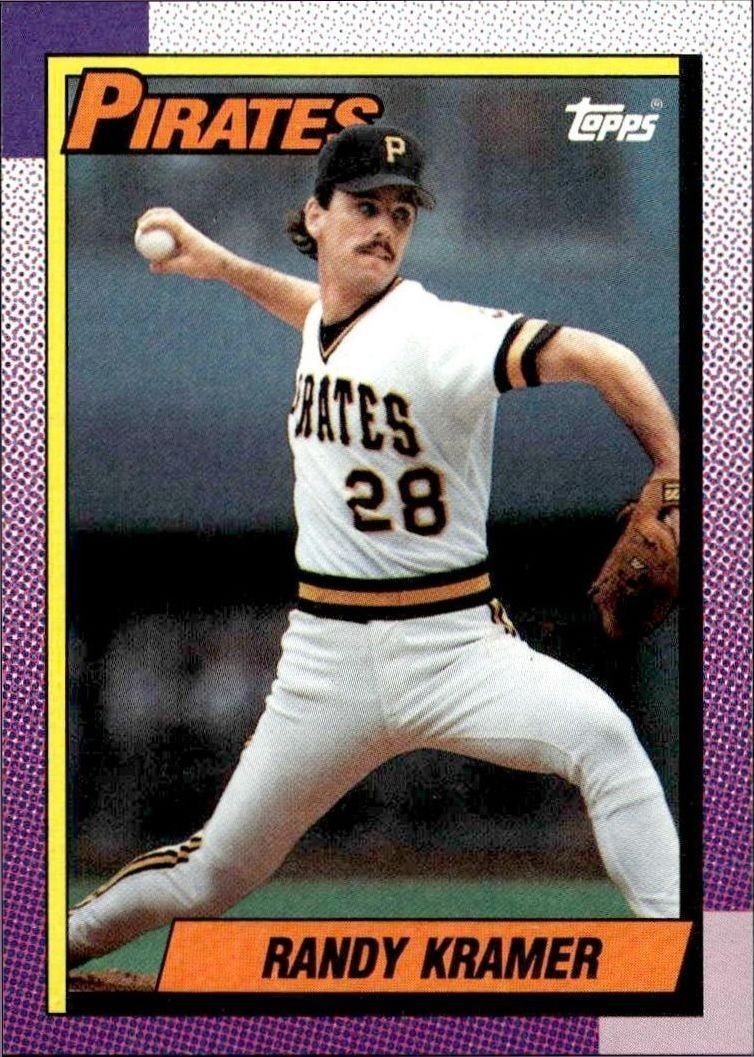

Explore the 1989 Topps #522 card featuring Randy Kramer of the Pittsburgh Pirates. A staple of late 1980s baseball card collecting and set completion.
1989 • Topps
Major League Baseball • Pittsburgh Pirates
Excellent
522
New
Shipping Calculated at Checkout
This seller is away until 10/19/2026 — orders are still accepted and ship after they return.30-day Returns| Condition | Value | Source | Trend | Price Details |
|---|---|---|---|---|
$0.06 | Guide Estimate | 0% | ||
$83.00 | Guide Estimate | 0% | ||
$38.00 | Guide Estimate | 0% | ||
$64.00 | Guide Estimate | 0% | ||
$38.00 | Guide Estimate | 0% | ||
Raw / Ungraded
PriceCharting Price Guide · Guide Estimate evidence · captured Oct 7, 2026
The 1989 Topps #522 card features Randy Kramer, a pitcher who appeared for the Pittsburgh Pirates during the late 1980s. This card number is a recognizable part of the massive 1989 Topps baseball set, which remains one of the most popular and widely collected series in the history of the hobby. Collectors often seek out this card to complete their base set, as it represents a key era for the Pirates franchise. Randy Kramer’s inclusion in this release highlights the depth of rosters during that period, offering a tangible connection to players who contributed on the mound. For investors and casual fans alike, vintage baseball cards from the late 80s provide a nostalgic look at the sport’s golden age. The 1989 Topps design is iconic, with its distinctive border and layout that defined a generation of trading cards. Whether you are building a dedicated Pittsburgh Pirates collection or assembling a comprehensive 1989 Topps base set, this card is an essential component. The enduring appeal of vintage sports cards lies in their ability to capture moments in time, and this card is no exception. Collectors value these cards not just for their historical significance but also for their accessibility. Unlike high-end vintage issues, 1989 Topps cards are generally affordable, making them an excellent entry point for new hobbyists or a cost-effective way to round out a long-time collection. The market for vintage baseball cards remains strong, with consistent demand for complete sets and key players. By acquiring this card, you add a piece of baseball history to your portfolio, preserving the legacy of the 1989 season and the players who wore the Pirates uniform. ## What makes the 1989 Topps set unique? It features a consistent design language that many collectors find appealing for its simplicity and clarity. ## Is Randy Kramer a rookie card? No, the 1989 Topps #522 card is not Randy Kramer's rookie card. It represents his time with the Pittsburgh Pirates later in his career, specifically during the 1989 season. ## How do I complete my 1989 Topps set? Completing the 1989 Topps set typically requires acquiring 792 base cards. Collectors often use checklist apps or online marketplaces to track missing cards and find the best deals on specific numbers like #522.
18 hours ago
We'll pre-fill the product details from this catalog entry, so your listing lands on this exact page. Just add photos of your copy, pick its condition, and set your price.
The catalog profile below summarizes the card identity, featured subject, and notable collectible traits.
The subject, team, league, and sport context tied to this card.
Production details and format-specific attributes.
Material
Card Stock
Language
English
Compare prices, grades, photos, and shipping from approved sellers.
New
Excellent
See how many public collections currently include this card.
0 collectors have this card
This 1989 Topps card of Randy Kramer sits at a modest entry-level price point, reflecting its status as a common base card from a high-volume production era. While it lacks the premium tier associated with rookie cards or star players, it remains an accessible component for collectors seeking to complete a specific set or team collection. The current market positioning suggests stable, low-volatility value typical of mass-produced cards from the late 1980s.
As a standard base card without noted parallels, short prints, or serial numbering, this item carries no inherent supply constraints beyond general market availability. The absence of special attributes means it shares the same mass-produced nature as the majority of the 1989 Topps set, resulting in abundant supply relative to demand. Consequently, it does not benefit from scarcity mechanics that typically drive premium valuations in the secondary market.
The card's investment potential is limited by its lack of rookie status and the sheer volume of identical copies likely still in circulation. Collector demand is primarily driven by set-building needs rather than speculative interest, making it a stable but low-growth asset. Investors should view this card as a functional addition to a collection rather than a vehicle for significant appreciation.