











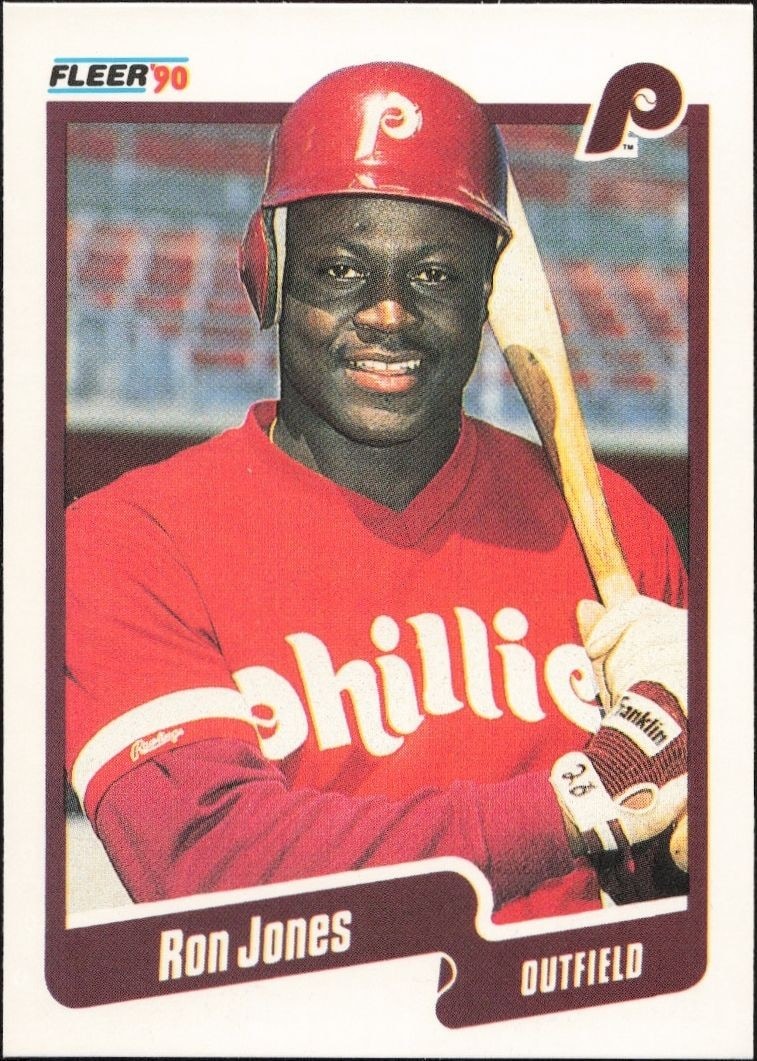

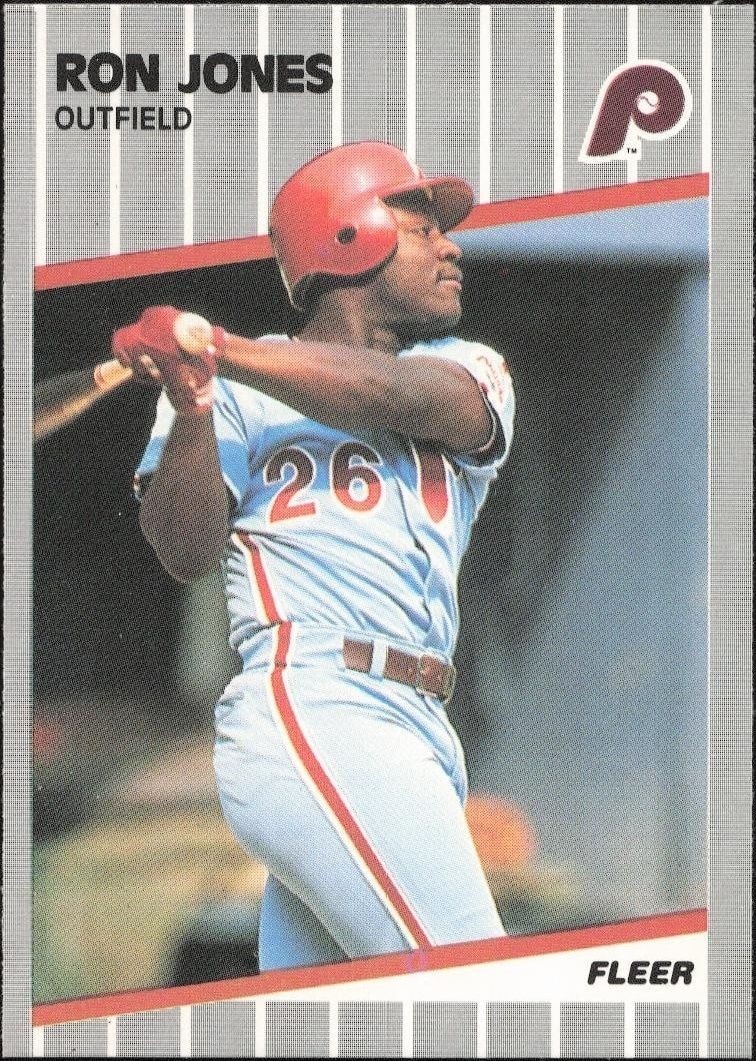
The 1989 Topps Ron Jones #349 captures the Philadelphia Phillies infielder during his tenure with the team. This classic baseball card represents a specific era in MLB history.
1989 • Topps
Major League Baseball • Philadelphia Phillies
Excellent
349
New
Shipping Calculated at Checkout
This seller is away until 10/19/2026 — orders are still accepted and ship after they return.30-day Returns| Condition | Value | Source | Trend | Price Details |
|---|---|---|---|---|
$0.16As of 9/21/2026 | Guide Estimate | 0% | ||
$40.00As of 9/21/2026 | Guide Estimate | 0% | ||
$19.00As of 9/21/2026 | Guide Estimate | 0% | ||
$31.00As of 9/21/2026 | Guide Estimate | 0% | ||
$19.00As of 9/21/2026 | Guide Estimate | 0% | ||
Raw / Ungraded
PriceCharting Price Guide · Guide Estimate evidence · captured Sep 22, 2026
The 1989 Topps Ron Jones #349 stands as a tangible piece of Philadelphia Phillies history, capturing the infielder during a specific period of Major League Baseball. Released by Topps, the premier manufacturer of sports trading cards, this card is part of the foundational 1989 set that defined the aesthetic for a generation of collectors. For those building a library of vintage baseball memorabilia, this catalog entry represents the specific card number associated with Jones during his time with the Phillies. Ron Jones, listed as card #349, provides a direct connection to the roster composition of the Phillies during this time. While his career statistics may not be the primary driver for every collector, the card itself serves as a historical record of his presence on the team. For investors and hobbyists alike, vintage Topps cards from the 1980s continue to hold significant appeal. The durability and availability of this release make it a common yet valuable component for those completing full set collections. Whether you are a dedicated Phillies fan or a broader baseball collector, adding this card to your portfolio offers a piece of MLB heritage. The enduring popularity of Topps products ensures that cards like the 1989 Ron Jones #349 remain relevant in the secondary market. Collectors often focus on the brand's consistency and the historical context of the players featured. This card, representing a specific moment in Jones's career with the Phillies, offers a straightforward addition to any vintage baseball collection. By focusing on the catalog identity, collectors can appreciate the card for what it is: a verified piece of 1989 Topps production featuring a Philadelphia Phillies player.
9 hours ago
We'll pre-fill the product details from this catalog entry, so your listing lands on this exact page. Just add photos of your copy, pick its condition, and set your price.
The catalog profile below summarizes the card identity, featured subject, and notable collectible traits.
The subject, team, league, and sport context tied to this card.
Production details and format-specific attributes.
Material
Card Stock
Language
English
Compare prices, grades, photos, and shipping from approved sellers.
New
Excellent
See how many public collections currently include this card.
0 collectors have this card
This card trades at the absolute floor of the market, reflecting its status as a common base card from a standard set. As a non-premium insert featuring a role player rather than a franchise cornerstone, it holds negligible monetary value compared to star athletes or special parallels. The current pricing indicates it is treated as a bulk item rather than a distinct collectible asset.
The item possesses no scarcity mechanics, as it is a standard base card without serial numbering, short-print designations, or parallel variations. Supply is effectively unlimited within the context of the secondary market, as mass-produced base cards from this era are widely available. Consequently, there is no inherent rarity premium driving the value of this specific specimen.
This card offers no significant investment potential due to the lack of rookie status, special attributes, or high-profile player association. Collector demand is minimal, limiting liquidity and growth prospects to the point where it functions primarily as a filler for bulk lots. Investors should view this as a low-value entry point rather than a standalone asset with appreciation potential.


